








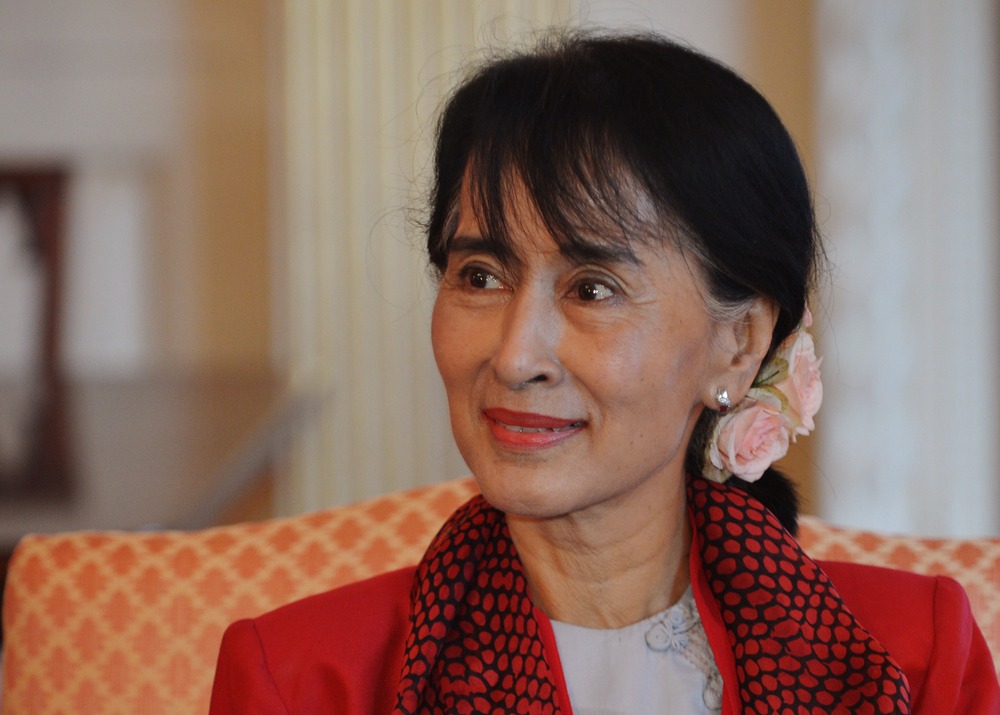
 by Alex Wagner |
If people have heard of the Southeast Asian country known alternately as “Myanmar” or “Burma,” they are just as likely to have heard mention of its national heroine: pro-democracy leader and Nobel Peace Prize Laureate, Aung San Suu Kyi. When Burma— as it has always been known in my family— was plunged into economic ruin, crippled by ethnic strife and subject to gross violations of human rights at the hands of an oppressive and illegitimate military regime beginning in 1962, my family emigrated to the United States, where they would eventually become American citizens. But not once in the last half decade did they— or I— ever lose sight of the faraway country once called home, a place shrouded as much in secrecy as it was sadness.
For both exiled Burmese and the global community that has followed Aung San Suu Kyi’s decades-long struggle for human rights in the face of one of the world’s most brutal military juntas, her recent release from 15 years of house arrest has capped a stunning series of changes inside the country, led in large part by newly-elected president Thein Sein. Her historic visit to the United States this week is not something that my 96-year-old grandmother could have imagined happening in her lifetime, after so many years of horrifying violence and dashed hopes. Nor, certainly, could she have ever dreamed that her years of activism in service of the pro-democracy movement would one day culminate in her granddaughter sitting down to speak with Aung San Suu Kyi at the invitation of Amnesty International.
There are certainly many serious concerns about reforms inside the country, questions relating to the treatment of Burma’s ethnic minorities and the fate of the thousands of political prisoners still languishing in the country’s jails, and how to encourage sustainable and responsible investment in a period of rapid change— and I hope we can discuss much of this during our town hall tomorrow.
For me, this is a moment of great joy. It also carries with it a distinct sense of responsibility to the men and women who have fought long and hard— and, in some cases, given their lives— to see Aung San Suu Kyi walk the streets of Washington D.C. and New York City and points in-between. Indeed, the mere fact that she is able to travel across borders is in and of itself a message to those still living in oppression: namely, that freedom is not simply an abstract concept worthy of meditation, but a blessing that is sometimes granted in the most unlikely circumstances and in the darkest hours— a reason not just to hope in the unseen, but to believe in it. Got a question you want Alex to ask the Nobel Peace Prize winner? Submit them here. Watch the live stream of the town hall discussion on this blog Thursday, September 20, 11:30 a.m. ET.
The place for in-depth analysis, commentary and informed perspectives. Recommended


