








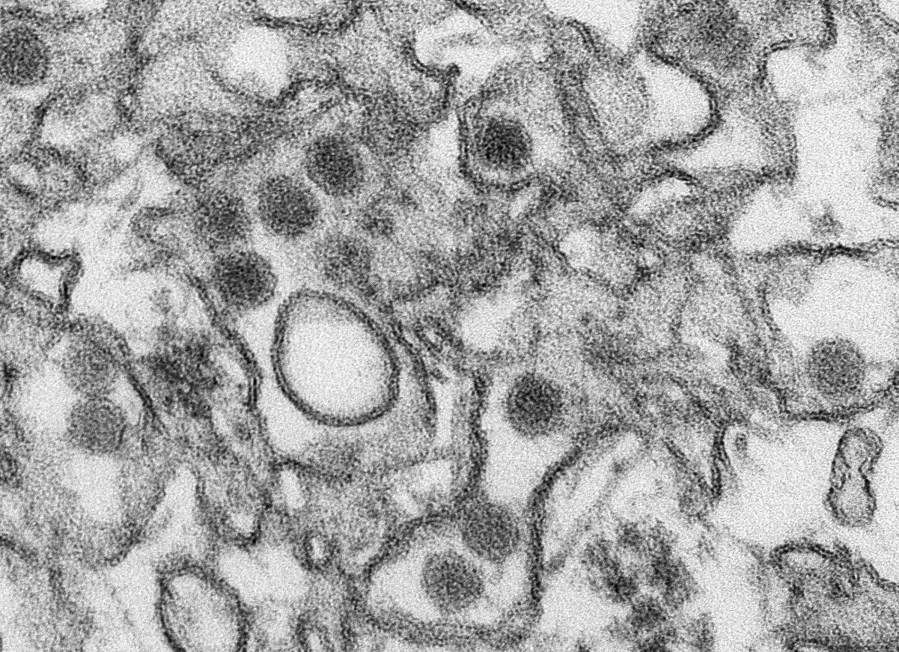
The Zika virus that has doctors worried about birth defects is likely to spread to most countries in the Americas, the World Health Organization said Monday. But that doesn’t necessarily mean all or even very much of the United States.
Zika’s already taken hold in 21 countries and territories of the Americas, and the mosquito-borne virus will almost certainly spread further, WHO’s western hemisphere branch, the Pan American Health Organization, said in an update.
“PAHO anticipates that Zika virus will continue to spread and will likely reach all countries and territories of the region where Aedes mosquitoes are found,” PAHO said in a statement Monday.
That’s everywhere but Chile and Canada.
But while the U.S. is among the countries considered vulnerable, many experts say Zika is unlikely to spread far outside tropical zones.
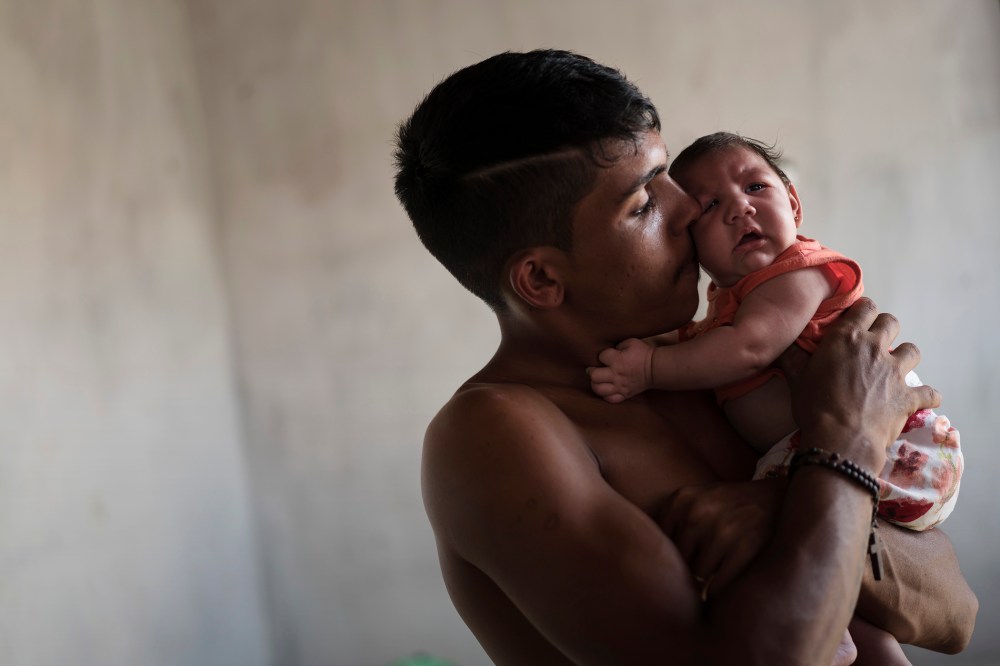
Zika’s spread wouldn’t be of much concern if it weren’t for fears that it causes a severe birth defect called microcephaly — an abnormally small head and brain. Babies with microcephaly die at birth, they miscarry or they suffer lifelong disability.
Health experts still are not sure how or even whether Zika is causing microcephaly in Brazil — the only country that’s reported an increase in cases so far.
But, as with any mosquito-borne disease, once Zika is in place, it will spread quickly. That’s because so many people have never been infected before and because mosquitoes are so common.
%22It%27s%20a%20virgin%20soil%20outbreak.%22′
“There are two main reasons for the virus’ rapid spread: (1) the population of the Americas had not previously been exposed to Zika and therefore lacks immunity, and (2) Aedes mosquitoes — the main vector for Zika transmission — are present in all the region’s countries except Canada and continental Chile,” PAHO said.
Any new virus can spread quickly in a population with no immunity, says Dr. Arnold Monto, an expert in the spread of disease at the University of Michigan’s school of public health.
“It’s a virgin soil outbreak,” he said. The more actively infected people there are, the more likely it is that a mosquito will bite one of them and then bite someone else, spreading the virus.
“The transmission can take place because they have both the virus and the vector and it really takes off.”
RELATED: This virus you never heard of may be causing birth defects in Brazil
Once a significant number of people have been infected, a virus spreads less rapidly.
Brazil and other tropical regions are vulnerable to Zika, dengue and other mosquito-borne viruses because they have dense human populations alongside dense populations of mosquitoes, plus little control of those mosquitoes.
Monto and other experts say countries with more temperate climates — like the United States — are less vulnerable. For one thing, the Aedes aegypti mosquitoes that transmit Zika only circulate in the very southernmost regions of the U.S., like south Florida and south Texas. Cold weather kills this species of mosquito.
“So I don’t expect at all that there would be a major outbreak of a mosquito-borne disease like this in the United States, mostly because we have a climate issue in our favor,” Dr. Tony Fauci, head of the National Institute of Allergy and Infectious Diseases, told NBC News. %22I%20don%27t%20expect%20at%20all%20that%20there%20would%20be%20a%20major%20outbreak%20of%20a%20mosquito-borne%20disease%20like%20this%20in%20the%20United%20States%2C%20mostly%20because%20we%20have%20a%20climate%20issue%20in%20our%20favor.%22′ Air conditioning, screens and good drainage all make U.S. residents much less likely to get bitten than people living in poorer, hotter countries. There’s another Aedes species that is capable of transmitting Zika, and that’s the Aedes albopictus or Asian tiger mosquito. It thrives in summer much farther north than its relative, but it has not yet been shown to transmit Zika in the western hemisphere, Monto said. Dengue virus is closely related to Zika and is spread in the same way. But while dengue also has spread quickly across tropical regions, it has not taken hold in the U.S. “We have been worried about the introduction of yellow fever and dengue where we do have the vector and we have just not seen it,” Monto said. So even if the occasional traveler shows up in the U.S. with a Zika infection, he or she would have to be bitten by the right species of mosquito for it to spread. West Nile virus is a mosquito-borne virus that spread across the North American continent in just a few years from when it first showed up in New York in 1999. But there are two important differences. West Nile is carried by different species of mosquitoes than Zika is, and these species are far more common in northern climates than Aedes mosquitoes. Plus West Nile virus also lives in birds — creating what’s called a reservoir to keep the virus circulating. Zika’s only know so far to infect humans and monkeys and if it passes from human to human, it’s only rarely. This article originally appeared on NBCNews.com.
Maggie Fox Recommended


