








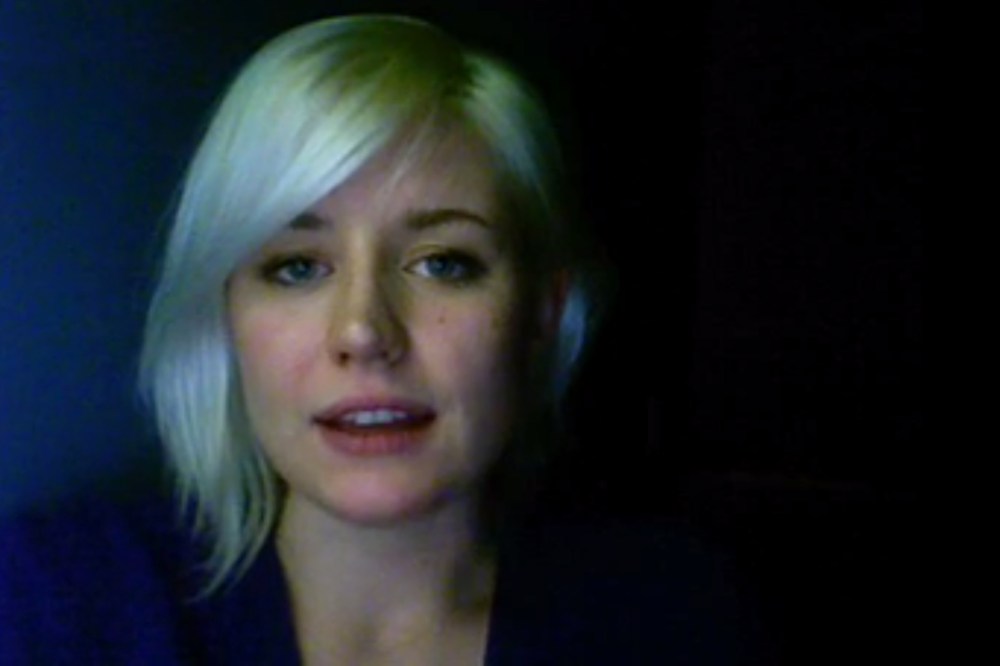
Emily Letts is a counselor to women at an abortion clinic in Cherry Hill, New Jersey. Recently, she had her own abortion filmed and put a video, along with her own commentary, on YouTube. Part of her intention, she says in the video, is to “show women there is such a thing as a positive abortion story.”
Unsurprisingly, her decision caused an outcry, especially after Letts followed up the March video with a first-person article on Cosmopolitan’s website this week. Letts is unapologetic: “We talk about abortion so much and yet no one really knows what it actually looks like,” Letts wrote in her Cosmopolitan piece. “A first trimester abortion takes three to five minutes. It is safer than giving birth. There is no cutting, and risk of infertility is less than 1%.”
Women who have abortions often have their stories told by others, for political or journalistic purposes. Letts, on the other hand, told her story wholly on her own terms. For these women, political footballs for decades, the script has often already been written, and it doesn’t leave much room for women who feel like Letts did about her abortion. The narrative of abortion regret is so dominant that it has even guided Supreme Court jurisprudence.
“While we find no reliable data to measure the phenomenon, it seems unexceptionable to conclude some women come to regret their choice to abort the infant life they once created and sustained,” Justice Anthony Kennedy wrote for the majority in 2007 in the last major Supreme Court abortion case, Gonzales v. Carhart. “Severe depression and loss of esteem can follow.”
It surely does follow for some women, just as complicated feelings follow childbirth, but as Slate‘s Dahlia Lithwick pointed out at the time, for Kennedy, “only those women who regret the decision to abort illuminate some deeper truth.” The expectation of regret above all has seeped into pop culture, too. One recent study of how abortion decision-making is shown in movies and TV showed that female characters who considered or had abortion were disproportionately likely to die afterwards, which is decidedly not realistic. The video and article are part of a broader, intentional pushback to that narrative. Her video won a contest put on by a network of independent abortion providers to try to bust stigma. A new organization, the Sea Change Program, is devoting itself entirely to studying and counteracting abortion stigma. (Full disclosure: the co-founder is my sister-in-law.) Letts explicitly puts her video in the context of this pushback. “Our society breeds this guilt,” she says in her Cosmopolitan piece. “We inhale it from all directions. Even women who come to the clinic completely solid in their decision to have an abortion say they feel guilty for not feeling guilty. Even though they know 110% that this is the best decision for them, they pressure themselves to feel bad about it.”
Irin Carmon Recommended


