








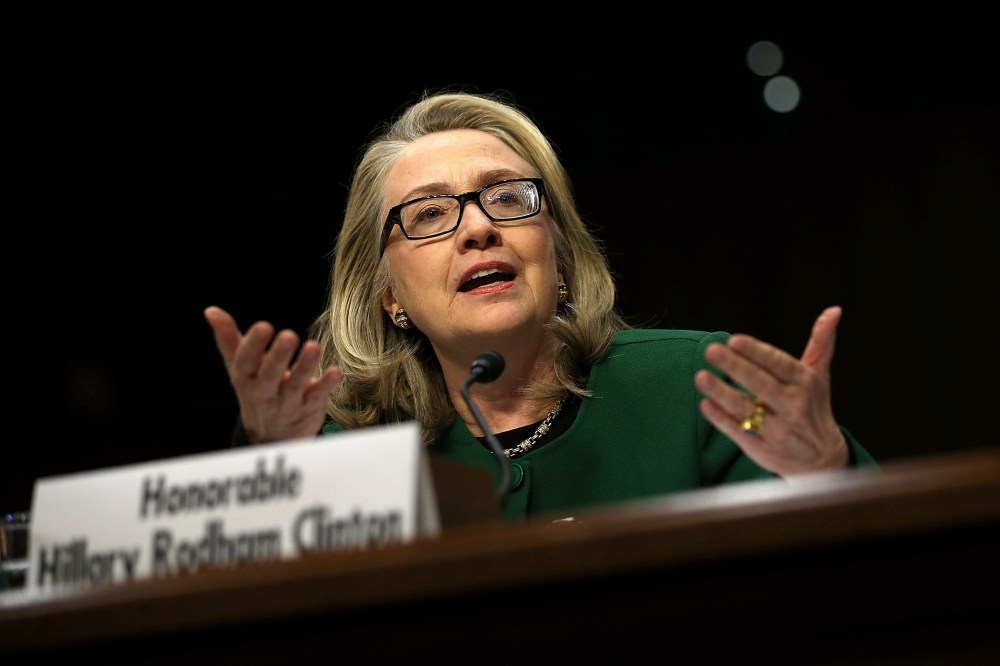
Hillary Clinton won’t be the first presumed presidential candidate to be dragged before a congressional committee if and when she testifies before the House Select Committee on Benghazi, but she won’t be far from it.
“We’d put it in the rare, but not unprecedented category,” Don Ritchie, the official historian of the Senate, told msnbc. Ritchie could find only a few instances of declared or likely presidential candidates testifying before congressional committees in American history. While there might be a few more examples, given the vagaries of declaring a run for the presidency, there’s no question the practice is “very rare,” he said.

Clinton’s most recent predecessor would be H. Ross Perot, the independent billionaire whose conflict over requested testimony from a Senate select committee on prisoners of war became a minor subplot to his 1992 presidential campaign against Clinton’s husband. Perot agreed to testify before the committee, helmed by then-Sen. John Kerry, but backtracked in June, fearing that the “highly-emotional, pre-election atmosphere” would turn the hearings into a “political circus.” He ultimately gave private testimony, under oath, to two Senate investigators in Dallas.
In 1951, as Republican Sen. Robert Taft prepared for a presidential run the following year, he was made to testify before a Senate subcommittee investigating alleged unfair campaign activities on both sides of his 1950 reelection battle. Taft blamed “a sinister conspiracy … directed right from the White House” of Democratic President Harry Truman. The next year, Taft fought neck-and-neck with Dwight Eisenhower for the Republican nomination, but ultimately lost to the general on the first ballot at the 1952 Republican convention.
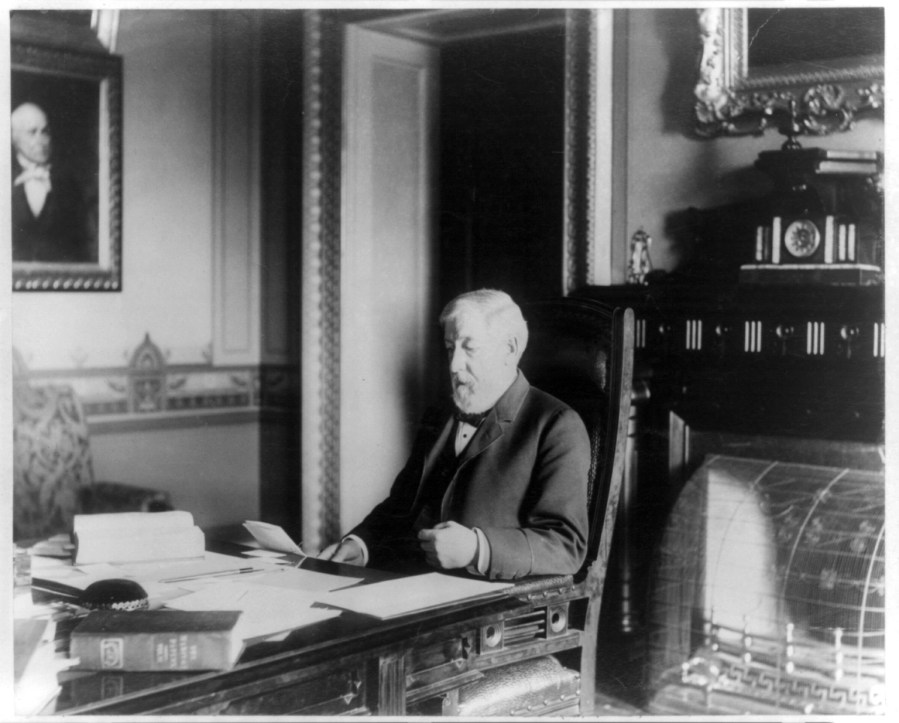
But the closest parallel to Clinton came in 1882, when James G. Blaine, a former secretary of state and senator, who was his party’s favored nominee in the upcoming presidential election, became embroiled in a controversy alleging that he directed U.S foreign policy to enrich himself via guano holdings in South America.
RELATED: Republicans on Benghazi committee: Hillary who?
The House Foreign Affairs Committee spent months investigating the matter before bringing Blaine himself to testify. At one point during his appearance, he lost his temper and yelled a freshman Democratic congressman: “This highly charged personal confrontation was grist for the mill of the rabidly partisan media,” according to historian Edward P. Crapol’s biography of Blaine, “Architect of Empire.” “Whether or not the charges of improper behavior and diplomatic blunders hurt his future presidential aspirations is debatable, but Blaine probably was correct in assuming that that was the goal of his enemies on both sides of the aisle in Congress.”
Blaine won his party’s nomination, but lost the White House to Democrat Grover Cleveland.
Clinton had her own confrontation during an earlier testimony on Benghazi, which itself became grist for partisan media.
Another parallel might be found in 1974, when President Gerald Ford was made to testify before the Senate Judiciary Committee about his pardon of predecessor Richard Nixon in the Watergate scandal. It was less than a month before the congressional midterm elections, and two years from his own reelection cycle. He was one of only three sitting presidents who have had to testify before Congress.
Today, as in 1882 with Blaine, allies of the former secretaries of state charge the opposing party of abusing Congress’ oversight power for partisan ends. Clinton has been willing to testify before the Benghazi Select Committee for months, Democrats say, but Republican Chairman Trey Gowdy has delayed her appearance for maximum impact on her expected presidential campaign. “I fear that they’re trying to run the clock to push this further into the presidential cycle,” Democratic Rep. Adam Schiff said Wednesday morning on CNN. In September, the day after the Stop Hillary PAC delivered hundreds of thousands of signatures to Gowdy urging him subpoena testimony from Clinton, the Republican chairman asked Democratic ranking member Elijah Cummings to contact Clinton and see if she would be willing to testify, a Democratic aide told msnbc. This was before the committee’s investigative work had gotten underway. Cummings reached out to Clinton, who agreed to testify as soon as December. But Democrats charge that instead of holding the hearing right away, Gowdy intentionally delayed requests for State Department documents so he could use the lack of the documents as an excuse to push back Clinton’s testimony closer to her expected campaign launch. Republicans say that’s not so. “Chairman Gowdy has always said we would welcome her testimony after State produces documents responsive to Committee requests,” spokesperson Amanda Duvall told msnbc Wednesday. And she noted that in December, Cummings and Democrats said they opposed having Clinton testify at all. “As soon as the State Department complies with our requests for documents, then we would be thrilled to have her come before the committee. So It’s really in their hands,” Gowdy said on Fox News Wednesday.
Alex Seitz-Wald Recommended


