








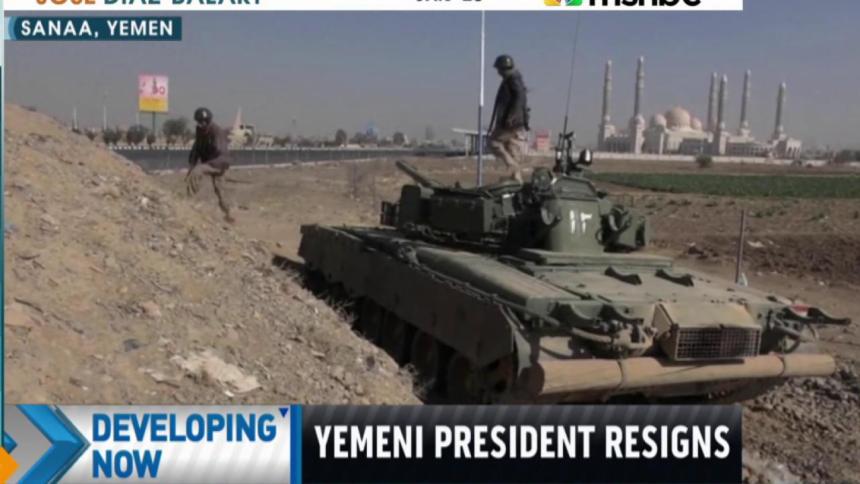
After years of unrest, Yemen’s president, prime minister, and cabinet all stepped down Thursday, effectively ceding control of the country to a Shiite rebel group.

The coup puts America’s terror policy at risk: Yemen is a key ally in America’s fight against al Qaeda in the Arabian Peninsula (AQAP), the group that took credit for the Paris attacks and is based in Yemen. Officials confirmed on Thursday that Houthi rebels had control of the intelligence and military branches with which the United States coordinates operations.
While the Houthis oppose AQAP, their outlook is also anti-American. One senior Yemeni official told NBC News that the situation “creates a vacuum and that is good for Al Qaeda.”
The resignations – and brewing potential for a civil war as the Sunni majority threatens to secede from the Shiite rebels — could also unsettle the already precarious balance of power in the Middle East: While the previous government was financially and politically backed by Saudi Arabia, the Houthi rebels who are now in power are widely believed to be backed by Iran, which Saudi Arabia sees as a top geopolitical rival.
A senior State Department official told NBC News that the security situation had prompted them to further reduce American personnel in the country’s embassy in Sana’a. “While the embassy remains open and is continuing to operate, we may continue to realign resources based on the situation on the ground. We will continue to operate as normal, albeit with reduced staff,” the official said.
President Abed Rabbo Mansour Hadi stepped down one day after apparently reaching a deal with the rebels to share control, but a government official told The Washington Post the rebels had stripped Hadi of all of his powers, in spite of the agreement. In his resignation letter, Hadi pointed to the rebels without naming them. “I would like to apologize personally to you and to the parliament and to the Yemeni people now that we have reached a dead end,” he said in the statement. Hadi took power after the Arab Spring, ousting former President Ali Abdullah Saleh, who many believe may be helping the Houthi rebels; Saleh and two rebel leaders were sanctioned by the United Nations late last year for threatening the country’s stability.
Jane Timm Recommended


