








On Monday morning, Dec. 15, a self-professed Sunni Muslim cleric named Man Haron Monis entered the Lindt café in Sydney’s bustling Martin Place, taking 17 people hostage. The resulting police standoff and siege lasted over fourteen hours, culminating in the death of the perpetrator and two hostages.
Monis’ motive, revealed in the black “shehada” flag displayed in the café’s window, confirmed that Islamic extremism has successfully penetrated deep into the Southern hemisphere. Although it remains unclear to what extent Monis acted under the auspices of the Islamic State of Iraq and Syria (ISIS), the siege commanded rolling news coverage for nearly 24 hours, increasing the media power of these so-called “lone wolf” attacks and giving ISIS a publicity coup worth more than any oil refinery.
Related: How to destroy ISIS before it spreads
Had Monis not deployed the “shehada,” an Islamic profession of faith, it is doubtful such a criminal act would have saturated global news coverage in the way that it did. And we should be careful in attributing any particular lone wolf-style attack to ISIS influence. Shehada imagery is used by hundreds of jihadist groups operating across the Middle East and Asia, including Jabhat al Nusra, al Qaeda, the Taliban and The Islamic Front. (It also features prominently on the official flag of Saudi Arabia, among others.) But whether Monis was inspired by the rhetoric of ISIS leader Abu Bakr al Baghdadi or the notion of a broader jihad, he represents a complex and growing threat to the West: the self-radicalizing individual.
Terrorist organizations have traditionally operated through networks of autonomous cells that are given broad remit by leadership. While the cells could benefit financially and be provided with arms and training by the broader terrorist organization, no one cell could divulge information about the others should an individual member be captured.
But an autonomous terror cell is still vulnerable to being compromised. Security forces can eavesdrop on individuals, track their financing, and target arms shipments. It was precisely this kind of intelligence-gathering, for instance, that led to Operation Pendennis in 2005, Australia’s second-largest anti-terrorism raid, which uncovered jihadist cells in Melbourne and Sydney.
%22The%20process%20of%20radicalization%20is%20not%20always%20obvious.%22′
The lone wolf is potentially much harder for intelligence agencies to detect. Self-radicalization does not require communication with terrorist leadership, and it’s common that the logistics leading to an attack are self-supported. Perhaps most vexing is uncovering the specific motives that lead an individual to make the jump to engaging in hostile activity.
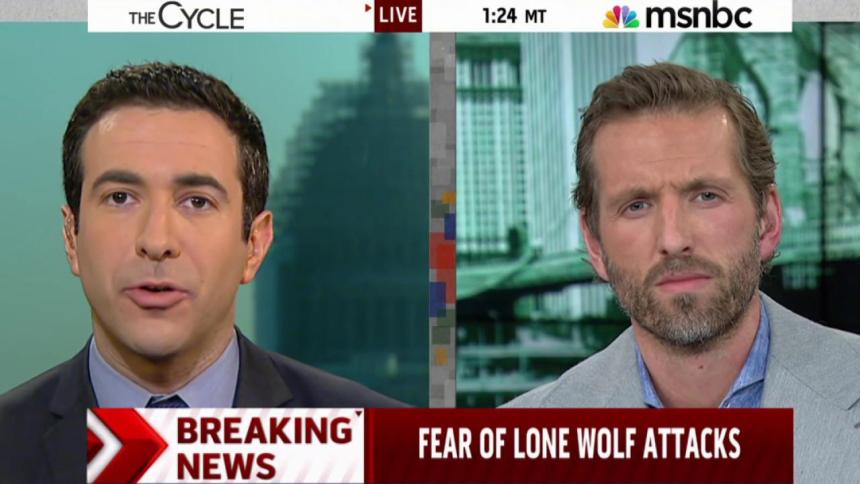
The process of radicalization is not always obvious. While Monis had a lengthy criminal background and a history of unstable behavior, the Iranian refugee was also 50 years old — hardly a target demographic for Internet propagandists — and a Shiite, putting him at odds with the Sunni extremists that constitute ISIS. But a lone wolf attacker could have any number of motives and connections that may come under the banner of jihad: Zale Thompson, the man who attacked a group of New York City policemen with a hatchet in an apparent act of terror, was found to have been inspired by a hodgepodge of sources, including both ISIS and black separatist ideology. Internet chat rooms and social media have become a potent resource for extremist groups to connect with self-radicalizing young men like Thompson. Hate-spewing clerics such as Omar Bakri Muhammad, allegedly responsible for radicalizing the murderers of Lee Rigby, the British soldier killed with a machete on a London street, have harnessed social media to turn disillusionment deadly. Yet lone wolves are also limited by their isolation; more wide-reaching terrorist acts — such as the use of explosives — require knowledge, expertise and training. While intelligence agencies are increasingly concerned with the thousands of Westerners (with Western passports) now fighting and receiving training in Syria and Iraq, most individual terrorist actors will only be able to harness more conventional methods of disruption. The “lone wolf” attacks in the U.S., Britain, Canada, and now Sydney, while relatively cumbersome and contained, nevertheless expose significant vulnerabilities in traditional domestic security policy. As social media grows more ubiquitous — allowing radical clerics to extend their reach — and with no end in sight for conflict in the Middle East, such attacks are unlikely to subside. But the greater concern remains the recruitment of Western citizens fighting with extremist groups in Syria and Iraq, where they can acquire deadly training. Organic wolves such as Monis are a threat; jihadists hardened by battlefield experience could be a disaster. Michael Kay is a British TV host, foreign affairs reporter, regular contributor on MSNBC, CNN, Bloomberg and the Huffington Post, and director and producer of current affairs documentaries. He previously spent 20 years as an assault helicopter pilot in the British Royal Air Force.
Michael Kay Recommended


