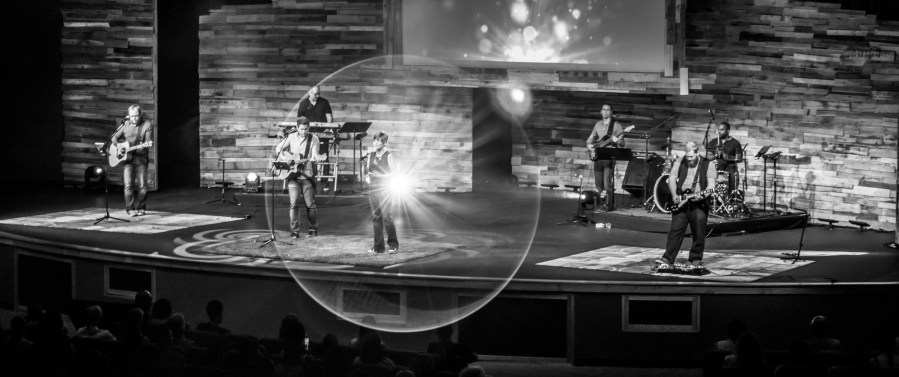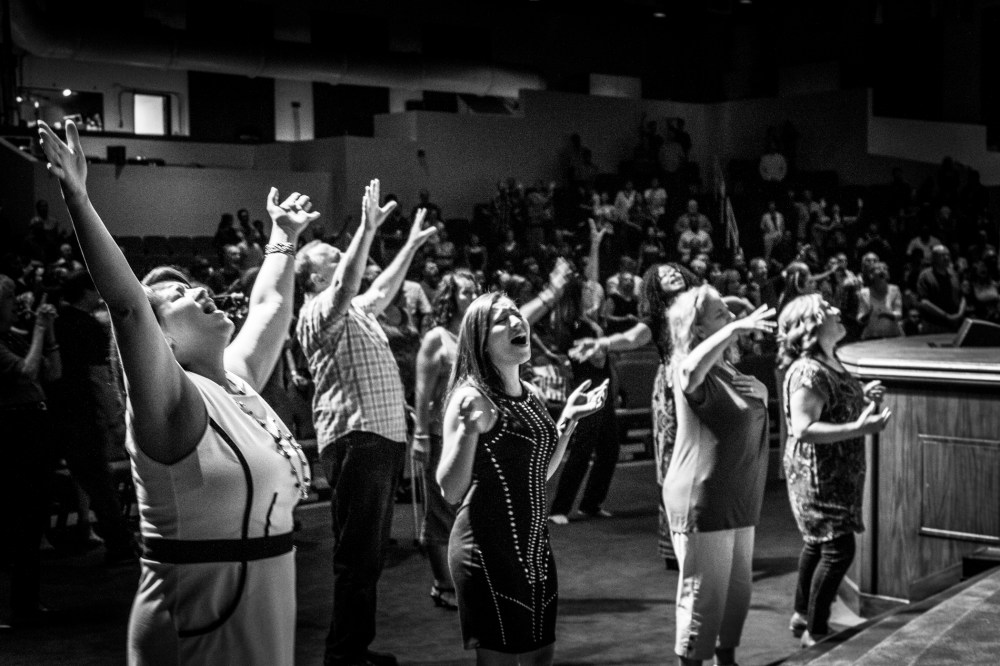
On a typical weekend, thousands of people file into a packed house just miles off the Las Vegas strip. Giant monitors amplify the stage as musical acts warm up the crowd to an extensive light show dancing behind them. Audience members rise to their feet, hands in the air. By the time the event wraps up and the crowds begin to clear, performers are already looking ahead to the next show just a few hours away.
But this isn’t a rock concert, an A-list venue or tourist attraction off the strip of Sin City – for thousands of Christians each Sunday, this is simply what church services look like.
%22Roughly%2029%25%20of%20Christians%20in%20Las%20Vegas%20attend%20a%20megachurch%22′
A departure from images of rigid and stuffy Sunday-morning prayers, megachurches that focus on ways to modernize how churchgoers practice their faith are supersizing throughout the country. At a time when Americans’ religious allegiances slowly continues to wane, these churches, attracting congregations of more than 2,000 people, are only only rapidly expanding, but sweeping up congregants from small-scale churches along the way.
Las Vegas is home to the highest concentration of megachurch congregations in the country with 29% of Christians who attend services at churches with more than 1,000 people, according Barna, a polling firm that researches religious issues.
As one of the largest megachurches to dominate the Las Vegas region, Central Christian Church boasts of bringing in more than 18,000 people through their doors in a single weekend. Multiple branch locations of the church are sprinkled throughout the valley hold as many as five services throughout each Saturday and Sunday.
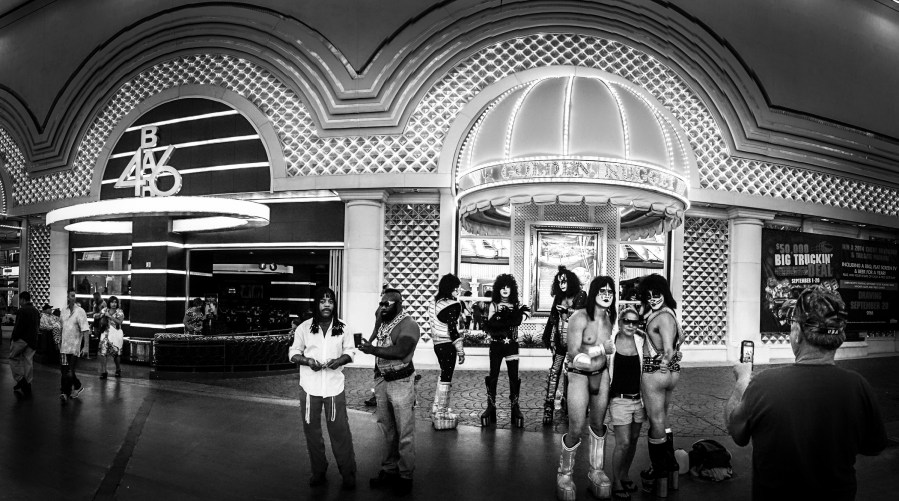
Instead of worshipping between rows of wooden pews, megachurchgoers there fill columns of stadium seating. Robed choirs are replaced with full bands — electric guitars, bass and drums included. Recorded sermons are streamed live for worshipers to tune in remotely either from their televisions or online.
“The cultural norms and values have changed in that most of our institutions are no longer small and antiquated with organs and wooden pews,” said Scott Thumma, a leading expert in megachurch research and professor of sociology religion at the Hartford Institute. “It’s not surprising that the religious life parallels and echoes everyday life.”
%22Most%20of%20our%20institutions%20are%20no%20longer%20small%20and%20antiquated%20with%20organs%20and%20wooden%20pews.%22′
It’s a model that’s starting to crop up throughout the country, concentrated in regions through the south and west coast. Since the early 90s, megachurches have seen congregations grow in primarily white, suburban areas, typically in sprawling cities like Dallas, Houston, Los Angeles, Phoenix, and Seattle.
Even with a growing share of the American population who say they do not identify with any religion, megachurch domination continues to rise. In all, 10% of worshipers attend churches that draw in more than 2,000 people, totaling nearly six million megachurch attendees nationwide each weekend.
And it’s not just the U.S. that catching onto super-sized congregations. According to the Hartford Institute for Religion Research, a single church in Korea says more than 250,000 people attend services there. By comparison, Hartford researchers say America’s largest megachurch has an average of 45,000 attendees.
A major driver behind the rapid expansion are often the leaders themselves. As congregations slowly began to swell in numbers, so too did the star-status of the leaders at the church’s helm. Church leaders and televangelists like Joel Osteen and Pat Robertson paved the path in becoming household names marketing themselves in the big business of bringing faith to the masses.
Such soaring stardom among communities however sets up for a dramatic fall from grace for some leaders. Just last week, Seattle-based Mark Driscoll was forced to resign as senior pastor at Mars Hill Church, where he presided for over 18 years in expanding the faith community in the largely secular Pacific Northwest. Facing mounting criticism for his abrasive, quick-tempered personality, dust-ups with allegations of plagiarism in his books and claims that he misused church funds, the 43-year-old was forced to step down following months of controversy. The scrutiny on megachurch leaders is only heightened as the scale and size of congregations continues to grow. Churches built a franchise out of the success, setting up satellite branches just to keep up with the demand. In what critics have called the “Wal-Mart effect,” megachurches are expanding in suburban areas, absorbing congregants from small-town churches and running them dry. To keep up with the demand, megachurches lead multiple services held throughout the entire weekend. For church campuses hosting guest speakers or church leaders from out of town, live video monitors bring services to congregations sometimes held hundreds of miles away. “Clearly the majority of the people who came to a megachurch were coming from a congregation nearby. Then there’s also a sizable number of folks that say they came to that congregation and they hadn’t really gone to any for a long time,” Thumma said. “If you’re moving to a suburb, the megachurch allows you an almost instant community of people who think like you.” Related: Megachurches in the shadow of Sin City’s strip
Amanda Sakuma Recommended