








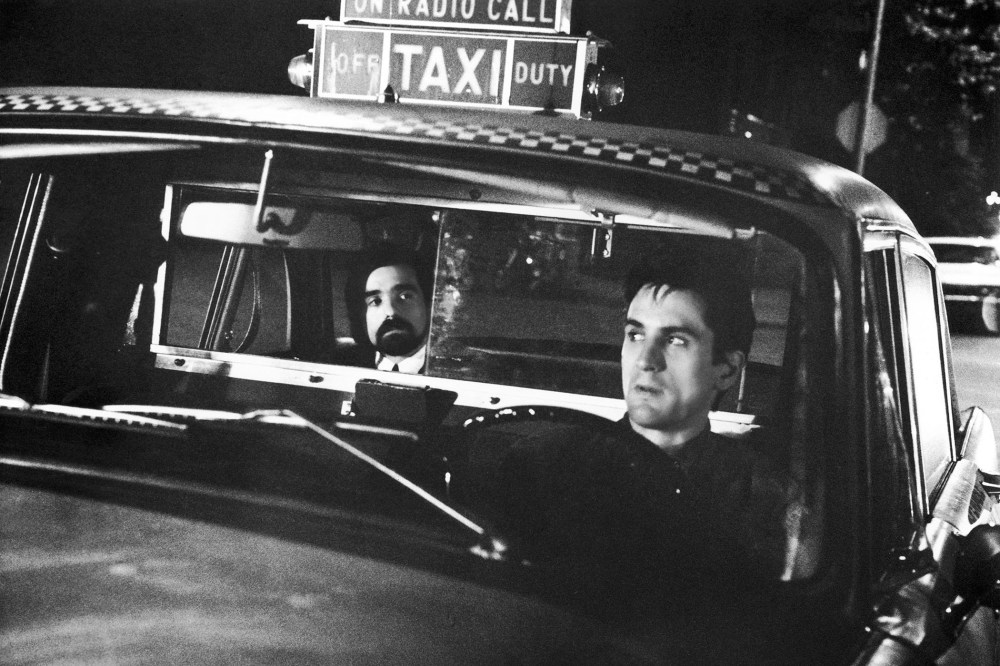
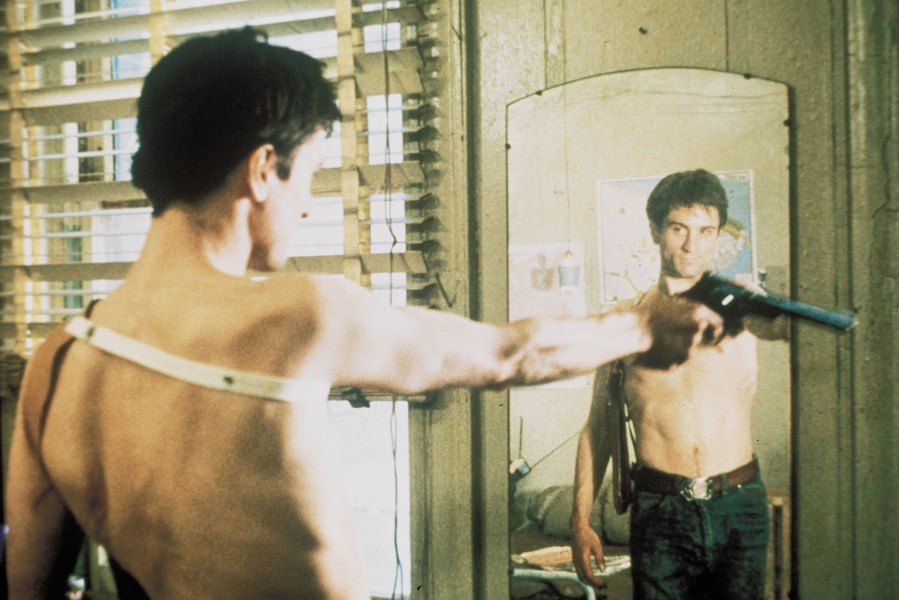
“You talkin’ to me? You talkin’ to me!? Well I’m the only one here.”
It’s acting legend Robert De Niro’s most iconic line, and while some young movie buffs may know the film that it comes from — “Taxi Driver” — few may know its context.
In the Martin Scorsese-directed masterpiece, which turns 40 this year, De Niro plays Travis Bickle, a deranged, socially isolated cab driver with delusions of grandeur. He delivers that famous line while preparing to assassinate a fictional presidential candidate. Although — spoiler alert — he comes up short, Bickle winds up becoming a celebrated, crime-fighting vigilante in a dark, ironic twist.
Scorsese and his screenwriter Paul Schrader were drawing inspiration from Arthur Bremer, a real-life troubled loner, who planned to shoot a presidential contender in 1972 simply to gain notoriety. When his efforts to get close enough to then-President Richard Nixon failed, he settled for surging segregationist George Wallace, who he paralyzed in a hail of bullets.
Released in another contentious election year, 1976, “Taxi Driver” would inadvertently inspire another assassination attempt. John Hinckley Jr.’s shooting of President Ronald Reagan in 1981 was in part provoked by his infatuation with actress Jodie Foster and her performance as a child prostitute in the Scorsese film. It was the film’s unflinching violence which shocked audiences decades ago— but today, it may be the sociopolitical undercurrents of the movie that resonate the most.
RELATED: De Niro decision to pull film can’t cure Hollywood’s vaccine obsession
On Thursday, the Tribeca Film Festival will be reuniting DeNiro, Scorsese, Foster, Schrader and co-star Cybill Shepherd at a special screening of the film at New York City’s Beacon Theater. Perhaps it’s fitting that in the wake of New York’s primary this Tuesday, where GOP front-runner Donald Trump’s “America first” message clearly resonated with a broad majority of the state’s conservative voters, that this film, which tapped into frustration with economic malaise and issues of racial entitlement, would experience a resurrection, too.
“When the movie came out, a lot of people wrote a lot of stuff about the ‘politics.’ Forty years later, the movie has accumulated in power as the verbiage around it has evaporated into thin air,” Kent Jones, the director of the New York Film Festival and the host of the star-studded panel discussion that will follow Thursday’s screening, told MSNBC. “People complained that the movie was ‘pro-gun,’ but that’s to drain the richness and complexity out of it and isolate a few details. People have also said that it’s racist and sexist. Well, not the movie that I’ve seen, more times than I could possibly count. There’s racism and misogyny in the movie, but … not racist and misogynist, because again, that’s to simplify by means of isolating details.”
“Great art really, really isn’t safe. At all. It’s dangerous. ‘Othello’ is dangerous. Mahler’s fifth [movement] is dangerous. ‘The Illiad’ is dangerous. And so is ‘Taxi Driver,’” he added.
Not unlike Scorsese’s most recent hit film “The Wolf of Wall Street,” there have long been debates about the filmmaker’s intent. Did Scorsese seek to satirize or romanticize the Bickle character? Or both? It’s an unsettling film, which forces audiences to identify with a character who is unapologetically prejudiced, violent and disconnected from traditional social interaction.
“It’s a film about loneliness and isolation, wanting to be understood and heard in a hostile and unforgiving environment. I don’t really see a scenario where that will stop resonating,” said Jones.
It was also a film about a certain kind of disaffected American. Bickle is a Vietnam war veteran in New York City at a time when demographics have dramatically changed the look and feel of the community. As he plunges further into disquieting mental instability, the Bickle character speaks broadly about a desire to see a “real rain” come and “wash away” all the people he finds undesirable.
And while it may be trite to suggest that there’s a direct correlation between the Bickle character and the modern Trump voter, they do both speak to a consistent theme in American life: The projecting of problems onto “the other” — whether it be immigrants, the LGBT community or people of color in general. “I think the movie tapped into a palpable anxiety among members of the middle class and others who were disenfranchised in a way,” Eric Kohn, deputy editor and chief film critic for IndieWire, told MSNBC on Thursday. He sees “Taxi Driver” as a kind of “psychological horror film” about a person who casts himself in a heroic light by demonizing people he isn’t comfortable with and doesn’t understand. “Scorsese [as a filmmaker] likes to scrutinize certain character types that aren’t rational heroes, making them protagonists in a way that trouble us,” he added. “He wants us to experience things we don’t want to accept intellectually, to create worlds where the moral compass is constructed from the ground up.” Within the world of Bickle, authority figures provoke almost as much disdain as the “freaks” he serviced nightly in his cab. One such figure is the film’s fictional presidential candidate — an idealistic senator named Charles Palantine. Initially drawn to Palantine, Bickle turns on him abruptly, not out of any kind of partisan hatred but what Kohn describes as a need to “validate your baser emotions by acting out.” “It is what you see at Trump rallies, this kind of group think that isn’t justified from an intellectual standpoint,” Kohn said. “‘Taxi Driver’ taps into something that is very much rooted in the way our society operates and how people see themselves in our society.” And while he believes the film’s “simmering rage” can be applied to almost any era, it would be hard for a movie like “Taxi Driver” to have the same kind of impact were it to come out in 2016. “Today, it would have to make more of a dramatic statement,” Kohn argues, while conceded that the film’s ambiguity about race, culture and class is in a sense. timeless. “If our society has a history of being racist and imperialistic,” said Kohn, “It makes a lot of sense that it would impact the dominant narratives that we tell.”
Adam Howard Recommended


