








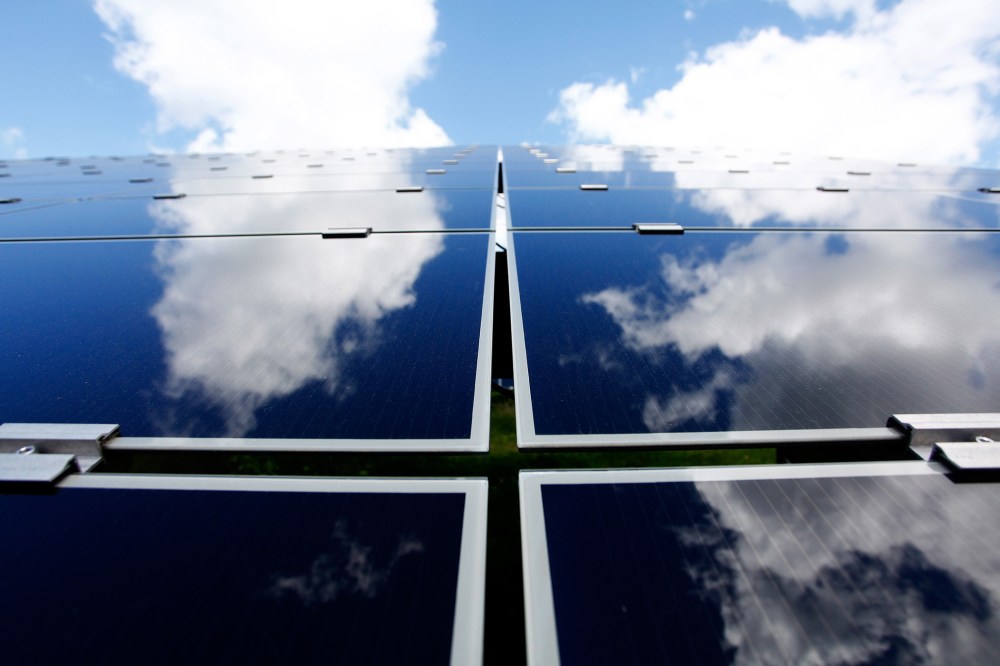
Solar power is easy to dismiss as a thing for rich white people, a status marker for the Burning Man set. But the White House attacked that stereotype on Tuesday, launching a $520 million initiative to bring the power of the sun to the multihued universe of rental properties, housing projects, and other “low income” communities.
The initiative is scheduled to be announced in Baltimore by Representative Elijah E. Cummings and Brian Deese, the Obama administration’s senior adviser for climate issues.
“We need to expand opportunities for more families to reap the benefits of using cleaner sources of energy that can also help households save money on their utility bills,” Deese told reporters on Monday.
The project, which also includes a plan to make the solar industry “the most diverse sector” in America, is stacked on top of President Obama’s other solar promises: a bid to add 75,000 workers by 2020 and a pledge to generate 20% of electricity from renewable resources by 2030.
President Obama has told the world that America will reduce its total carbon footprint by up to 28% in the near term. That’s a lie in the making without a solar revolution. The good news for Barry: that revolution is here.
Related: Solar-powered plane lands in Hawaii after flight from Japan
Scientists insist that we need to swiftly change the way we fuel our world or face irreversible warming. For decades such a change was a largely rarified option, the province of rich white guys and big corporations. Who else could afford the upfront cost of panels and installation? Who else could navigate a patchwork of local regulations? Who else even had the privilege of such concerns in the first place?
Now, however, solar is cheap and powerful. Let’s talk about cost first. The price of solar panels is down 99% in the last 40 years, and 75% in the last six years alone. And it gets better: solar is a technology, not a fuel, which means means that the price should fall even more, much as it has for phones.
Solar panels and solar batteries are so good these days that they’re capable of frying the opposition’s talking points. Solar depends on the weather, which used to make it unreliable. There wasn’t a way to store extra energy for a cloudy day.
Enter the Tesla Powerwall.
In April, Elon Musk unveiled this suite of low-cost solar batteries for homes, businesses and utilities. By storing energy from the sun—“this handy fusion reactor in the sky”—he argued that his batteries could power the night and help the world pivot away from dead dinosaur fuels.
The world seemed to agree.
A week after launch, Musk described demand for the batteries as “off the hook.” His company has since sold all the batteries it can make through the middle of next year. His other company, Solar City, the biggest and the fastest-growing installer of rooftop solar, plans to start bundling Solar panels with Tesla’s wall-mounted batteries in 2016. Related: The secret weapon in fight against climate change That could be the beginning of the end for traditional utility companies. And it points to another reason the Obama administration could use the broadest possible cross section of solar users. He needs the political support. Solar used to be considered a liberal scam, a major part of the great global warming hoax. But these days solar is also seen as something that supports consumer choice, fiscal responsibility, and energy independence. That has conservatives diehards and tea party activists swooning. But on the other side is the Koch Brothers and the right-wing American Legislative Exchange Council. They’ve tried to short circuit solar by reducing state targets for renewable energy. They’ve also tried to slap solar-toting customers with hefty connection fees, then offer them lower prices for any surplus energy the customers feed back to the system. More good news: The Koch campaign doesn’t seem to be working much. But solar sure is. “By next year, it will be the fastest-growing new source of energy in the country, approaching half of new capacity,” the author and activist Bill McKibben wrote in the New Yorker last month. The realization was enough to make the surfboard-shaped veteran of the climate movement feeling something funny inside. It was “hope.” The White House’s new solar diversity programs mean there should soon be a lot more of it.
Tony Dokoupil Recommended

