








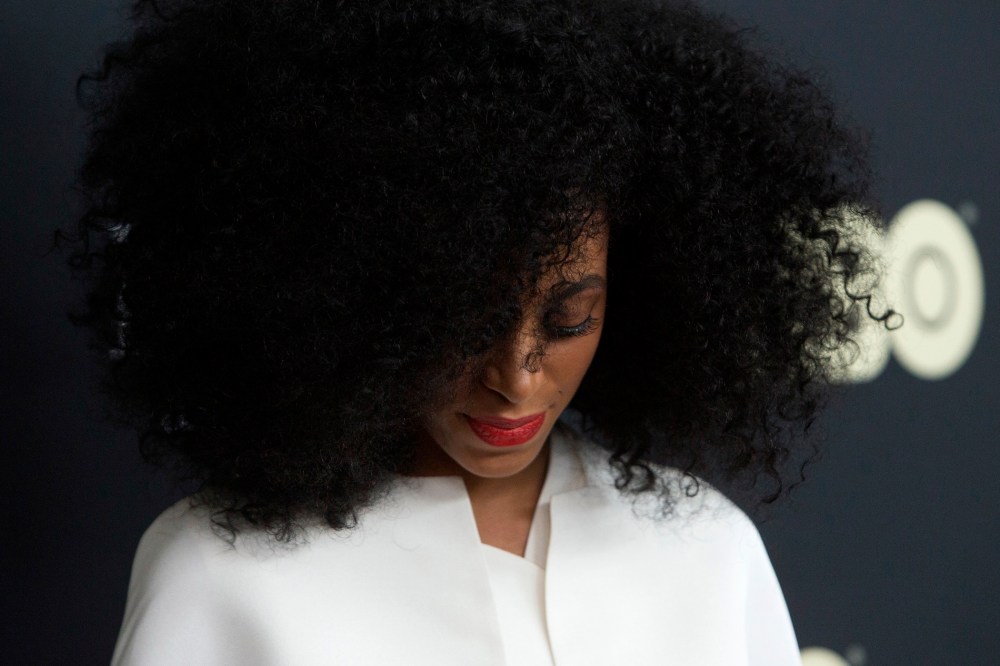
“Where can we be safe? Where can we be free?” And then, this: “Where can we be black?”
Solange Knowles, musician and sister of Beyoncé, struck a deep and dark chord hours after a white man gunned down nine worshipers who had gathered for Bible study at the historically black Emanuel AME church in Charleston, South Carolina.
Knowles’ anguish is rooted in the lived experience of racialized violence. Generations of black communities have endured this kind of brutality — through slavery, the Jim Crow era, and most recently, the deaths of unarmed black men, including Walter Scott, who was shot and killed by a North Charleston police officer just miles away from the church.
And while these incidents aren’t always fatal, they do create a palpable sense of anxiety for communities of color.
RELATED: The question hanging over Charleston: ‘Why?’
When a white police officer was caught on camera wrestling an apparently unarmed 14-year-old black girl to the ground at a pool party in McKinney, Texas, many African-Americans collectively held their breath, and some could easily see themselves in her place.
The fact that the Charleston massacre took place in a church, which has historically been an epicenter of black culture, has been especially disheartening. If a place of worship cannot be safe, where can people of color turn for solace?
“There is no more solid a foundation for the black experience in this country than the black church,” South Carolina Rep. James Clyburn said at a Thursday vigil for the victims.
Clyburn ended his remarks by condemning the shooter Dylann Storm Roof, but also those who remain quiet in the face of injustice. “I’m here today to beg you … please break your silence … Speak up! We cannot. We cannot. If we stay silent, they’ll win. They must not win,” he said.
Meanwhile, Knowles’ comment was shared with her 2.17 million followers on Twitter and eventually galvanized the digital world, touching celebrities and regular people, both white and black, struggling to make sense of what happened on Wednesday night. Actor Mark Ruffalo, The Roots’ drummer Questlove, and rapper Talib Kweli also joined the conversation, raising awareness of the disproportionate number of hate crimes perpetrated against African-Americans. RELATED: 2016 candidates, lawmakers send prayers to Charleston The hashtag #blacklivesmatter, which became a phenomenon after the acquittal of George Zimmerman in the shooting death of 17-year-old Travyon Martin in July 2013, resurfaced following the Charleston massacre as activists linked the shooting to other high-profile deaths of unarmed black men, including Scott, Michael Brown, Eric Garner and Freddie Gray. “Everyday People are losing their lives w/ the uncertainty of a Russian Roulette game,” Questlove said on Twitter. “Do any of you care? really care? #BlackLivesMatter.”
Alicia Maule Recommended


