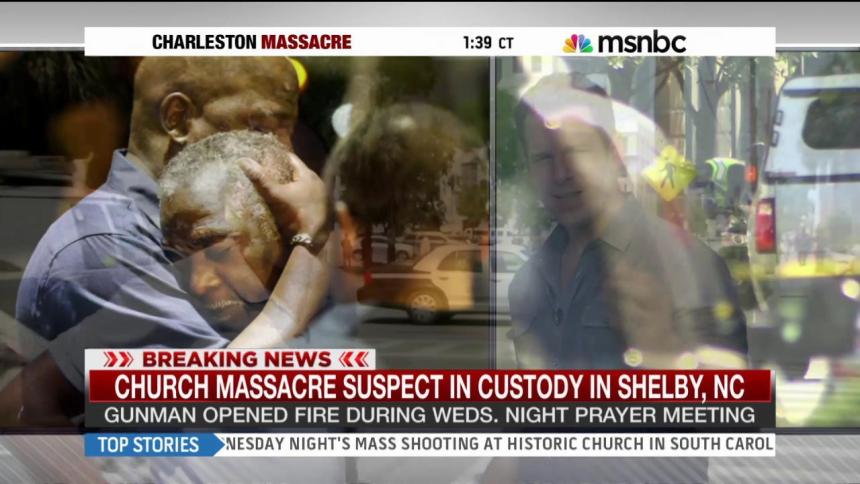
CHARLESTON, South Carolina — Roughly 14 hours after it began, the race to find the young man who authorities suspect methodically killed nine people in a historic black church ended as police arrested Dylann Storm Roof in Shelby, North Carolina. On Friday morning, the 21-year-old confessed to the horrific crime, according to authorities.
“They got him!” a truck driver exulted as he blared his horn outside the church crime scene. “They got him!”
RELATED: Who are the victims?
For some the news was cause for celebration. For many more residents, however, the arrest of the shooting’s prime suspect was only the beginning of long and difficult process as they attempted to solve a mystery gnawing at them from the earliest hours after the attack.
“Why?”
It was a question asked often in the hours after the attack outside the police boundaries set up near the church, as pastors and worshipers called out to the heavens for an answer as to why anyone would do such a thing, why it hadn’t been prevented and even why God would allow such a horrific crime in the first place.
“If we’re not safe in the church, God, you tell us where we are safe!” Pastor Thomas Ravenel, wearing a purple shirt that read ‘Empowerment Missionary Baptist Church,’ screamed into the night air as he gripped his fellow South Carolinians’ hands tight.
At a press conference announcing Roof’s capture, Charleston Mayor Joe Riley acknowledged that the arrest was only the prerequisite to a less certain battle. With it, he said, they could “begin the process of our healing together.”
In the short term, Roof’s capture offered some tangible relief. It tamped down the immediate and real fear of further faith-based attacks in Charleston – a place nicknamed “The Holy City” for its many churches.
“It could happen to anybody,” a shaken Shahid Husain, a leader in the Central Mosque of Charleston, told msnbc.
Husain was hanging around the site of the crime as a show of solidarity. Word of the shooting broke as his mosque, which often participates in interfaith events with local churches and synagogues, was packed for late night Ramadan prayers. As members offered up prayers for the dead, he recounted how his community grew consumed with the same question plaguing their Christian neighbors.
RELATED: A legacy of violence against black churches
“We have to ask why?” he said. “They were peaceful people in that church. They just wanted to communicate with God.”
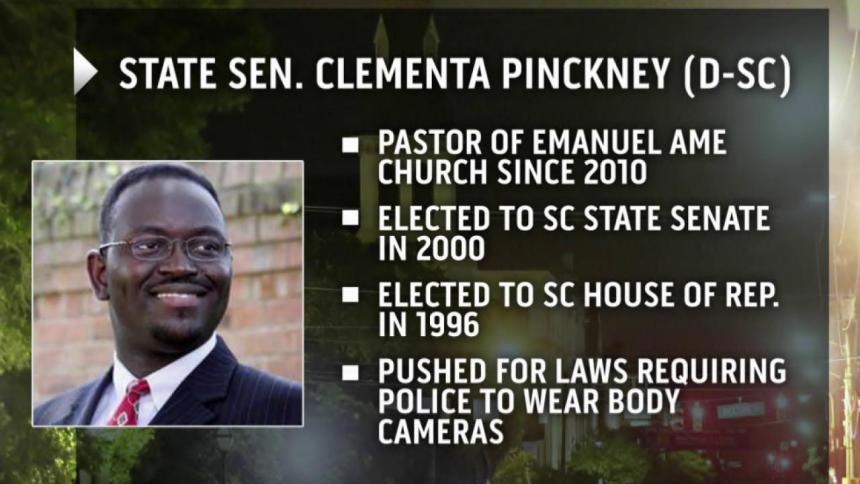
This maddening question led to grisly places for Pastor John Paul Brown, who knew Clementa Pinckney – a church pastor and state senator killed in the attack – since he was a small child and who had prayed with the victims’ families on the night of the killings.
“I hope he doesn’t commit suicide,” Brown told msnbc shortly before Roof’s capture. “He needs to be dealt with, we need answers, and people need closure. And if he was deranged we need to know, what was he doing with a gun?”
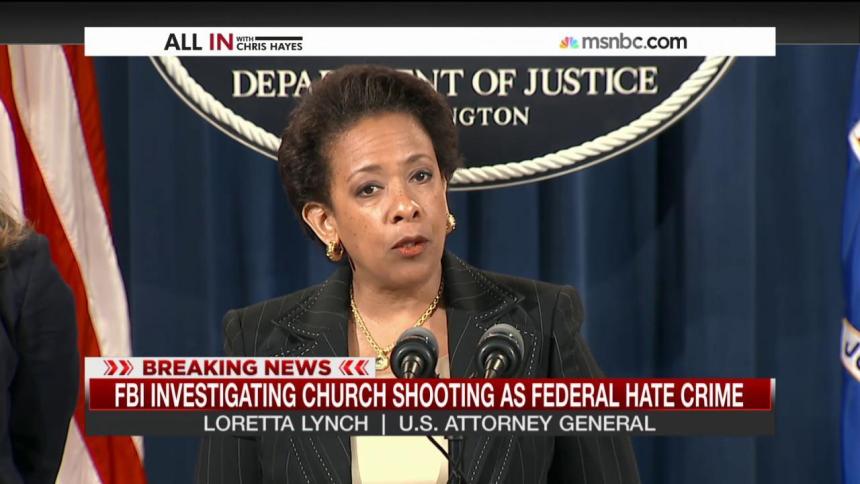
As Brown alluded to, people often had their own answers as to what went wrong. Locals were well aware this was not the first time a black church had been attacked by hate-filled white men. Some pointed to the Charleston church’s own history – it was burned down in the 1820s after whites tied its membership to a thwarted slave revolt. Many on the scene likened the shooting to the 1963 bombing of the 16th Street Baptist Church in Birmingham, Alabama, which claimed the lives of four young girls. Certainly the early details about the suspect fit the template of past racial terrorists – one woman told NBC News her cousin, a survivor of the attack, quoted the killer telling them, “You rape our women and you’re taking over our country — and you have to go.” As online sleuths scoured possible social media accounts tied to the suspect, they turned up alleged photos that included symbols invoking apartheid. Charleston Police Chief Gregory Mullen made his own views clear on the matter from his earliest statements: “We believe this is a hate crime,” he told reporters within hours of the attack. Some in the prayer circles blamed lax gun laws. Some saw a general breakdown in community. Others threw their hands up in the air and looked to others for leadership – Ravenel prayed that either Jeb Bush, who was scheduled to visit the state on Thursday (he canceled the trip) or Hillary Clinton, who visited it on Wednesday, offer up a remedy. “It doesn’t matter who,” he said. Whatever fast action they wanted wasn’t going to come from the current president, who had seen this movie enough times to know the ending. “I’ve had to make statements like this too many times,” President Obama said in an address to the nation. RELATED: Obama says America must grapple with gun violence As the president was well aware, that day wasn’t today. Congress already rejected his last push for an expansion of background checks on gun sales that, on paper at least, had broader public support than almost any policy pollsters could test. That was with the memory of a schoolhouse massacre fresh in the country’s mind and a solid re-election under his belt. “At some point, we as a country will have to reckon with the fact that this type of mass violence does not happen in other advanced countries,” Obama said. With no consensus in sight as to why those six women and three men had to die – or even on whether such answers existed at all — the only thing everyone could agree on was that, once again, the pain was well distributed across race, party, and geography. “The heart and soul of South Carolina is broken,” Gov. Nikki Haley told reporters after Roof’s arrest, choking on every word.
Benjy Sarlin Recommended