








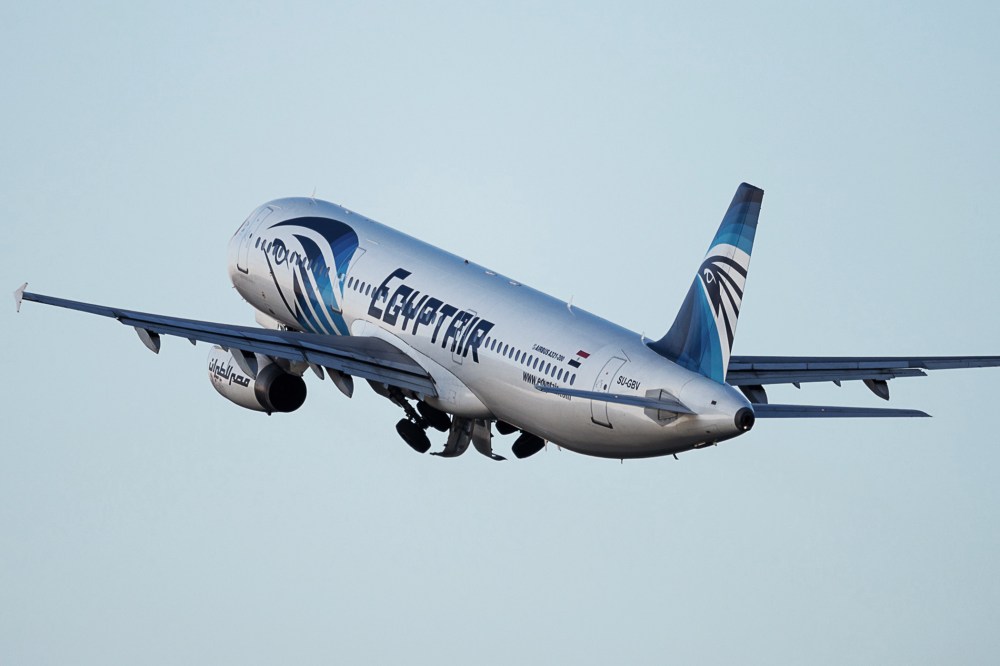
Smoke was detected aboard EgyptAir Flight MS804 before it crashed but no conclusions are being drawn about the cause, France’s air accident investigation agency said Saturday.
The plane sent automated messages indicating smoke a few minutes before it disappeared from radar into the Mediterranean Sea, BEA spokesman Sebastien Barthe told NBC News.
“This usually means a fire,” he said.
The BEA confirmed an earlier report by industry news site Aviation Herald that data transmissions from the plane revealed smoke in the front lavatory, behind the cockpit.
The ACARS (Aircraft Communications Addressing and Reporting) messages suggest the possibility of smoke or a fire in close proximity to the electronics and equipment bay of the Airbus A320, located below the floor of the cockpit.
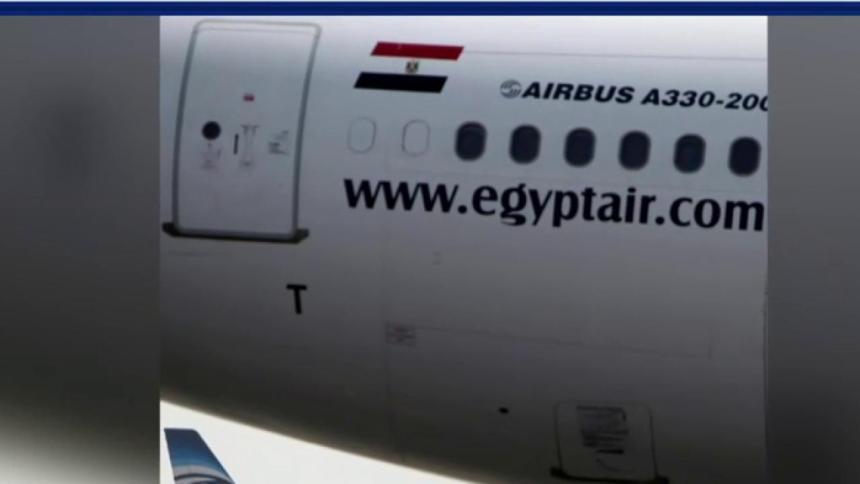
“We can confirm that these data messages are genuine, they are real,” Barthe said. “There are five or six reports of smoke from the front of the aircraft, close to the cockpit. We are not putting any interpretation on this information or what is the cause of the smoke.”
It came as military officials in Cairo released pictures of what it said was debris from crashed EgyptAir flight MS804. An uninflated life vest, parts of the airline fuselage, branded headrests and seat upholstery were visible in the images.
Barthe added that the priority for investigators was to the find jet’s flight data recorder and cockpit voice recorder – the “black boxes.”
The plane, carrying 66 people, crashed in the Mediterranean Sea Thursday. Wreckage was found Friday some 180 miles north of the Egyptian coast.
Terrorism has been cited as a possible cause — though officials have cautioned against speculation and there has been no credible claim of responsibility from any group.
Planes and vessels from Egypt and five other countries — Greece, Britain, France, the United States and Cyprus — continued searching a wide area of the eastern Mediterranean Saturday.
The waters in the area are 8,000 to 10,000 feet deep and the pings from the black boxes can be detected up to a depth of 20,000 feet.
The ACARS smoke messages could have been triggered by a false indicator such as condensation or a wiring fault.
“The messages were all from the front of the plane but we do not know if the smoke was only in this place, it depends on the location of the detectors,” Barthe said.
No mayday call was sent from the jet.
Former National Transportation Safety Board investigator Greg Feith said the fact that the smoke warning occurred so soon before the plane disappeared suggest something more catastrophic than a discarded cigarette or electrical fire.
“Electrical fires don’t burn that fast, and of course if somebody were to put a cigarette in a trash can with paper towels it definitely wouldn’t have burned that fast,” Feith said.
“It would have set off the sensor but the flight crew is trained to handle those types of fires and it would have given them time. Plus, they probably would have made a radio call,” he said.
However, David Learmount, operations and safety editor of Flight International magazine, said the pilots may have been too distracted to raise the alarm with air traffic controllers. “There may not have been an indication on the flight deck just at the time the data link was connected,” he told the BBC, adding: “When you smell smoke, the first thing you do is think ‘What’s that?’ – you don’t necessarily say anything until you’ve established what’s happening. “When the computers start to fail, you get so busy trying to work out what’s happening and what you’re going to do about it that you don’t want to talk to anybody.” He added: “Fire, for aviators and mariners, has always been the enemy you fear most.” Meanwhile, investigators are looking at anyone with access to the EgyptAir plane while it was sitting on the ground, including baggage handlers, caterers, cleaners and fuel truck workers. The plane was on the ground at four different airports in the 24 hours before the crash — in the Eritrean capital Asmara, Cairo, Tunis and Paris. Egyptian government ministers on Saturday visited the families of victims at hotels near Cairo airport, EgyptAir said in a statement. In Paris, French Foreign Minister Jean-Marc Ayrault said that he and other officials — including representatives of Paris Aeroport, the French prosecutor, EgyptAir, and the Egyptian ambassador to Paris — had met with about 100 family members to express “our profound compassion” over the crash. In a statement delivered to reporters following the meeting, he said: “All the hypotheses are being examined — none are being favored.” “In the name of France, once more, I am expressing my solidarity, but also our affection … for all those people who learned that a loved one, or even an entire family, have drowned in the sea — and who want to know, to know to be able to grieve. It’s a difficult moment, a painful moment. I wanted to say it again: We’re on their side.” This article originally appeared on NBCNews.com.
Alastair Jamieson
Tom Costello Recommended


