








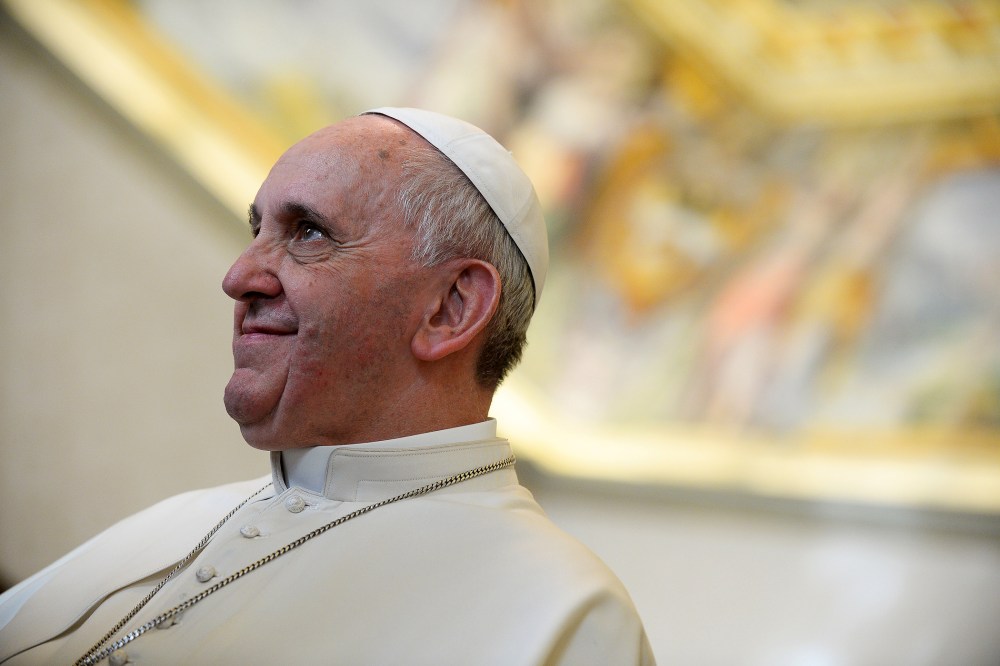
Pope Francis has expressed his desire for the Catholic Church to “look into” the reasons some states across the country have chosen to favor civil unions for gay individuals, New York’s Cardinal Timothy Dolan said Sunday.
The pope last week suggested he could be open to such unions for people in “diverse situations of cohabitation.” But, Dolan said, the pope has not disclosed his outright approval of such marriage agreements.
“He didn’t come right out and say he was for them,” Dolan, the archbishop of New York, said during an exclusive interview on NBC’s Meet the Press. “Once again in an extraordinarily sincere, open, nuanced way, he said, ‘I know that some people and some states have chosen this. We need to think about that and look into it and see the reasons that have driven them.’”
“Rather than quickly condemn them, let’s just ask the questions as to why that is appealing to certain people,” he added.
Dolan last year said the church needed to listen to all individuals — gay or straight — and not be “anti-anybody.” His comments came just months ahead of the Supreme Court’s June decision to overrule the Defense of Marriage Act, a major victory for same-sex marriage advocates. But he admitted the church’s potential allowance of civil unions would make him uncomfortable.
“If we water down that sacred meaning of marriage in any way, I worry that not only the church would suffer, I worry that culture and society would,” Dolan said, explaining his belief that the marriage between a man and woman is more than just a religious sacrament.
The number of states where gay couples can wed increased from one to 17, plus Washington, D.C., since 2004. Additionally, federal judges have struck down bans against same-sex marriage in Utah, Oklahoma, Virginia, and Texas, msnbc previously reported.
More than half — 59% — of Americans recently said they favor marriage equality, a record high measured in a poll earlier this month that indicated a more tolerant America. Comparably, a mere 38% supported gay and lesbian couples the right to wed in findings published 10 years ago.
Pope Francis succeeded Pope Benedict XVI last March as the first Jesuit pontiff. He has since promised to change the ways the Vatican conducts business and demonstrated an unprecedented willingness to soften the Catholic Church’s take on social issues. The pope broke with his predecessors in September when he said the church “cannot insist only on issues related to abortion, gay marriage, and the use of contraceptives.” Christians around the world typically question the pope’s true meaning of such comments, which then creates the need for him to expand on his comments. “If he asks some pointed questions, if he leaves people wondering and guessing, that’s not bad. A good teacher does that,” Dolan said. Additionally in his forward-thinking ways, Pope Francis recently declared the religious institution must “accompany — not condemn” divorced people. His views helped him earn the title of TIME Magazine’s “Person of the Year” in 2013, beating top politicians and celebrities. “I think we’ve got a Pope,” Dolan said, “that says, ‘I want to ask the right questions, I want to point the people to the place where they can get the answers.’”
Michele Richinick Recommended


