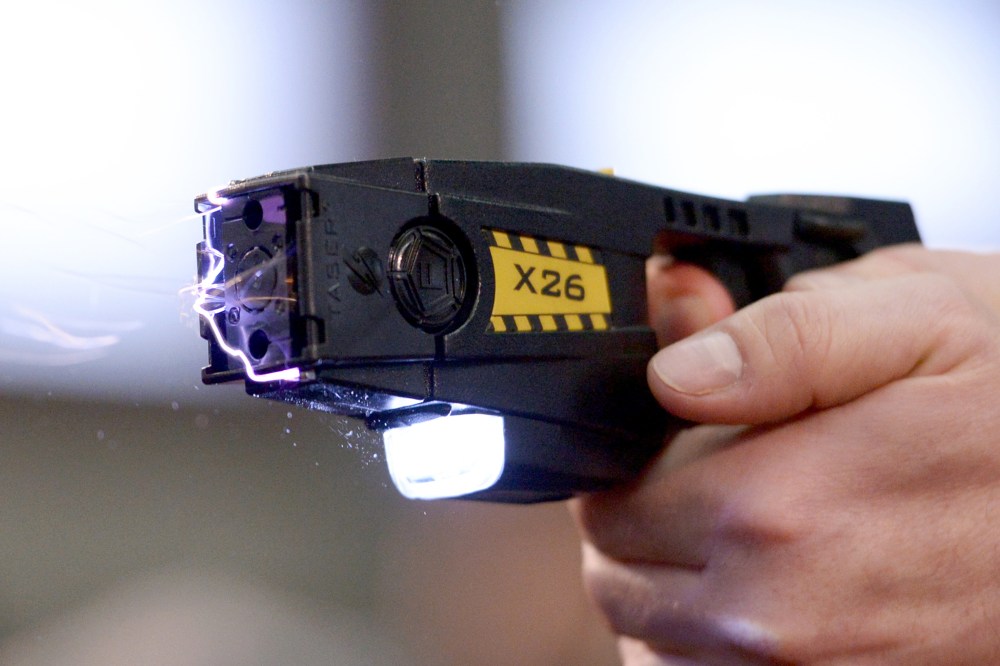
On May 4, 2013, Linwood “Ray” Lambert was tasered and died in police custody. By now, we are all too familiar with the narrative: Officers fail to de-escalate, instead choosing to use a weapon on an unarmed — and in this case handcuffed — individual to “control” the situation. Because the incident was caught on video, we will hear the same outcry about bad training, poor judgment, and “lazy policing” by officers lacking empathy.
However, the key player we too often ignore in our righteous indignation? TASER International, the only company manufacturing, selling, and training officers on how to use these electric weapons in more than 18,000 departments in the United States.
RELATED: Police Taser use questioned after man’s death
Founded by brothers Rick and Tom Smith, TASER International cornered the market by making the first TASERs that could incapacitate a person’s neuromuscular system, gaining control of a suspect’s body rather than relying on pain compliance. Most officers were trained based on TASER International’s initial assertions that the weapons were not capable of causing death.
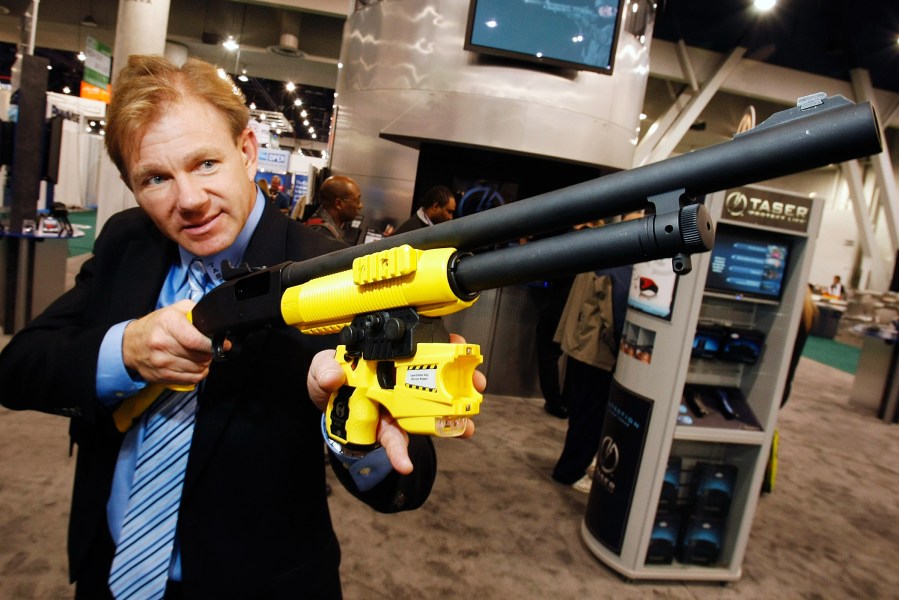
We should skip over the obvious part: TASERs can and do kill people. It is not a question of if, but how often, they kill people. My film, “Killing Them Safely,” goes much deeper into the company’s controversial history as we watch the Smith brothers and Steve Tuttle, vice president of communications, devolve from altruistic entrepreneurs into men resetting their moral standard in order to justify the decisions that made them all multi-millionaires. The film essentially becomes a study in how victors write history. (For other great background on TASERs and the company, read this recent story from The Guardian.)
The best data available suggests that officers will use a weapon (baton, pepper spray, TASER, gun) in just 2% of arrests. The problem with TASERs is that they have always been very expensive, especially when compared to other standard police equipment — the new models run as high as $1,300 each. The Smith brothers knew that in order for departments to justify arming the majority of their officers with such pricey weaponry, they would have to revolutionize how police officers did their jobs. De-escalation, from TASER International’s point of view, was bad for business. Instead, they would have to convince officers that the best way to end any confrontation was to do it quickly, and that the TASER was by far the best option for immediate and effective control.
From the beginning, TASER International has controlled the training by paying officers to become “master instructors,” who then go on to train the average street cop. (The company has a separate history of paying high ranking police officials, such as former NYPD Commissioner Bernie Kerik, to champion its products.) With such singular control over the message, officers did exactly what the Smith brothers hoped. By 2004, after less than five years on the market, research showed TASERs were being used by more than every other police weapon combined.
RELATED: Film explores dirty truths about Taser
The marketing was brilliant: The public would believe that TASERs were an “alternative to deadly force” only to be used in high-risk situations, while the police would believe they were a panacea. Of course, TASERs are still far and away the most popular weapon among law enforcement officers. However, they are clearly not without controversy.
While it seems clear that officer injuries are likely to go down in departments that use TASERs, evidence over the past decade suggests the weapons do not reduce deadly force. Research shows TASERs can even cause more injuries to suspects and dramatically increase a department’s number of in-custody deaths. Despite the evidence suggesting TASERs need to be used judiciously, officers faith in the save-all nature of the weapons has lead to what some criminologists call “lazy cop syndrome.”
It all makes sense when you think about what a TASER actually does, and how effectively it does it. TASERs allow officers to stand at a distance and control another human being, and that ability to play God can be so empowering it chips away at the empathy officers need to do their jobs. My film has a lot to say about our societal inclination to believe in the promise of technology before truly considering the dangerous hypotheticals. Certainly law enforcement bears some responsibility; there are some officers who have willfully abused these weapons. Despite the company’s effective rhetoric and sharp marketing, departments should have been, and need to be going forward, more skeptical. Unfortunately, some of the officers who do act in good faith are learning the consequences of their department’s naiveté through litigation. Public records show that roughly $100 million in liability damages has been paid to victims as a result of TASER injuries or death — and not all the data has been collected. While TASER International has paid some of those damages, the company’s willingness to surreptitiously change the fine print in its training material without truly warning its customers has effectively put a target on the backs of police departments. As informed citizens, we have to acknowledge that TASER International’s business model relies on officers using force, so a growing divide between the police and the community is good for the company’s bottom line. (TASER International is now also the market leader in body cameras, which, despite not being a weapon, has its own set of problems.) Unless we all start holding TASER International more accountable for the message it delivers to officers, lives that should never be in jeopardy will continue to be put at risk. Tuttle says it best in the film: “The controversies, as painful as they are, they make you grow. And, right now, this is only making us stronger.” Nick Berardini is a 2009 graduate of the University of Missouri’s School of Journalism. “Killing Them Safely” is his directorial debut.
Nick Berardini Recommended