








When the federal government begins implementing President Barack Obama’s immigration actions — which could take effect as soon as February of next year — it will build on some hard lessons learned from the last time around.
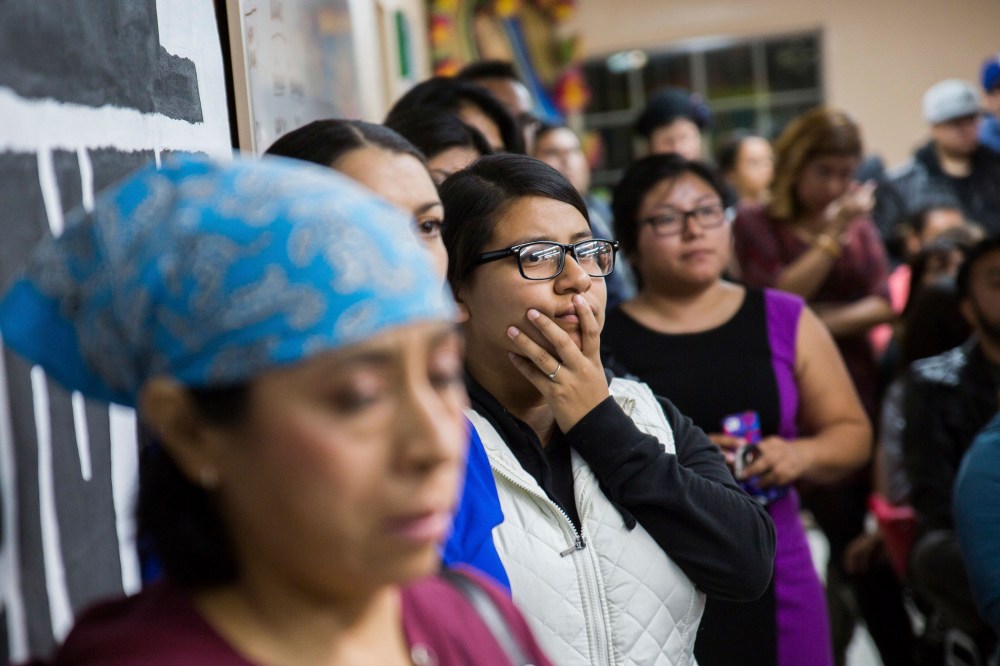
After Obama unveiled the 2012 deferred action program, hundreds of thousands of DREAMers — immigrants brought to the U.S. as young children — were able for the first time to apply for temporary work permits and live lawfully in the states. Lines of potential applicants flooded the offices of advocacy groups located in densely populated immigrant communities. School districts were bombarded with requests for records proving that applicants kept up with their studies and were eligible for deferred action. Volunteers struggled to maximize exposure by hosting seminars on how to apply and avoid falling victim to immigration lawyer scams.
Since then, more than 580,000 DREAMers have successfully applied for the Deferred Action for Childhood Arrival (DACA) program. They are now able to work, pay taxes and go to college. But the number of total applicants pales in comparison to the estimated 5 million people who could potentially benefit from the latest round of executive measures. After learning what works — and what doesn’t — in getting DREAMers signed up for executive action during the past two years, immigration advocates say they are more prepared this time around as they brace for new programs likely to arrive in 2015.
WATCH: DREAMers in Arizona gain new, important benefit
Camille Mackler, director legal initiatives at the New York Immigration Coalition, said there were several immediate lessons learned from the DACA implementation process. While the success rate of those who applied was relatively high — just more than 3% of applications nationwide were rejected with more than 70,000 cases still pending — the Pew Research Center found that hundreds of thousands of DREAMers who potentially qualified for benefits never enrolled. Advocacy groups fear that many of those young immigrants may not even know they could seek relief from deportation. Others may be aware of the program, but unclear on the details and fearful of coming forward to apply.
“With DACA, we learned that outreach has to be a lot more focused. In New York, we don’t have one major immigrant group — we have people from all over the world,” Mackler said.
While the Latino community may be more clued-in on the details of the new executive actions, Mackler said it will likely require additional effort to target other groups that are not typically on the front lines of immigration advocacy. Certain cultures are best connected through religious leaders, she said. For others, community centers and niche radio stations serve as the best resources to spread the word.
“Not having a cookie-cutter approach is going to be the most important outreach effort,” she added.
The sheer number of people expected to benefit from new programs creates a daunting situation for the local and federal officials tasked with its implementation. The Citizenship and Immigration Services is increasing its staff in preparation, opening 1,000 new full-time jobs to process applications. The agency is setting up a new operational center in Crystal City, Virginia, to accommodate the increase. Meanwhile, New York City Mayor Bill de Blasio has created a coalition of nationwide mayors to offer a forum for swapping tips on how to smoothly implement the executive actions.
RELATED: A head-scratcher for immigration advocates
Still, there are a number of hurdles to clear before federal officials start receiving the first applicants. Some 24 states have signed onto a lawsuit challenging Obama’s immigration actions, which it claims are unlawful and place heavy burdens on the states. The fate of the executive measures is now with a federal court in Texas, where the suit is being brought before a President George W. Bush-appointed judge who has a history of critical views regarding Obama’s immigration policies. %22More%20of%20the%20concern%20is%20that%20people%20in%20the%20community%20will%20see%20this%20lawsuit%20and%20not%20want%20to%20come%20forward.%22′ Though the lawsuit has gained traction politically in nearly half the states in the country, experts say the legal side of the states’ argument is relatively thin. As White House officials and immigration advocates readily point out, President Obama is hardly the first to use the Oval Office to take executive action on immigration reform — Presidents Ronald Reagan and George H.W. Bush already beat him to the punch. With legal precedence on the president’s side, advocates say efforts to sue Obama are unlikely to succeed. Philip Wolgin, a senior immigration policy analyst with the Center for American Progress, doubts that the president’s executive actions will be unraveled before the bulk of the application process begins. “It’s incredibly unlikely that it will have any substantive impact,” Wolgin said. “More of the concern is that people in the community will see this lawsuit and not want to come forward.” For a community already distrustful of government agencies they see deporting hundreds of thousands of undocumented immigrants each year, advocates must exert twice as much effort in encouraging people to apply for the new executive actions. But according to Apolonio Morales, political director at the Coalition for Humane Immigrant Rights of Los Angeles, in the two years since DACA was first introduced, immigrant families have seen the benefits firsthand: DREAMers have seen higher wages, been able to open bank accounts and live each day without the fear of being stopped by immigration officials. “I think folks feel more comfortable coming out of the shadows and they know that it takes time,” Morales said.
Amanda Sakuma Recommended


