








Years of budget cuts and financial fraud may have hindered New York City’s ability to defend itself against Hurricane Sandy. Despite a mad rush to brace for the storm, crucial components of the city’s infrastructure—notably its hospitals and transit system—were unequipped to deal with the impact of this massive hurricane.
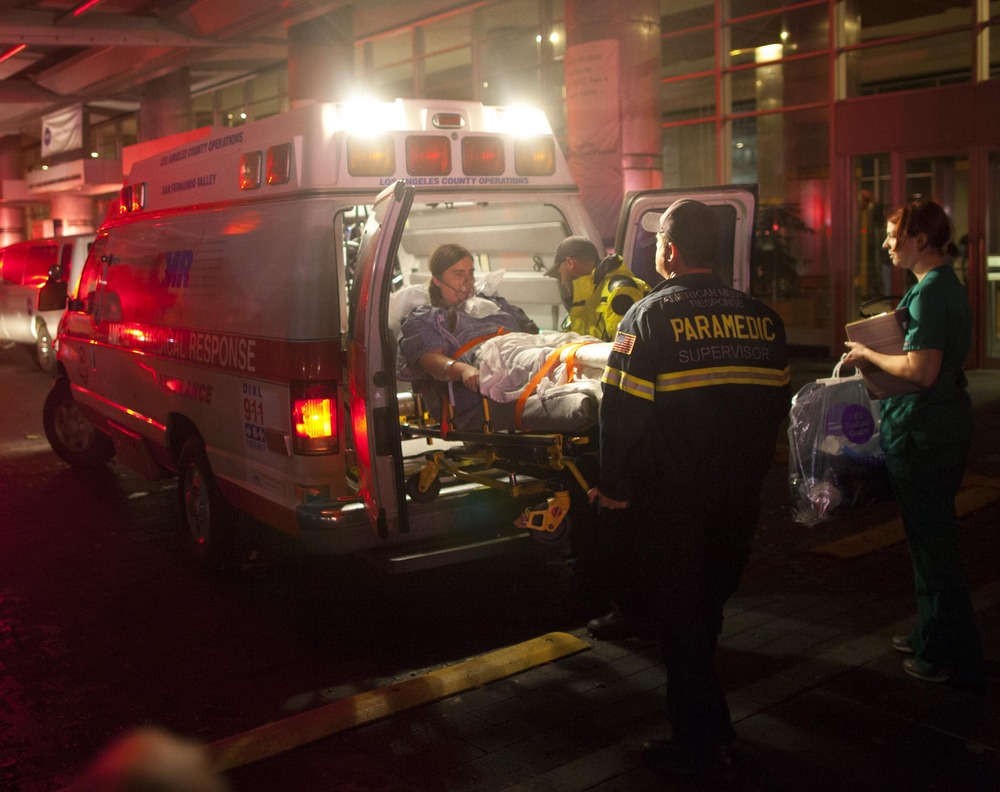
Power outages at New York University Tisch Hospital and Coney Island Hospital forced first responders to relocate their patients to other hospitals. During the storm, the Huffington Post reported that the New York Health and Hospitals Corp. (HHC) had trouble finding open beds in other hospitals.
“Will be be able to locate these beds as easy as we would like? Probably not,” HHC’s Ian Michaels told the news outlet at the time. “It’s kind of a precarious situation.”
New York City’s subway system, on the other hand, was left entirely incapacitated. It was completely shut down Sunday evening through Wednesday with limited service expected to return Thursday.
“The New York City subway system is 108 years old, but it has never faced a disaster as devastating as what we experienced last night,” Metropolitan Transit Authority Chairman Joe Lhota said in a statement.
Despite some modest flood-mitigating overhauls which the MTA has made in the last few years, the subway system was completely unprepared for a weather event of Sandy’s magnitude.
Like other municipalities around the country, New York’s city and state governments have had to cut back on spending to deal with their post-economic collapse revenue drops. According to the Center on Budget and Policy Priorities, states across the country faced serious budget shortfalls after the financial crisis because of “weak tax collection” and insufficient federal aid. In New York, the shortfall made up 18.2% of the state’s entire budget for fiscal year 2012. To help close that gap, Governor Andrew Cuomo and Mayor Michael Bloomberg have been digging deep, with Bloomberg alone proposing $1.5 billion in spending reductions at the beginning of 2012.
This sort of top-down austerity may have worsened the situation for hospital patients stuck in Hurricane Sandy’s path. After the historic New York City private hospital St. Vincent’s was forced to shut down due to massive budget shortfalls, other hospitals in the surrounding area had to pick up the slack. But the burden on city hospitals only increased in the next couple of years, as Gov. Cuomo tried to balance the budget through Medicaid cuts, which the New York Post estimated could ultimately threaten up to 10 hospitals. Since then, North General Hospital in Manhattan and Peninsula Hospital in Queens have both closed, with each closure putting more pressure on the surviving institutions.
This is the context in which New York hospital staff and first responders had to scramble to find empty beds for evacuees from NYU and Coney Island.
The New York City subway system has also suffered from serious budget problems in recent years. Though the Cuomo administration has put significant funds toward supporting subway expansion and overhaul, the MTA is still stymied by heavy financial debt. A recent report said the MTA could need up to $20 billion over the next few years “just to keep its system in good repair,” though it carries more than $30 billion in debt. It remains to be seen how much it would cost to make the subway system capable of withstanding another Sandy-level extreme weather event.
What is known, however, is that the MTA has struggled to come up with a stable funding stream without borrowing and creating more debt for itself.
“Putting all these billions of dollars on credit cards or on the backs of the riders is not funding; it’s credit,” said Noah Budnick, deputy director of the mass transit advocacy group Transportation Alternatives. He argued that the New York government was using “unhealthy amounts of debt to fix the transit system.”
“I think that we need to remember that this system is a hundred years old and is constantly rebuilt,” he said. “What’s happened in the last few days is a harsh reminder of the urgency that no corners can be cut in keeping the system in the best shape possible.” The MTA’s budget woes may have been exacerbated by financial malfeasance. A December 2011 report by United New York (where, full disclosure, I used to intern) found that the MTA “remains on the hook for nearly $1.3 billion in payments to banks” due to financial mechanisms called interest rate swaps. “Swaps were sold to public officials as a way to lower the costs of borrowing by, in essence, converting variable interest rates on municipal bonds into fixed interest rates,” reads the report. But the federal government “aggressively drove down” the variable interest rate in response to the financial crisis, and suddenly agencies like the MTA found that their fixed interest rates were much higher than the variable ones they had traded to the banks. To make matters worse, those variable interest rates are often linked to the LIBOR rate, or London Interbank Offered Rate—the rate at which the biggest banks in London loan money to each other. In recent years, as many as 20 of those banks have been investigated regarding allegations that bankers conspired to keep LIBOR artificially low. There’s no telling how many millions illegal LIBOR manipulation has cost the MTA. Some of the transit authority’s biggest creditors—including UBS and JPMorgan Chase—are being investigated in connection with the LIBOR scandal. Neither the budget pressures caused by fraud and austerity nor the threat of rising tides and future extreme weather events are likely to go away any time soon. According to an August 2011 report issued by Thomas R. Knutson of the National Oceanic and Atmospheric Administration, “There are better than even odds that anthropogenic warming over the next century will lead to an increase in the numbers of very intense hurricanes in some basins.” There could be many reasons for such a sluggish response to climate change. In July, for example, Grist.org’s David Roberts pointed to the “psychological challenges” that prevent people from feeling the need for an urgent response to climate change. But there’s another, more tangible hurdle that climate change mitigation initiatives need to clear as well: They need dollars. Billions of them, in fact.
Ned Resnikoff is an urban policy analyst, researcher, writer, and editor. His byline has appeared in a variety of publications, including the New York Times, San Francisco Chronicle, Dissent, and The Nation. He writes the newsletter Public Comment, which can be found at publiccomment.blog. Recommended


