








Women’s experiences with questions of reproductive justice in the United States have often been tied to race.
In the introduction to Dorothy Robert’s 1997 book Killing the Black Body: Race, Reproduction, and the Meaning of Liberty, she writes:
“The systematic, institutionalized denial of reproductive freedom has uniquely marked Black women’s history in America. Considering this history – from slave masters’ economic stake in bonded women’s fertility to the racist strains of early birth control policy to sterilization abuse of Black women during the 1960s and 1970s to the current campaign to inject Norplant and Depo-Provera in the arms of Black teenagers and welfare mothers – paints a powerful picture of the link between race and reproductive freedom in America.”
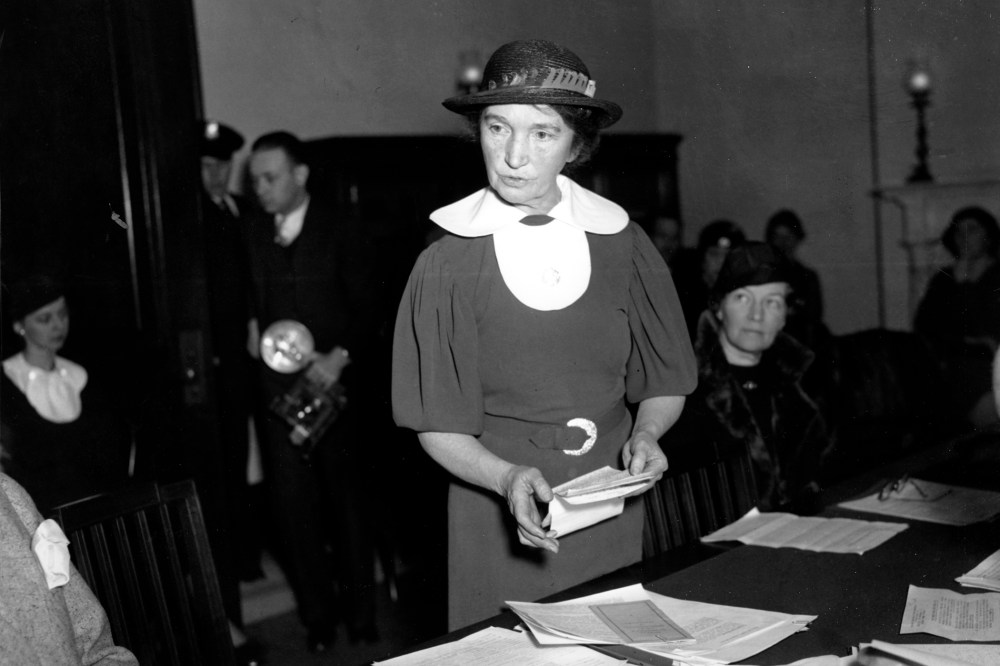
Today we are going to discuss birth control, and the woman who spent her life advocating for its universal availability: Margaret Sanger.
Sanger is credited with coining the term “birth control” and founded the American Birth Control League, a precursor to Planned Parenthood, at a time when contraceptives were still criminalized under the Comstock Act. She was instrumental in bringing about the first FDA approved oral contraceptive, Enovid.
But Sanger was also a proponent of eugenics, and saw birth control as a method of promoting that agenda.
In a 1921 article entitled “The Eugenic Value of Birth Control Propaganda” Sanger wrote:
“The eugenic and civilizational value of Birth Control is becoming apparent to the enlightened and the intelligent.
In the limited space of the present paper, I have time only to touch upon some of the fundamental convictions that form the basis of our Birth Control propaganda, and which, as I think you must agree, indicate that the campaign for Birth Control is not merely of eugenic value, but is practically identical in ideal, with the final aims of Eugenics.” Roberts writes about this tie between eugenics and the promotion of birth control in Killing the Black Body: The language of eugenics did more than legitimate birth control. It defined the purpose of birth control, shaping the meaning of reproductive freedom. Birth control became a means of controlling a population rather than a means of increasing women’s reproductive autonomy. Birth control in America was defined from the movement’s inception in terms of race and could never be properly understood apart from race again. But despite the ideology used to advance the cause of birth control, it was still a tool by which all women, regardless of race, were able to make decisions about their own reproduction. Roberts explains: It would be misleading to paint a picture of the early birth control movement as diametrically opposed to the interests of Black citizens. Contrary to the prevalent interpretation, the birth control movement was not simply “thrust upon an unwilling black population” … Blacks in disproportionate numbers enthusiastically used the few birth control clinics across the country that were available to them. Black activists played a critical role both in the national debate about birth control and in the establishment of local family-planning clinics. Their guiding concern for racial justice, however, distinguished their understanding of birth control from the dominant conception linked to eugenic thinking and practice.
Sara Kugler Recommended


