








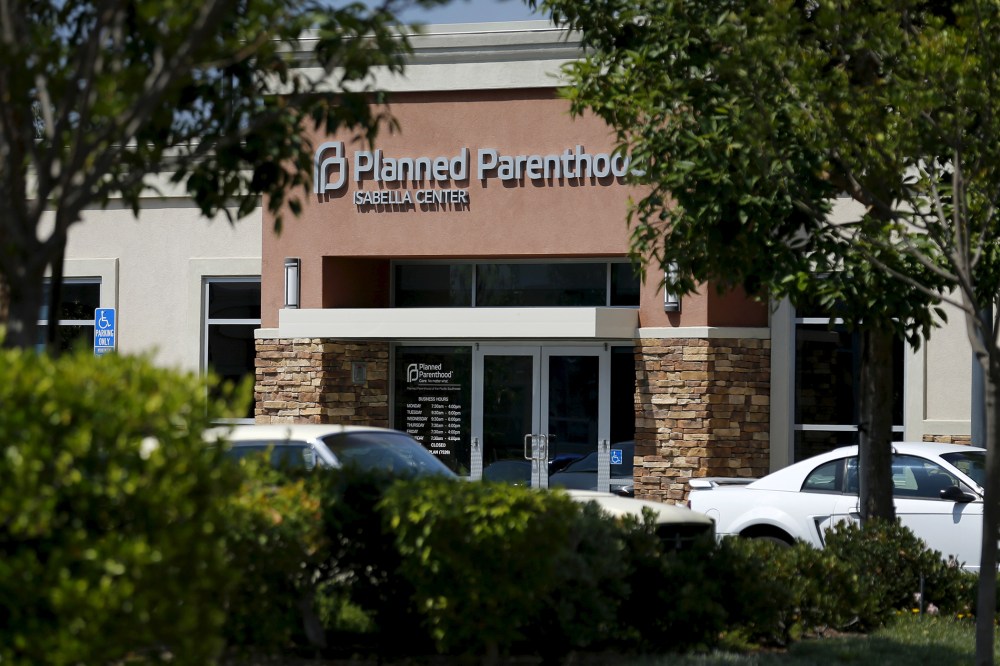
Women stopped using the most effective types of contraception and more babies were born on the government’s tab after Texas cut off funding from Planned Parenthood clinics, a team of Texas researchers said Wednesday.
The number of claims for long-acting contraception plummeted by more than a third and births paid for by Medicaid rose 27 percent, the team at the University of Texas at Austin reported.
“This change is worrisome, since increased access to long-acting, reversible contraception methods is a priority of the American College of Obstetricians and Gynecologists, and one study has indicated substantial unmet demand for long-acting, reversible contraception methods in Texas,” they wrote in their report, published in the New England Journal of Medicine.
RELATED: Grand jury indicts anti-abortion activists behind Planned Parenthood videos
“This new research shows the devastating consequences for women when politicians block access to care at Planned Parenthood. Politicians have claimed time and again that our patients can simply go to other health care providers — and tragically that’s not the case. Instead, women were left out in the cold,” Cecile Richards, president of Planned Parenthood Federation of America, said in a statement.
“Texas is fast becoming a cautionary tale for politicians in Ohio, Utah, and other states targeting care at Planned Parenthood.”
Texas lawmakers have had a long-running battle with Planned Parenthood. The mostly conservative state legislature objects to the abortions provided by the organization, which also provides general medical care to its clients.
“Texas is one of several states that have barred Planned Parenthood affiliates from providing health care services with the use of public funds,” PhD candidate Amanda Stevenson and colleagues wrote in their New England Journal of Medicine report.
Planned Parenthood clinics are set up in densely populated communities with much of the state’s population of low-income women.
The team looked at Medicaid records from 2011 to 2014, as the state fought with the federal government over whether it could exclude Planned Parenthood from Medicaid, the joint state-federal health insurance plan for people with low incomes.
“After the Planned Parenthood exclusion, there were estimated reductions in the number of claims from 1,042 to 672 (a reduction of 35.5 percent) for long-acting, reversible contraceptives and from 6,832 to 4,708 (a 31 percent reduction) for injectable contraceptives,” they wrote.
These methods are far more reliable than the use of condoms and birth control pills, experts agree.
Women who use injectable hormones must come to an office every three months to get a new injection. The team found that the number coming back fell from about 60 percent of women to less than 38 percent after Texas excluded Planned Parenthood. In counties where there were no Planned Parenthood clinics, the number of women coming back for new shots actually rose. “During this period in counties with Planned Parenthood affiliates, the rate of childbirth covered by Medicaid increased by 1.9 percentage points (a relative increase of 27 percent from baseline) within 18 months after the claim,” Stevenson and colleagues wrote. RELATED: Sanders dismisses major women’s group as ‘establishment’ “It is likely that many of these pregnancies were unintended, since the rates of childbirth among these women increased in the counties that were affected by the exclusion and decreased in the rest of the state,” they added. “Our data are observational and cannot prove causality. However, our analyses suggest that the exclusion of Planned Parenthood affiliates from the Texas Women’s Health Program had an adverse effect on low-income women in Texas by reducing the provision of highly effective methods of contraception, interrupting contraceptive continuation, and increasing the rate of childbirth covered by Medicaid.” Another study showed that similar Texas legislation aimed at restricting abortions actually led to more home abortions. This article first appeared on NBCNews.com.
Maggie Fox Recommended


