








While the NFL remains preoccupied with severe head injuries, one innovative chiropractor thinks the organization has overlooked a crucial component: the neck.
Dr. Patrick Kerr, who played as a linebacker as a youth and remains an avid football fan, believes that the league has put too much emphasis on trying to reduce violent tackles, instead of looking at how to diminish their impact. Over a decade ago, he created the “Kerr collar” to protect players’ necks, which has already found widespread success in college football. A biomechanical analysis by the Virginia Tech Center for Injury Biomechanics showed that the Kerr collar, tested against two other similar collars, greatly reduces both the force trauma to the neck (by 58 percent in at least one impact position, according to Kerr) and how far the head moves during a collision (by 38 percent). Ultimately, this could mean less damage to brain stems.
“I really believe we’re not looking at football the way we should,” Kerr told MSNBC on Tuesday. “We’re looking at trying to avoid it as a collision sport. This is a collision sport.”
He says that while he believes that the NFL is sincere in their efforts to address player safety, they may be overthinking the problem — and the issue isn’t just confined to the pro leagues.
“It’s not really about the NFL. It’s about football … football can’t sustain this,” he said.
RELATED: Ken Stabler’s posthumous CTE diagnosis overshadows Super Bowl
Kerr believes that a concerted effort must be made to better educate parents and athletes at the high school and middle school level, where a disproportionate number of cataclysmic injuries occur. Beyond the recent spike in concussions in the NFL, at least two college players were paralyzed and six high school players died due to the effects of on-the-field injuries last year alone. And more than 100 have died in the past decade, according to the University of North Carolina’s National Center for Catastrophic Sport Injury Research.
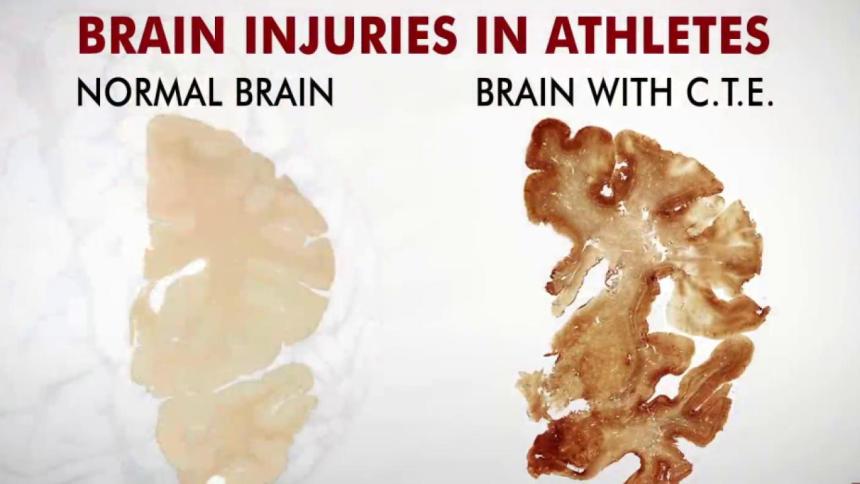
In the wake of the Will Smith film “Concussion,” the high profile posthumous diagnoses of the neurological disorder CTE in former players, and the premature retirement of NFL stars due to concerns over lingering injuries, it’s clear that the NFL, which has never been more popular, could have a crisis on its hands. Kerr believes that right now NFL owners with deep pockets, like the Dallas Cowboys’ Jerry Jones, could easily equip all of their state’s local high schools and colleges with his collars at minimal cost, but there needs to be a serious evolution in thinking. For instance, it’s mandatory across the board that football players wear a mouth-guard, why not institute better neck protection as well?
“There is a lot of very intelligent, brilliant people trying to solve this problem and there are a lot of people who are not so smart, directly related to kids,” he said. While some sports fans might dismiss pro athletes as overpaid men who have made a conscious choice to put their bodies and minds on the line, Kerr believes there should be more sympathy for young people whose bodies are still developing and who may stand no chance at a professional football career. And for those young players who do have a shot, the NFL doesn’t want to see possible future superstars pursuing careers in soccer or track instead.
According to Kerr, his collar is now in use in up to 70 percent of college football programs, and a handful of NFL players have begun using it, too. He is meeting next month with an engineering committee spearheaded by the NFL to seek funding for research to discover if it also prevents brain injuries. “The NFL could be very instrumental in making football safer. [People ask] ‘What haven’t they’? My answer is they’re going to.” The resistance he faces comes from what Kerr describes as football’s “old guard,” which looks down on equipment like his because they want to preserve an image of invincibility. In particular, he laments the fact that parents often encourage their children put themselves at risk for short term glory. “You’re asking the human body to do something it’s not designed to do,” he said. Still, despite the numerous patients he’s seen who’ve sustained serious injury through the game of football, and the proliferation of former stars who have revealed neurological damage before and after death, Kerr still remains an avid fan of the sport. As a young man, he believes the game provided him with comradeship, a healthy outlet for his aggression and life lessons that shaped who he is today. “I’ve gotten so much from football,” he said. “It made me a stronger man.” But he still believes that we must be doing more to protect kids just coming up in the game, or it won’t have a future. He added: “There is not a magic bullet here with football. But if your goal is to make football safer, this is a really good step.”
Adam Howard Recommended


