








Britain will vote on whether to leave the European Union in a national referendum on June 23 that could have profound implications for the U.S. Here’s what you need to know.
Why is this happening now?
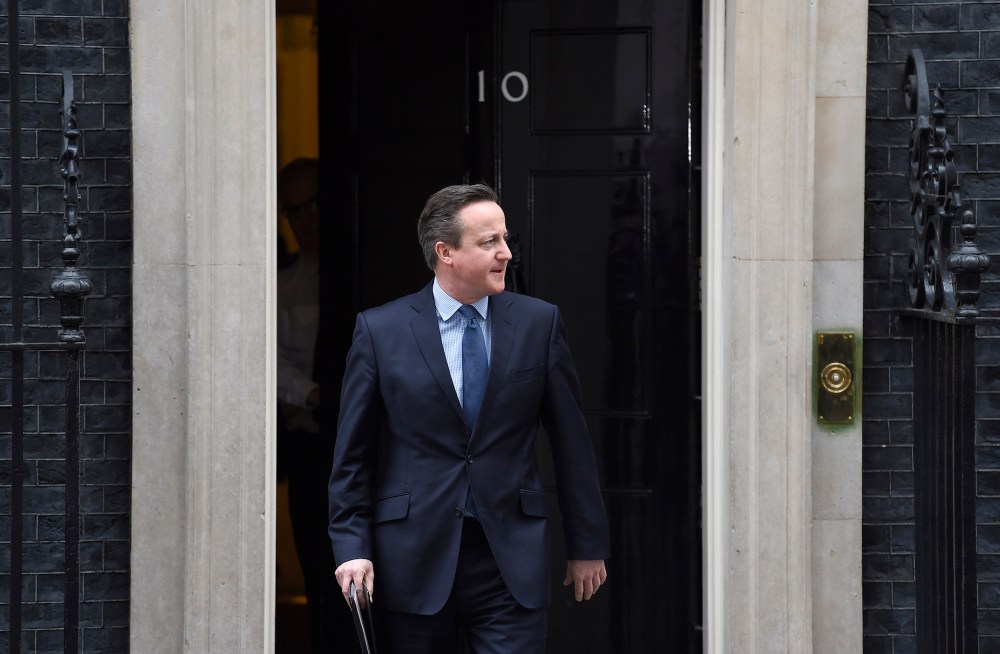
British Prime Minister David Cameron is fulfilling a promise to negotiate a better deal for his country in the European Union and to put the new terms to a national vote. It was an act of pre-election political expediency — a way to unite the two sides of his Conservative party which has been bitterly divided over the issue of Europe.
An uptick in immigration and a long period of austerity have eroded British enthusiasm for the EU.
The trading bloc is arguably the world’s first successful attempt at creating a “superstate,” or a collection of nations that have agreed to give up meaningful aspects of their sovereignty in exchange for greater collective security and economic development.
A series of treaties have given courts and politicians in Brussels the power to change national laws and bring them in line with European standards. Up to 55 percent of Britain’s laws and regulations are now set by Europe.
This forfeiture of national authority lies at the root of concern among many British voters.
What is at stake?
In short, the future of Europe and the global order. Britain is the EU’s second-largest economy, has a powerful military and exerts outsize influence in global affairs; it would be difficult to interpret “Brexit” as anything other than abandonment of the EU by one of its most important members.
Some predict a domino effect as other EU members consider their own departures, while other members fear that an EU without Britain would be economically dominated by Germany. Another structural crisis is the last thing Europe needs amid the biggest refugee crisis since World War Two, intractable economic woes and a nebulous security threat from international terrorism.
Why does it matter for the United States?
The United States advocates a strong, stable Europe. Even a smooth “Brexit” would see Washington building a new relationship with both Britain and a Britain-free remainder of the EU. However, some observers fear the rump EU could begin to unravel, weakening America’s allies and bringing instability.
Despite a weakened “special relationship” between Washington and London, Britain remains America’s primary transatlantic military ally and its role in Europe is strategically important to the U.S.
How could it affect the U.S. election?
A perceived dissolution of the European Union would reinforce the isolationist views of many conservative Americans on the right. Politicians like Donald Trumpwould likely pounce on a “Brexit” as a reinforcement of the worldview he has championed on the campaign trail — that Europe is weak and its institutions are unable to cope with the realities of the modern age, and that border controls, protectionist trade policies and a reassertion of national sovereignty are essential to deal with the chaos of the outside world.
Meanwhile, internationalists — who in American politics are generally on the left, although there are pockets on the right as well — could only view this as a discouraging development.
Isn’t Britain already separate from Europe?
Britain has long had a love-hate relationship with the E.U.. While it has supported the European bloc at key moments of its development, it has also kept the project at arm’s length in major areas and has negotiated the most opt-outs of any member state. In particular, it is a member of neither the euro currency zone — it retains the pound sterling — nor the border-free Schengen zone that allows travel without a passport.
Who are the key players?
David Cameron, the British prime minister
Cameron went to Brussels in early February to renegotiate the terms of British membership in the EU. He was largely successful in securing concessions including a cap on government welfare payments to migrants from other EU countries and a guarantee that London’s financial industry would escape tighter bloc-wide regulations.
“We will be safer, we will be stronger, and we will be better off inside the EU,” he said after reaching a deal with his counterparts — a mantra he will repeat until the referendum takes place.
Iain Duncan Smith, the U.K. Work and Pensions Secretary
A stalwart of the Conservative Party, Smith holds influence belied by his bureaucratic ministerial title. “The big issue is around control of our borders,” he told the BBC. Long a Eurosceptic, he has highlighted the EU’s open borders and the Nov. 13 terror attacks in Paris.
Boris Johnson, the mayor of London
London is the financial capital of Europe, and as mayor of the sprawling metropolis Johnson must take into account the large and influential constituency of bankers and brokers there.
RELATED: Pound drops as London Mayor Boris Johnson backs ‘Brexit’ from EU
That Boris has joined the “Out” camp is a big blow to Cameron, his friend and rival. Jeremy Corbyn, Labour Party leader Often compared to Bernie Sanders, Corbyn’s left-leaning leadership and grassroots support gives him an important influence over the vote. He supports the “Remain” campaign, saying the EU offers protection of workers’ rights. However, other left-wingers view the EU as a capitalist project whose free trade has damaged Britain’s blue-collar workers. Nigel Farage, the UK Independence Party leader UKIP was founded to campaign for Britain’s withdrawal from Europe and secured 12.6 percent of the vote in the 2015 general election (but only one member of parliament under Britain’s constituency-based first-past-the-post electoral system). Its folksy leader has become a popular spokesman for immigration-weary Britons, particularly those who fear the impact of the influx of migrant labor. The party has managed to get lawmakers elected to the European parliament, railing against Brussels bureaucracy from within the heart of the EU project. However, it remains a marginal force whose reputation as a home for far-right supporters with rabid anti-immigration views has been a double-edged sword. Who will win the referendum? Opinion is almost evenly split, but as of Feb. 23 a Financial Times poll trackerindicates support for “In” averages 46 percent against 38 percent for “Out.” With 15 percent undecided, it means both campaigns have all to play for and the result could be uncomfortably close for Cameron. Cameron has announced the referendum will take place on June 23. Voters will be asked: “Should the United Kingdom remain a member of the European Union or leave the European Union?” They will tick a box against either “Remain a member of the European Union” or “Leave the European Union.” The result will be decided by a simple majority, based on total votes. A “Brexit” will be uncharted territory as no nation state has ever left the EU — although Greenland, an overseas territory of Denmark, left in 1982. A contentious issue in the campaign will be trade deals. “Out” campaigners say Britain could easily trade with the likes of the U.S. on its own terms. However, “In” supporters say EU trade deals are more beneficial for Britain. U.S. Trade Representative Michael Froman hinted in October that the White House favored the status quo, saying there was no guarantee Washington would seek a trade deal with an independent Britain. “I think it’s absolutely clear that Britain has a greater voice at the trade table being part of the EU, being part of a larger economic entity,” he said, according to the Daily Telegraph. “We’re not particularly in the market for [free trade agreements] with individual countries. We’re building platforms that other countries can join over time.” The history of the EU There have been numerous attempts to create workable institutions that superseded national interests. The first serious attempt came in the wake of World War I. That bloody conflict reinforced the view among internationalists of the day that a binding pact among the nations of the world was necessary to maintain peace and stability. This resulted in the League of Nations, which died an unhappy death amid the rise of militant nationalist regimes in Europe and Asia in the 1930s. The next serious attempt came at the end of the most disastrous conflict in human history, the Second World War. The United Nations was founded in 1945. Despite serious flaws in its conception — it was largely designed as a vehicle for maintaining the postwar geopolitical order — it continues chugging along. The UN has evolved into a sprawling bureaucracy with a lot of “soft influence,” but no hard power. Lacking in mechanisms for enforcement should any of its five permanent security council members disagree with the others, the UN has proven unable to carry out its primary function: stopping conflicts. Enter the most recent attempt to shift power away from the nation state, the European Union. The EU has its roots in the Cold War, when Europe was dominated by the nuclear superpowers of the late 20th century, the United States and the Soviet Union. With the horrors of the Second World War still fresh in their minds, a collection of European intellectuals and politicians fought for the creation of an organization that transcended the ethno-nationalist rivalries, which had led to so much bloodshed. Mac William Bishop also contributed to this report. This article originally appeared on NBCNews.com.
Alastair Jamieson Recommended


