








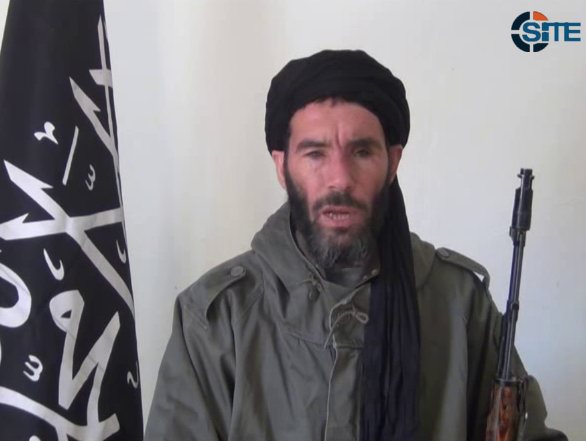
DAKAR, Senegal – After years of trying to discipline him, the leaders of al Qaeda’s North African branch sent one final letter to their most difficult employee. In page after scathing page, they described how he didn’t answer his phone when they called, failed to turn in his expense reports, ignored meetings and refused time and again to carry out orders.
Most of all, they claimed he had failed to carry out a single spectacular operation, despite the resources at his disposal.
The employee, international terrorist Moktar Belmoktar, responded the way talented employees with bruised egos have in corporations the world over: He quit and formed his own competing group.
And within months, he carried out two lethal operations that killed 101 people in all: one of the largest hostage-takings in history at the In Amenas gas plant in Algeria in January, and simultaneous bombings at a military base and a French uranium mine in Niger just last week.
The al Qaeda letter, found by The Associated Press inside a building formerly occupied by their fighters in Mali, is an intimate window into the ascent of an extremely ambitious terrorist leader, who split off from regional command because he wanted to be directly in touch with al Qaeda central.
It’s a glimpse into both the inner workings of a highly structured terrorist organization that requires its commanders to file monthly expense reports, and the internal dissent that led to his rise. And it foreshadows a terrorism landscape where charismatic jihadists can carry out attacks directly in al Qaeda’s name, regardless of whether they are under its command.
Rudolph Atallah, the former head of counterterrorism for Africa at the Pentagon and one of three experts who authenticated the 10-page letter dated Oct. 3, said it helps explain what happened in Algeria and Niger, both attacks that Belmoktar claimed credit for on jihadist forums.
“He’s sending a message directly north to his former bosses in Algeria saying, ‘I’m a jihadi. I deserve to be separate from you.’ And he’s also sending a message to al Qaeda, saying, ‘See, those bozos in the north are incompetent. You can talk to me directly.’ And in these attacks, he drew a lot of attention to himself,” says Atallah, who recently testified before Congress on Belmoktar’s tactics.
Born in northern Algeria, the 40-something Belmoktar, who is known in Pentagon circles by his initials MBM, traveled to Afghanistan at the age of 19, according to his online biography. He claims he lost an eye in battle and trained in al Qaeda’s camps, forging ties that would allow him two decades later to split off from its regional chapter.
Over the years, there have been numerous reports of Belmoktar being sidelined or expelled by al Qaeda in the Islamic Maghreb. The letter recovered in Timbuktu, one of thousands of pages of internal documents in Arabic found by the AP earlier this year, shows he stayed loyal to al Qaeda in the Islamic Maghreb, or AQIM, until last year, and traces the history of their difficult relationship.
The letter, signed by the group’s 14-member Shura Council, or governing body, describes its relationship with Belmoktar as “a bleeding wound,” and criticizes his proposal to resign and start his own group.
“Your letter … contained some amount of backbiting, name-calling and sneering,” they write. “We refrained from wading into this battle in the past out of a hope that the crooked could be straightened by the easiest and softest means. … But the wound continued to bleed, and in fact increasingly bled, until your last letter arrived, ending any hope of stanching the wound and healing it.”
They then begin enumerating their complaints against Belmoktar in 30 successive bullet points.
First and foremost, they quibble over the amount of money raised by the 2008 kidnapping of Canadian diplomat Robert Fowler, the highest-ranking United Nations official in Niger, and his colleague. Belmoktar’s men held both for four months, and in a book he later published, Fowler said he did not know if a ransom was paid.
The letter reveals al Qaeda wanted to use the kidnapping to force concessions in the U.S.-led war in Afghanistan, but the plan was stymied when Belmoktar struck his own deal for about $900,000 for both men. That’s far below the $3 million-per-hostage that European governments were normally paying, according to global intelligence unit Stratfor.
“Rather than walking alongside us in the plan we outlined, he managed the case as he liked,” they write indignantly. The complaint reflects how al Qaeda in the Islamic Maghreb, initially considered one of the group’s weaker wings, rose to prominence by bankrolling its operation with an estimated $89 million raised by kidnapping-for-ransom foreign aid workers and tourists. No less than Osama bin Laden endorsed their business model, according to documents retrieved in the terror leader’s hideout in Pakistan. The letter also confirms for the first time that payments from European governments went directly toward buying arms to carry out attacks against Western targets, as long speculated by experts. The council chides Belmoktar for not following this practice. Referring to him by his nom de guerre, Khaled Abu Abbas, the letter says: “(The chapter) gave Abu Abbas a considerable amount of money to buy military material, despite its own great need for money at the time. … Abu Abbas didn’t participate in stepping up to buy weapons. So whose performance deserves to be called poor in this case, I wonder?” The list of slights is long: He would not take their phone calls. He refused to send administrative and financial reports. He ignored a meeting in Timbuktu, calling it “useless.” He even ordered his men to refuse to meet with al Qaeda emissaries. And he aired the organization’s dirty laundry in online jihadist forums, even while refusing to communicate with the chapter via the Internet, claiming it was insecure. Sounding like managers in any company, the Shura leaders accuse Belmoktar of not being able to get along with his peers. They charge that he recently went to Libya without permission from the chapter, which had assigned the “Libya dossier” to a rival commander called Abou Zeid. And they complain that the last unit they sent Belmoktar for backup in the Sahara spent a full three years trying to contact him before giving up. “Why do the successive emirs of the region only have difficulties with you? You in particular every time? Or are all of them wrong and brother Khaled is right?” they charge. The sharpest blow in the council’s letter may have been the accusation that, despite this history of terrorism, Belmoktar and his unit had not pulled off any attack worthy of mention in the Sahara. “Any observer of the armed actions (carried out) in the Sahara will clearly notice the failure of The Masked Brigade to carry out spectacular operations, despite the region’s vast possibilities — there are plenty of mujahedeen, funding is available, weapons are widespread and strategic targets are within reach,” the letter says. “Your brigade did not achieve a single spectacular operation targeting the crusader alliance.” In December, just weeks after receiving the letter, Belmoktar declared in a recorded message that he was leaving the al Qaeda chapter to form his own group. He baptized it, “Those Who Sign in Blood.”
Rukmini Callimachi Recommended


