








So, why is it a big deal that the Pope abdicated?
Pope Benedict XVI is the first pope in seven centuries to abdicate; the previous abdication took place in 1294. Resignation notably clashes with the pope’s special, divine role in leading the Church. In 2005, when Pope John Paul’s II health was in decline, there were rumors he would consider resignation. “He is a spiritual leader and a father in the faith and fathers don’t resign,” Rev. Joseph Fessio, editor of Ignatius Press, a top U.S. Catholic publisher, said to the Associated Press. (Technically, Popes can’t resign as there is no higher power, aside from God, to accept their resignation.) Before Benedict XVI’s announcement, no more than 10 Popes were thought to have stepped down in the last 2013 years.
Wait, so what do popes actually do? (We skipped Sunday School.)
Popes are the supreme rulers of the Catholic Church. Catholics believe that, while human, popes are granted special ability to discern the true and right faith. They are deemed the “rock” of the Catholic Church—which has more than one billion followers worldwide, and 62 million members in the United States—in scripture. Pope Benedict XVI was a particularly conservative interpreter, speaking out against homosexuality, climate change, and stem cell research.
How are Popes chosen?
The selection process is called a Papal Conclave; the word conclave is derived from the Latin phrase cum clavis, which means ‘locked with the key,’ referring to the actual meeting where Cardinals are locked in the Sistine Chapel to vote on the next Pope. The meeting is absolutely a sequester. Cardinals are searched upon entry for cell phones and pagers. Telephone wires and TVs are removed from the Cardinal’s quarters and the Chapel.
Who selects the next Pope?
There are presently 118 Cardinal Electors, according to the Vatican’s statistics compiled last month. There are 92 additional Cardinals who are older than 80-years-old and therefore ineligible to vote in the Conclave. Late last year, the Pope elevated six new cardinals in response to criticism that his electors were far too Eurocentric; the new Cardinals are from Colombia, India, Lebanon, Nigeria, the Philippines, and the U.S. They will vote in the upcoming Conclave. Half of all cardinal electors are still Europeans. A full quarter of those are Italian.
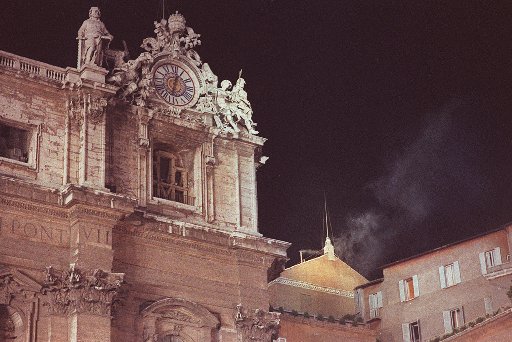
How long does it take? When will it happen? Papal conclaves last just a few days—on average, two or three days—the longest in the last 200 years was five days. Until recently a two-thirds majority plus one was the requirement to elect a new pope. After his election, Pope John Paul II reformed the process so that if there is no conclusive vote after 30 ballots, an absolute majority suffices. The paper ballots are burned after each round. Black smoke indicates the cardinals have not yet selected a successor; white smoke indicates a new pope has been elected. The Cardinals ordinarily convene on Rome 15-20 days after the death of a Pope (allowing for more than two weeks of mourning for the passed pope); it is unclear at this time whether the Papal Conclave will take place earlier due to the unusual circumstances. Who’s on the short list? Though there are no internal lists or outward campaigning, reports have placed several Cardinals at the top of the list, including Cardinal Peter Kodwo Appiah Turkson, of Ghana; Cardinals Angelo Scola, and Tarsicio Bertone, of Italy; and Cardinal Jorge Mario Bergoglio, of Argentina, at the top of the list.
Jane Timm Recommended


