The Rachel Maddow Show WEEKNIGHTS 9PM ETMorning Joe WEEKDAYS 6AM ETDeadline: White House with Nicolle Wallace Weekdays 4PM ETThe Beat with Ari Melber Weeknights 6PM ETThe Weeknight Weeknights 7PM ETAll in with Chris Hayes TUESDAY-FRIDAY 8PM ETThe Briefing with Jen Psaki TUESDAYS – FRIDAYS 9PM ETThe Last Word with Lawrence O’Donnel Weeknights 10PM ETThe 11th Hour with Stephanie Ruhle Weeknights 11PM ET
This week, Pope Benedict XVI shocked the world with his announcement that on February 28, he will become the first pontiff in nearly 600 years to step down as l
Pope Benedict’s resignation coincides with the beginning of Lent, the 40-day period of self-denial and repentence during which Catholics reflect on the life and teachings of Christ. The new pope will reportedly be in place no later than the end of Lent, on Easter Sunday. It’s fitting that the conclave of cardinals tasked with choosing the next pope will do so during this time of introspection for followers of the faith.
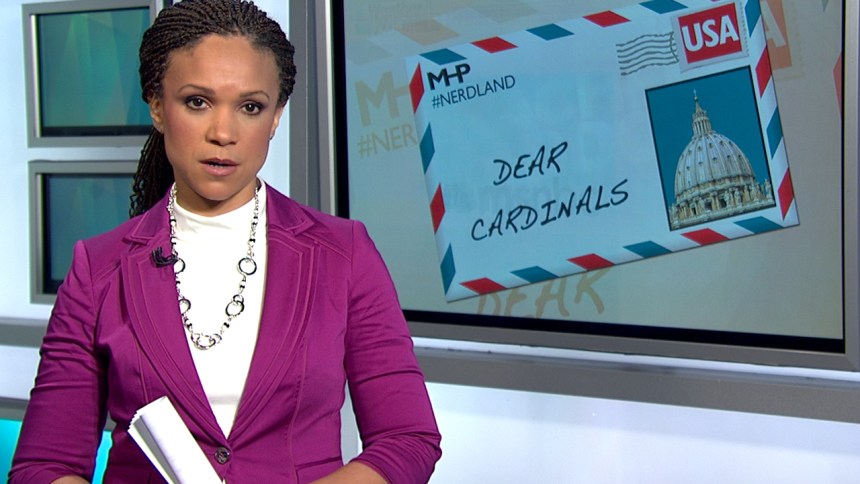
So, my letter this week is to the cardinals who will choose the next pope.
Dear cardinals,
It’s me, Melissa.
When I first began my seminary studies at Chicago’s Catholic Theological Union, I was taught by a priest from West Africa, and sat in class alongside a nun from Iraq, brothers from a fraternal order in South America, and Irish American laywomen from the Northside of Chicago. And I began to appreciate the global reach and inclusiveness of the Church.
Despite our differences, we shared a genuine engagement with Catholicism–not only as a faith, but also as an agent for social change. As you know, Catholicism’s reach extends beyond those of you who hold the reigns of power in Vatican City, and even beyond the Church’s global body of 1.2 billion believers.
As one of the world’s most enduring and influential institutions, the Catholic Church also encompasses all of those around the world who don’t identify with the Catholic faith, but have benefitted from the work of the church and the organizations it has created.
At its best the church has been an advocate for human rights and the dignity of the most marginalized of people–feeding the hungry, housing the homeless, and providing care for the sick and disabled. Here in the United States, the Catholic Church is the largest non-governmental provider of health care, human services, and education. For low-income families and students of color, Catholic schools have long been the only alternative for an affordable, quality education.
But cardinals, even as the church has been a channel for good, it is has also has been conduit for injustice around the world.
The church’s doctrinal intransigence and insistence on maintaining an image of the pope as infalliable has come at the expense of policies that recognize and address realities in the modern world. Women in underdeveloped and war-torn nations need access to contraception to address crushing poverty, overpopulation, and maternal deaths during childbirth. And yet, in many of these nations where the will of the church holds sway over policy, you in the Vatican have actively worked to undermine any attempts at expanding women’s reproductive freedom.
And nowhere have your policies been more devastating than your complicity in the crimes against children committed by the priests who were not held accountable. As you choose the next pope, you have an opportunity to set a more inclusive table for world Catholicism. A table that includes a seat for women who are called to the priesthood. A seat for those whose Catholic faith is as indelible a part of who they are as their LGBT identity. A seat for families who opt for birth control to avoid pregnancies, and those who choose an abortion to end one. And most importantly, a seat for all of the children who deserve justice and action–instead of rhetoric and cover-ups–in response to their suffering at the hands of abusive priests.
I am not here to dictate to you what Catholicism should teach its followers. Although I am not Catholic, my husband is, and our family attends mass every week. I kneel next to extraordinary men and women and in solidarity with Catholics around the world who are seeking meaning and justice.
I am asking you to make a choice that acknowledges their diverse and complicated lives and honors the best of the faith that animates their work.