








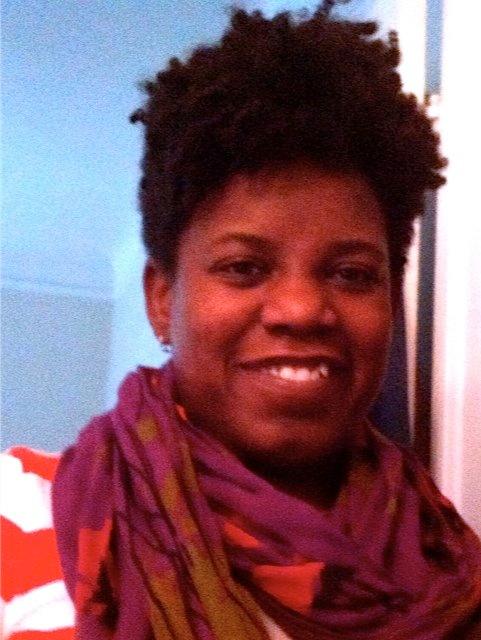
Prior to today’s Foot Soldier segment, Melissa shone light on the issue of school choice in her discussion of busing and desegregation in the Boston Public Schools. Closer to home for her, an activist named Aesha Rasheed is determined to ensure that New Orleans parents have the information they need to make the proper choice for their children.
Rasheed, a former education reporter with the New Orleans Times-Picayune, left the paper in 2005 to pursue advocacy — and continues pursuing that today through the organization she later founded, the New Orleans Parent Organizing Network, which publishes a parents’ guide for the city’s increasing crop of charter schools.
Rasheed had a lot to say about this issue when we spoke. Below is the first half of our conversation, and Melissa’s segment from today’s show.
LR: Tell me a little bit about what was going on before Katrina and how you got involved in this.
AR: Before Katrina I was an education reporter and I covered the Orleans Parish School system and the state board of education, and this is at a time when the state was sort of beginning to implement the accountability system including the high stakes test for kids. Part of the back story is that public schools in New Orleans were definitely in a decline. There were lots of stories – anecdotal stories – [in which] kids were graduating and they don’t know how to read and write, and they aren’t prepared for the workforce. There was pushback from the business community saying that we need to have kids that are better prepared.
This is a bit of my opinion, but for a long time the city was so reliant –and still is to some degree – on a lower wage employee force so it was acceptable to be supportive of the school system not being that strong. So you could get low wage workers. But it came to this point where [I thought], “well, actually we could use people who are better prepared to attract Fortune 500 companies etc., oil bust, in all of that. So we started to see this new pressure to get kids better prepared, to better prepare our students, and crime is going up, etc… Which created this condition where we then created and implemented this pretty intense accountability system which took the anecdotal stories and put some statistics to it — so mass failure, kids not passing high stakes tests, lots of evidence that schools were not meeting the needs of kids? And then, a part of the battle was really intense financial disarray, the district had 10 superintendents come through in 10 years. Some of who stayed for a couple of years, some who were interim, and were there for months.
What I observed as a reporter is that it didn’t get any traction even on a good idea. Because we had somebody new coming in and wanting to redo everything. You know, a new superintendent would come in and say, “I want to change everything.” They put in some new educational approach, or changed the structure of a school, or moved all the leaders around, but nothing really had time to stick and evolve. Which built these layers of… maybe it was a good idea but it never went anywhere. Which left kids in the mix of that, and also layers of corruption. So there was corruption, incompetence, corruption, and like big things that happened — like the district’s accounting system and payroll system didn’t work properly, so there were times where teachers didn’t get paid or got a two-cent check instead of their payroll check. Or dead people were getting paid, or somebody’s cousin who never worked for the system was getting a check, and all these scandals. Meanwhile the FBI was investigating the corruption, and so they had setup investigations inside the school board offices to investigate. They were so probing into what everyone thought was deep corruption. My perspective was that it was probably was a mixture of that layering, where structures didn’t work and systems didn’t work, and people that were all like “look, the system is broken so I better get something.” There certainly was corruption but there was also chaos.
LR: Your interest in this at the time was as a reporter focusing on education.
AR: Right, so I [was] sitting at school board meetings and observing. I had covered schools in a suburban parish before, and had watched from the outskirts this chaos in New Orleans and thought – well why don’t they do this, or that, why don’t they implement these systems that seem to work in this other parish? I came in New Orleans and was sort of like, visit all the schools and get a good sense of what is going on there. What I saw is this huge disconnect. School board meetings were spent talking who was getting what dollars. A lot of schools were just heartbreaking, like no one was at the front office. There was one school that looked just like a prison. It was very depressing to see the conditions that teachers and kids were actually working within, and that was not the conversation happening at the school board level. No one was actually talking about those conditions and that cause me a lot of angst, and is part of why I fed. I found myself only writing about this is how bad things are, and as a journalist you think writing about how bad things are would move people to do something, but what is saw is a lot of apathy. Apathy is not the right word, because apathy implies people don’t care, but “hardened-ness.” People who were like, “it’s been f***** up for a long time; it’s going to stay f***** up, so why bother.”
And so I just got to a point where I saw this wasn’t changing anything, it’s not improving anything. The framework of coverage was really flawed, because it was a very “let’s follow the money” framework. And my thought was what does this mean for kids? I almost don’t just want to follow money around, and ignore what’s happening in classrooms. The Times-Picayune, there were lots of great people there who were about doing good journalism, but generally they were not interested in setting an agenda about quality public schools. It was not like, “well, we could cover this in a more comprehensive way” or we could do certain things that – I believe that newspapers should and do set an agenda when they fail to set an agenda they set another agenda. I think the agenda that got set was, let’s just abandon public schools because they’re f***** up. You know, like unintentionally.
This isn’t helping, I’m spinning my wheels, I’m really exhausted, and I cried a lot during those years. I would leave meetings, and I couldn’t… It was so bad and hard to see, that I would just find myself emotionally tanked. And I realized I wanted to do something else. I wanted to not just write about the political shenanigans, I wanted to actually get involved in trying to help do something better, and so I thought at the time that that was policy, and I was like, well, maybe if I went to try to work on understanding this idea that id people just knew what to do then they would do it. And so I’m going to go try to figure out how to get into policy work. And also at the same time I had always ahead a calling to be a healer, so I also was like, I really want to go to massage school. So I left and became a massage therapist and started doing some little bits of work around policy questions as a contractor. I left the paper in 2005.
And so, Katrina happened, and like most people, it shifted everything for me. I was suddenly seeing the Matrix all of a sudden. This isn’t just good people that don’t know what to do; this is structural inequity and injustice and racism. This is way bigger got connected with people who thought about organizing and were organizers or people who supported organizing. So I started learning about organizing, and started to shift my work to thinking about community change from a grassroots up place. And that’s really how the Parent’s Guide started.
LR: What got you interested in the education beat? Do you have kids in the system?
AR: No. I arrived in New Orleans as a 23 year old college graduate who the Times-Picayune hired to cover something, and they [asked], “why don’t you cover schools for a minute?” I think they were all like, “you’re a girl, you probably like children!”
So — other than my own experience going to school — I had no other wise credentials to be an education reporter… You know, I think everyone put the lowest priority on education. It’s the youngest reporters, it’s the least covered. I was like, if you say this is really important, you don’t put the youngest reporter on it, which is cutting their teeth, by themselves. There was very little support. My editor didn’t really know about the school system, I felt like I could really be writing anything. I fell off into it. I loved it. I feel like I did a really good job, and I worked really hard — but it wasn’t a choice necessarily. It wasn’t like, “would you like to cover education?” It was like, “we’ll put you on the education beat and see how that goes for you.”
And the other thing that I didn’t tell you which you might have found in reading. There was a story about a class valedictorian from a high school who didn’t graduate because she couldn’t pass the graduation exit exam.
LR: Didn’t she try about seven times or something? AR: Yeah. I wrote that story, and that was towards the end. I think that two big altering moments for me were writing that story and working with her, and feeling torn about knowing that it was an important story, but also feeling like — I had a conversation with her where I was like, you should think about whether you want to have your name in the appear about this. Because i don’t know if it will help you. She wanted her story told, but if you’re 18, I think that you’re awesome, but people are going to say, “there’s that girl who failed.” For your whole life. I [said], people’s names only appear in media for a moment if you’re a private person, it’s like birth and death. And then when something bad happens in your life. LR: Just to clarify: she was first in her class and she failed that test several times. Do you believe it was because of how the test was structured or was it that… AR: She was not prepared. LR: …even being the best in her… Did anyone else pass? AR: A lot of kids at that school failed, I think she probably had.. A: her grades were probably more of a reflection of her behavior and disposition than her actually solidly knowing what she was being taught. So I think that’s part of it. So she wasn’t prepared in math. She didn’t even know some basics. And sure, she probably has some test anxiety, and I’m sure those things played in, but completely failing the test… I think the test is a huge problem; I’m not an advocate of it. I don’t think kids bomb it if they actually know they content. They might not do as well as they would have done, but if they are actually really well prepared they might pass it, even if they should have gotten Mastery or higher if it hadn’t been so stressful. But I don’t think they’d completely fail multiple times. She was not prepared in math. One of the things I did is ask to see all of her records as part of the agreement to do the story, and her highest score in the ACT was an 11. And the ACT people were like… an 11? You show up and you get an 11. She was every lovely and smart, she was just not prepared. I asked her teachers – did you feel like you had what you needed, and they were like ‘yeah.’ Also I think it highlighted another issue. How do you tell a child that they are going to be the valedictorian when they have this record of failing a test that you know is high stakes? And get all of the way until the week before graduation before telling them actually, no. I fell like that was from the thinking about the wellness of children kind of place – a huge oversight. I’m not saying that the people in the school were evil, but it highlighted so much that was wrong. The approach [seemed to be an] “if they’re going to learn they’re going to learn, if they don’t it’s not our fault” kind of attitude. The other story that was kind of deep for me was this…shooting at John McDunna School when I was a reporter. I think that’s part of what surprised me on the business of journalism is that there was a lot of pressure to go back and keep talking to students about how they felt about their school and whether they felt it was safe, and I kind of just… No one was thinking about the fact that these are not adults. We should not be asking…I think it’s pretty thoughtless to keep going into a community and asking if they feel safe, but at least its adults, who maybe can make the decision how to talk and when to talk. But I just think that presenting the question to young people who have to go to that school was wrong. It just felt really wrong. And that whole way of covering it was so sensationalized. I don’t think the Times-Picayune was particularly evil; this is how this stuff gets covered. But I just felt like it lacked in sensitivity to this kids. And I will say that it was different when I was covering St. Tammany public schools. LR: What public schools? AR: In St. Tammany, where it’s mostly white. I think it would have been different because no one in the newsroom was like ‘my kid goes to John Mac. These are “other” kids, and so we don’t even think of them as kids. That really bothered me, and quite frankly I didn’t go. I just like drove to a coffee shop. I couldn’t ask kids to keep talking about something really traumatic that happened in their school. And also there were lots of other things like loopholes, like the fact that the school was organized in a way that kids could walk in with AK-47s. It was one of those moments where I was like, “oh my God, it’s bad.” Check our blog tomorrow after the show to read the second half of my interview with Ms. Rasheed. See Melissa’s Foot Soldier segment below.
Lorena Ruiz Recommended


