








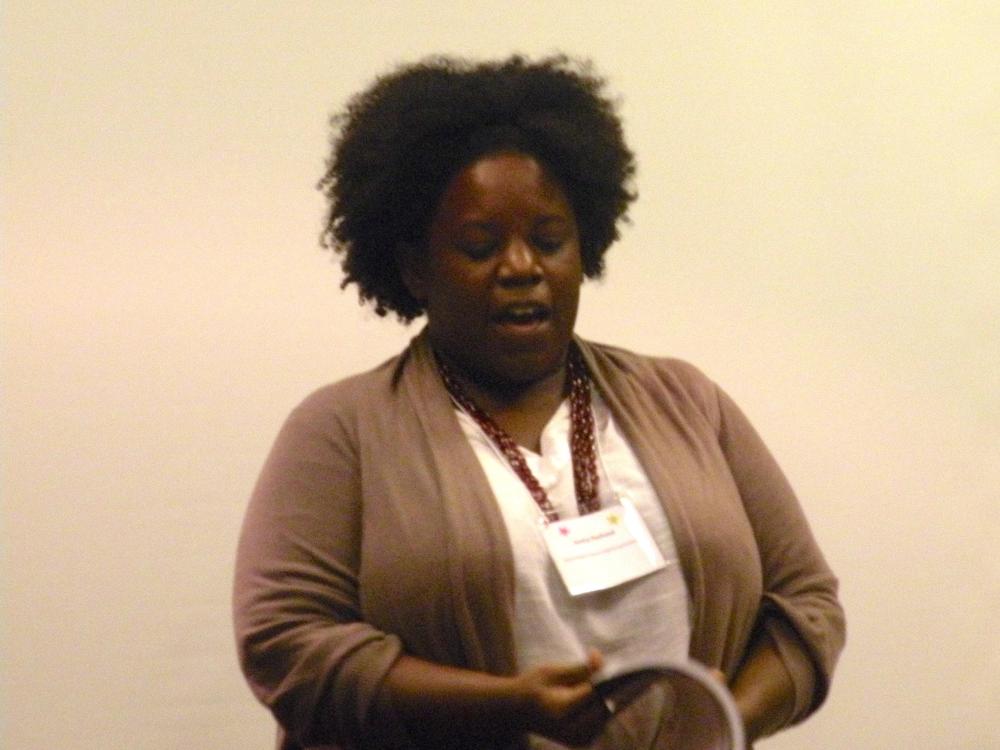
You’ll find below the second half of my interview with education activist Aesha Rasheed, whose parents’ guide has become an invaluable tool for New Orleans families caught in the maelstrom of the ever-growing crop of charter schools. I asked our Foot Soldier about the guide midway through our conversation last week.
LR: All right, so — the Parents’ Guide. Did you come up with this?
AR: After Katrina a lot of people that I knew in my social network knew that I knew a lot about schools, and so as people were trying to figure this out, the question of like what schools are open, and how do we tell people about it, people would ask me. I got to be a de facto expert on those subjects. Because they’re like – no one knows, what do you know? I was like ‘I don’t know, I heard this school is open, let me call this person..’ and then I was like, I’m just going to sit down and try to make a list. I tried to search for one. I was like ‘surely there is a list of every school that’s open, with their phone number’ but there wasn’t. There wasn’t like a single source of information. There were pieces over here and pieces over there but it was never in one place, and it was never comprehensive. And so, I [asked], “what if I tried to make a chart?” And so I made the chart.
At the time was working with other people who were trying to support organizing for this project called New Orleans Network. Our strategy was to pull together leaders and advocates around an issue, talk about an issue, and try to figure out what are the gaps that need to be filled. And so we had that convening around education.
One of the things that seemed like it was possible for me and us to do was to provide information. So that everyone agreed what we couldn’t figure out was how to get a handle on what schools were open and where. And [aren’t really needed that, so beyond advocates needed that, but also people were like no one can return as long as the information is only limited, you have to have certain information and access to get information about schools. So what would it look like if the access [were] more equalized?
So, that started me thinking about a parents’ guide. We talked about what it could look like, that group of leaders, but we couldn’t -– we being New Orleans network – didn’t have the money to make it. So we could make a resource guide, and then tell people how to print it and do it very [do-it-yourself].
Meanwhile, New School for New Orleans, which had been a huge engine for promoting lots of charter schools, creating and establishing and supporting charter schools was thinking more from a school choice place, that people needed information. So this led to interesting collaboration. New Schools for New Orleans figured out how to get the money for it, and I made it. Pulled together the districts and the schools, and went through the process of actually creating guide, and tried to find allies that could hold the accountability to the parents.
LR: What is New Schools for New Orleans?
AR: New Schools for New Orleans is a nonprofit born out of Katrina basically to catalyze and support the huge expansion of charter schools in New Orleans. Philosophically… The group of people that ended up working together to make the Parent’s guide happen had a lot of philosophical tension. We could agree that parents needed information, right, but I wanted it for a different reason that they wanted it but we agreed that it needed to happen. So they were kind of like we can figure out how to get money to make it happen. “If you can figure out how to make the content what it need be, and convince all for the schools to participate. Because in that first year, no one knew what it was, and I had to go literally met with every single school leader in the city to get the information.
LR: Did it continue to be funded by them, or when did you move on?
AR: It’s not so much that they directly gave the money; they raised money from like Capital One Bank and the Casey Foundation. I didn’t have those connections, but they did. That was the way that partnership worked. And as I was kind of working on the first guide I realized that there was no organized body of parents. I wanted the guide to be owned by parents.
But there wasn’t an organized body of parents in the city and there really hadn’t been any before Katrina in a formal way…As people came back, no one was really building parent voices. So I [asked], “what if we tried to do that?”
And so I started thinking about New Orleans Parent Organizing Network, which as an idea was meant to catalyze parent organizing. My thought was what if parents came together and had conversation about what they wanted to see in schools, what they thought was working and not working, and then build power to influence the decisions. It felt like everyone at least gave lip service to the idea of parents being engaged. If you say it to anybody, “so we need parent involvement?” They were like, “yes we do.”
It also occurred to me that a lot of times you could get like 20 parents together to say something, because there are almost never any parents in the room. I was intrigued with this idea. We started trying to create neighborhood-based parent groups, focusing on the most marginalized communities, the folks that were the least resourced, and attend having meetings, holding leadership development sessions, trying to meets people’s needs in various ways. The hard thing about that, people were in such crisis, and still are, but that that time people were in such crisis that it was almost all people could do…it was very support group. It was like this is how people were struggling to support their kids, and we kind of struggled to move to power building. Even if we came up with solutions, it was about figuring out, what the next step was, how to get the district to adopt it. When people are so under pressure all the time and things are happening so they are getting screwed by the medical establishment, so they can come to a meeting, but then they can’t because they’re being hospitalized or evicted.
All of that, so we never got those groups to take off. People would come for the information and support but we weren’t able to get past that. I think it was partly the condition, but also I don’t come out of an organizing history. I wasn’t a labor organization or something, so I struggled to figure out how to move people to through their struggle. We tried for a really long time; we did some cool things. The parents came together and created a review system for schools –- the parent school review — that we started to roll out to 10 schools to try to get the parents from particular schools to look at their schools and thought this could be connected to the parents’ guide. This way we could get reviews of schools from the parents, we could put that alongside what the state says about the school. Which maybe reflective of actual… in New Orleans they give grades now to each school but virtually every school receives a D or an F.
LR: Right, so how do you tell them apart?
AR: Yeah, like what does that mean? A friend of mine who is a parent was saying that there are some F schools like in total chaos, and there are some F schools that are getting it done, but their kids are so far behind that they’re not going to pull out of an f for a number of years. So, how do you tell the difference between those two just by giving a letter grade, you know? Most of those schools are an F, so it becomes irrelevant. What are you supposed to do as a parent but choose an F school? So we did that, and we also got there to be a centralized enrollment system. Our parent leaders talked a lot for there to be a centralized enrollment system. We were at the table a lot early on to try to come up with some kind of system.
At first it was kind of hodgepodge, and all on paper. Now, it has gotten fancy and sophisticated, but [at first], all the schools needed to be on the same timeline. We were just asking everyone to use the same time. Because, as a parent, keeping track of which applications are due when was really mind boggling, especially when you’re coming back into a city where you still figured the schools were based on where you lived.
So we were like at least you should have one system. One rule and also a lot of people feared that the schools were not fairly selecting students.….I don’t know how true this is. But parents would say I brought my application in but I don’t know think they kept it and then we didn’t get in. There is all type of assumptions they make, they think to themselves “Did they not like me?”
LR- Yeah and they didn’t have belief that the system was functioning…
AR- Yeah so by centralizing it they had an advocacy place and they can tell people “here are the rules”. Sow when your rights are being violated, you know it. When there are a million rules it hard to say, that’s true, that’s what my kid has done and that is a part of their policy but in another school they will still be cheating. But if we set rules for everyone then it would be easier for a parent to say “I was definitely cheated here.” And then others say, “No that’s just how it works.” When you don’t get the school you want
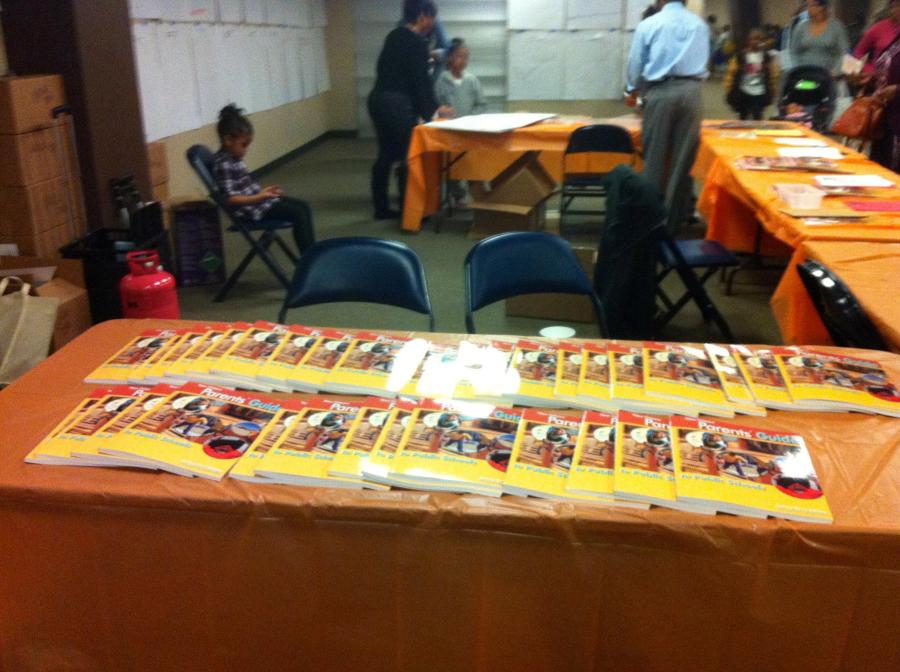
LR: So when you started with the parents’ guide, what was the distribution process? Was it always online, or was it on paper first? Did the schools participate? AR: Schools played a part in getting it distributed, But basically, it was me and my car. We printed 10,000 copies. Public libraries were the biggest source of distribution. We gave 2,000 to 4,000 to the public library branches and they put them in all of their libraries. Bring them to places where parents who don’t have access to the info and would be likely to go. We put them at schools so we can tell parents that they are available at schools but I don’t really count on schools to be the primary distributor just because the parents they have contact with heavily are the parents of the kids who are already in the school. Sometimes those parents also need that information. But we were very concerned about what about families who are trying to get into the schools and parents whose kids aren’t in school at all. So it’s always been a mix of we deliver some to school of a small number unless they ask us for more. We give about 30 to every school and ask them to keep at least one copy so that someone can go to the nearest school even if they just need to look at it. And it’s available for download online. That was never the primary thinking. I never thought that online would be the equal because a lot of people aren’t able to get to that. The access to get to it is hard. It is one thing to get online to find it but then to download that complicated document; those are more advanced that regular computer skills that not everybody has. We put it online as a pdf with the resources. It’s not a dynamic website because we don’t have a lot of money. So that is when we prioritized and thought we should just print as many as we can. That was in the first year when we did that and then we continued that philosophy so we it is primarily about the printed editions. This summer we made a smart phone app. Paid by the wireless foundation but we haven’t promoted it yet but that will come this year. We give the information we collect from schools to the online tool finder database so you can find it in a searchable manner online. But we haven’t made that a part of our mission to make that kind of website. The parents’ guide is an organizing tool for people in education or even if you aren’t you can use it as a base and outreach tool. When we went to knock on doors, we took the parents’ guide with us. And then we were able to give it to them and give them a book for more information. Then people think, “oh, this is great,” and then they want to talk to you. I didn’t think about it before but there is a lot of utility in it for different purposes. Then we can get it to more people who will use it in these ways. LR: Is it widely used in New Orleans? AR: Yes I was at the board offices yesterday at the assistant superintendent office talking to them about getting information and possibly helping provide some funding for it. And the map on the wall was the blown up map from inside the parent’s guide but she blew it up like a huge poster and put it on the wall. So definitely teachers and the school system use it all the time. People always tell me I can’t keep a copy; I have to write my name on it. So it is definitely widely used on that level. Parents found one or got one. I’ve recently had a focus group with parents but they didn’t know who I was, I didn’t introduce myself as having anything to do with the parents’ guide and it came up in almost every focus group as a way that people get information. Some people didn’t know about it so I know that we still have work to do so everyone will know that it is available to them. It is pretty widespread, a lot of people do. LR: So, the 6th edition came out earlier this year. What is on your plate now? AR: yes. I am working on the seventh edition now. It is me and the assistant editor. We are starting to gather information, work on fundraising, and figure out how to make the guide stronger every year. This year we are getting funding from the RSD and OPSB. This is good to have the school districts helping so it can be independent project with shared resources so it can be accountable to parents. Both districts have charter schools in them so the ROC is the state run called Recovery district. OPSB –- Orleans Parish School Board — is getting up to 18 new schools. They used to control most of the schools before Katrina but they were taken away. Now we are at a moment when schools are probably going to start trickling back to the local school district. We are at a tipping point where that will start happening. That is my prediction. LR: So you are getting ready for the seventh one. Do you think the app will be useful? AR: Yeah. Research show that communities that don’t have access to a lot of resources are more likely to have access to smart phones than desktops or laptops,. And people are more familiar with using them. This year we will promote it. I think it will be a value adds. We’ll see if in the future we print less. It allows for more updates. In order to get this Parents’ Guide out in a timely fashion that talks about the way decisions are made in schools in a point in time when things might change again we are always walking the line between perfect information and timeliness. You can find video for Saturday’s Foot Soldier segment spotlighting Ms. Rasheed here.
Lorena Ruiz Recommended


