








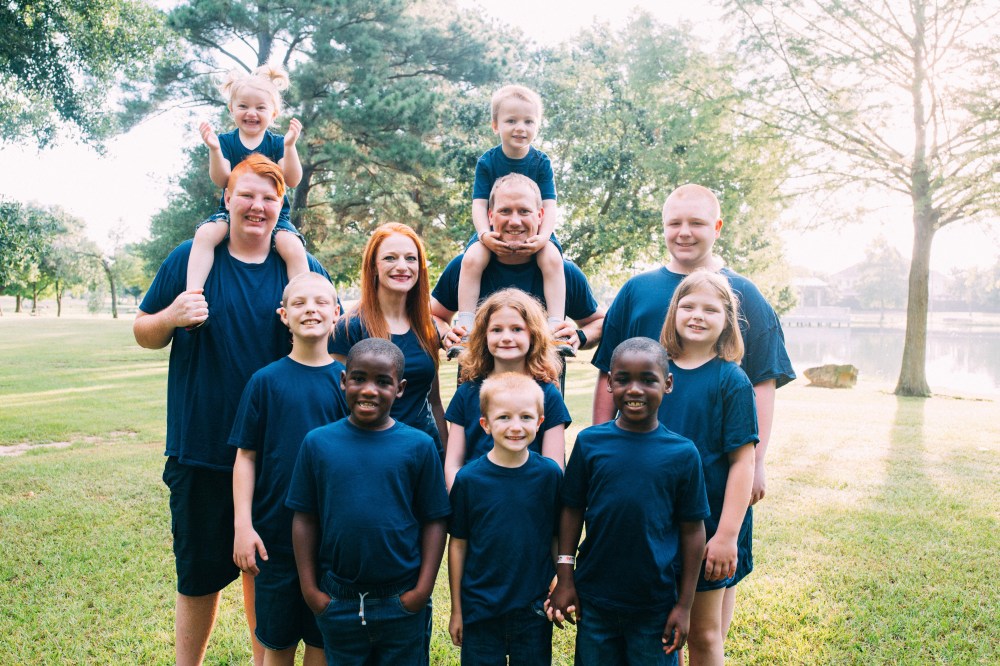
When schools closed in March 2020 at the start of the Covid-19 outbreak, Alicia Dougherty suddenly found herself at home … with all 10 of her children.
Between live classes and asynchronous work, the family’s school day often didn’t end until 9 p.m. “We had to upgrade to business WiFi,” said Dougherty, whose children range 3 to 10 years old. “It still didn’t work. The kids’ WiFi shut down several times a day.”
While her husband Josh, a teacher, taught his own high school special education students via Zoom from his home office in Pittsford, New York, Dougherty had to corral the rest of their brood, many of whom have specific educational and behavioral needs, to make sure everyone was focused and learning. “They pretty much all needed me one-on-one,” Dougherty said.
Fortunately, Dougherty, 40, happens to have a degree in special education herself. But finding the physical space and patience to give each child the attention they needed was a tall order.
Eventually, the kids with the most intense behavioral and educational needs returned to in-person school four days a week and the teenagers were in school two days a week. The change relieved some of Dougherty’s school-related multitasking, but it made the week feel like a logistical nightmare.
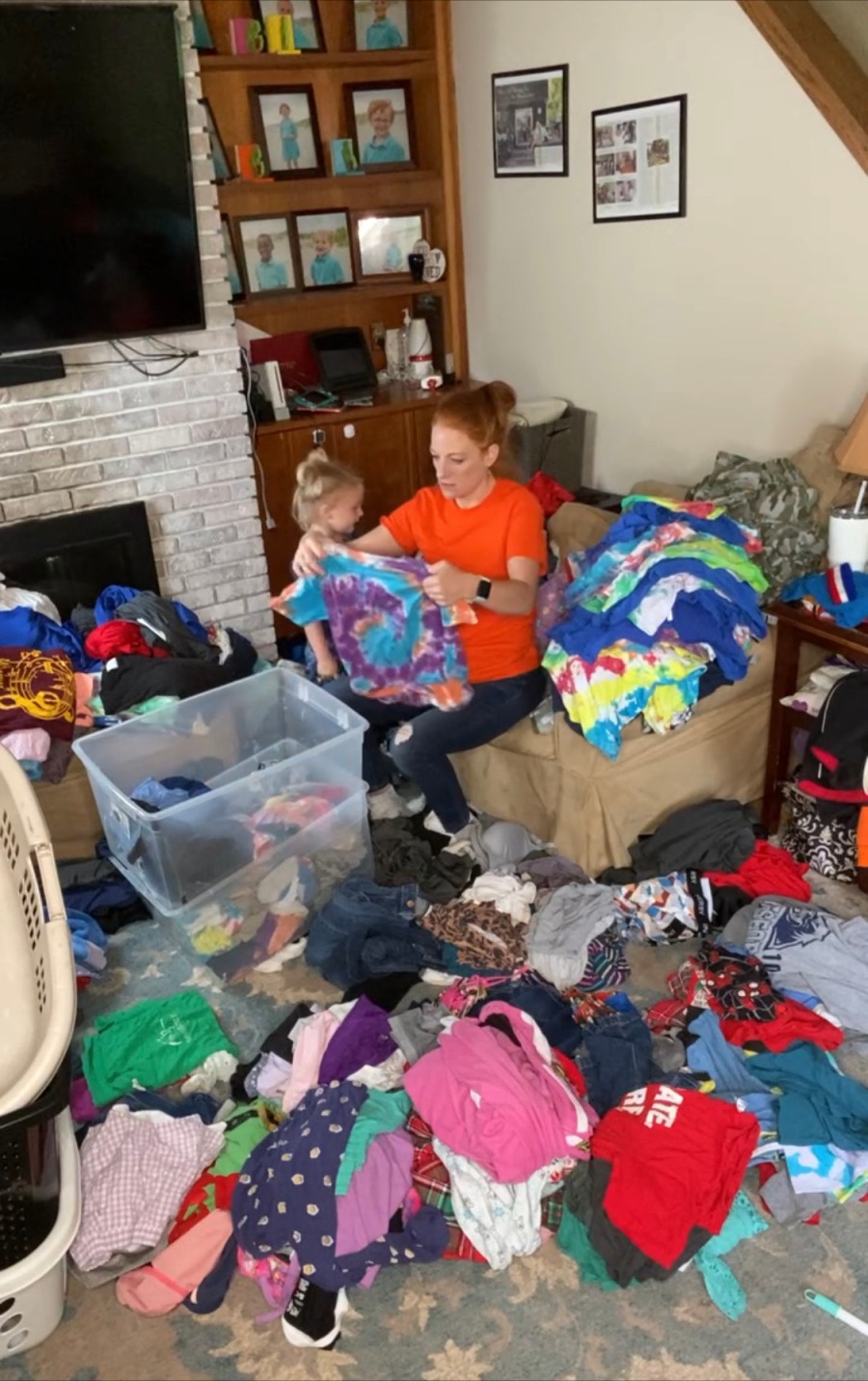
Dougherty, however, persevered. She frequently reminded her kids of one of their family mottos: “Doughertys don’t quit.”
After getting married in 2003, Josh and Alicia Dougherty experienced infertility and 11 miscarriages, leading them to the decision to adopt their first child, Alex (now 15), from foster care when he was 5 years old. Six days later, they found out they were pregnant with Zoey (now 9). The couple went on to birth three more children, and adopted five additional children, including two sets of biological siblings.
All six of the Doughertys’ adopted children have Fetal Alcohol Spectrum Disorders (FASD), a group of conditions that occur when alcohol passes from a mother to her baby through the umbilical cord. FASD can result in a mix of physical, behavioral and educational issues.
The Doughertys didn’t realize that Alex had FASD when they welcomed him into their home; he only received his diagnosis after the couple sought an explanation for Alex’s behaviors. Then, the Doughertys became “the go-to foster home” for kids with FASD. Dougherty said, “We realized we were fully equipped to advocate for the kids’ academic, educational and therapeutic needs.”
FASD is apparent in “toddler-level tantrums” and sleep disorders of the adopted Dougherty children. Dougherty said the most difficult aspect of FASD is the kids’ lack of executive functioning skills, which are the mental processes that enable people to make plans, focus attention and remember instructions, among other things.
“They don’t really problem-solve for themselves. They can’t take multi-step directions. And often, they can’t even follow through on a one-step direction. They might lose their focus because it’s not concrete enough for them. I have to literally be their executive functioner,” Dougherty said.
Know Your Value chatted with Dougherty to find out how she survived (and continues to survive) the pandemic, how the family is adjusting to a new school year…and if there’s room at home for one more Dougherty.
Going remote
Dougherty called remote school days in her Pittsford, New York home “intense.” The teenagers did their work in their bedrooms, as did her 9-year-old. The “triplets,” biological son Dash, 7, and adopted twins Jordan and Jason,6, were in the same class at school; they borrowed laptops so each child had a separate screen. Dougherty had to set them up in three different areas of the house so the sound wouldn’t echo. Bodhi—their biological 4-year-old with autism—had remote sessions for occupational therapy, speech therapy and special education. And Harlee, their youngest at 3, “just sort of hung out,” Dougherty laughed.
Dougherty didn’t have much outside help, so she didn’t have much down time. Her husband was teaching, her parents were self-quarantined and her mother-in-law had health issues. On weekends, she would clean houses to earn extra money to help support the family.
“Being a foster parent in general is hard. It’s hard,” Dougherty said. “These children have a lot of issues, a lot of trauma, and you’re helping them process it and heal from it. There’s definitely moments we’ve wanted to quit. But we push through, and we keep going. And then we use that and we turn it around for our kids. If they get frustrated with homework, we remind them that ‘Doughertys don’t quit.’ You’ve got to keep going. You can do it.”
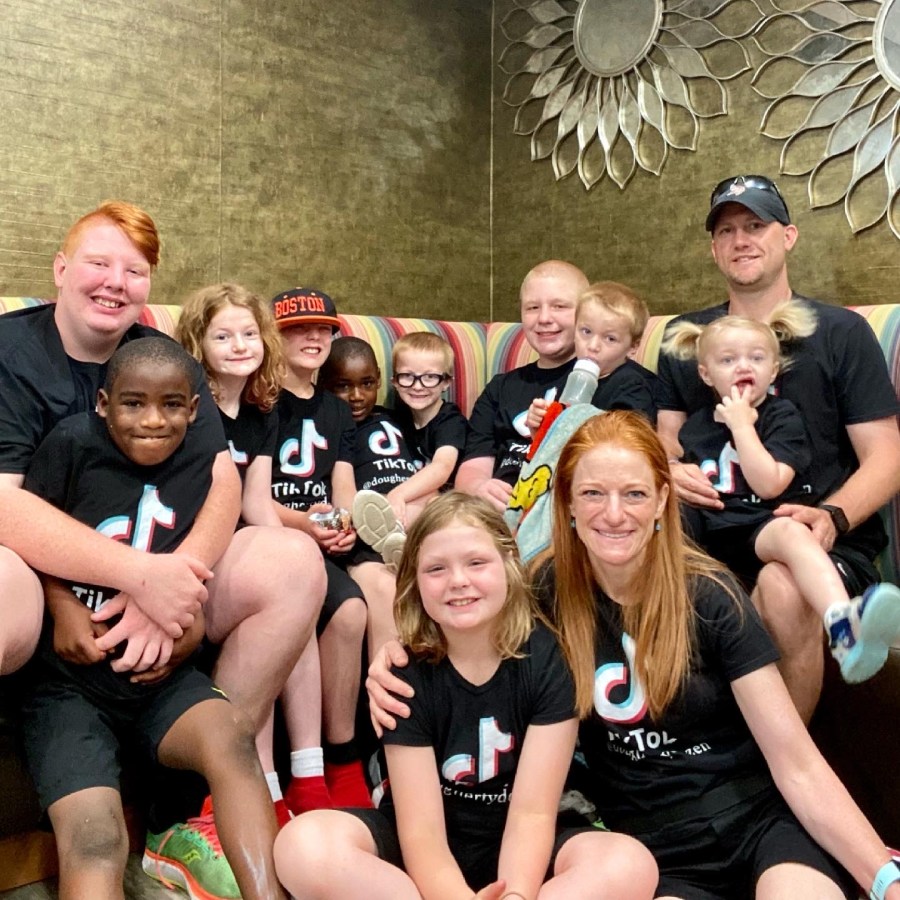
One thing the Doughertys appreciated about enduring a pandemic together was all of the family time they were able to enjoy. “We went from spending no quality time together to spending 24/7 quality time together,” Dougherty said. But in the summer of 2020, the Doughertys found that constant togetherness without structure was a little too much to handle. Dougherty said, “We were stir crazy. With 10 kids at home, we were all losing our minds.” Dougherty noticed that her kids were engrossed with TikTok. “I didn’t even know what it was called at the time,” she said. Dougherty made an account, and then one day she made a video. And she made another. “We would find a dance to learn or something funny to recreate and make us laugh. Then we started posting videos and realized they made other people laugh,” she said. Now, Dougherty and her family post a video almost every day, and their TikTok account has 1.8 million followers who watch Dougherty’s large-scale family food prep, daily routines and viral challenges. This September, the oldest nine children are at school in person while 3-year-old Harlee remains at home with Dougherty. The absence of remote school pressure has made her days less complicated, but the reintroduction to in-person school has made her days longer. On school mornings, Dougherty sets her alarm as early as 3 a.m. so she can be awake to have coffee, make breakfasts and lunches and check backpacks for homework and water bottles. The teenagers wake up at 6 a.m. and leave at 7 a.m. Then she wakes up the next group of kids to get them out the door by 8 a.m. Once winter arrives in their snowy upstate New York town, Dougherty added, the process will include hats, gloves and even snow pants. “From 6 a.m. to 8 a.m. it’s just go go go go go insanity. And then I breathe,” Dougherty said. So how does she get it all done? “I don’t go to bed until 11:30 p.m.,” Dougherty said. So I have about 20 hours in my day. You can get a lot done in 20 hours!” Josh and Alicia Dougherty have a second family motto: “There’s always room for one more.” Though Dougherty said of having biological children that “the factory is closed!” she and Josh “will always continue to foster and adopt.” And in fact, they have been approached to add one more foster child to the family. “We’re trying to figure it out,” Dougherty said. Regardless of the size or circumstances of your family, Dougherty said, “When you feel overwhelmed, just take it one day at a time. And if that’s too overwhelming, just break it down further. Take it an hour at a time, a half an hour at a time. Pick a bright spot in your day and focus on that instead. Humor and laughter can seriously get you through those crazy stressful moments.”
Rosie Colosi, TODAY
Rosie Colosi is a reporter for TODAY Parents. Recommended


Quality time
A new school year
A baker’s dozen?
