








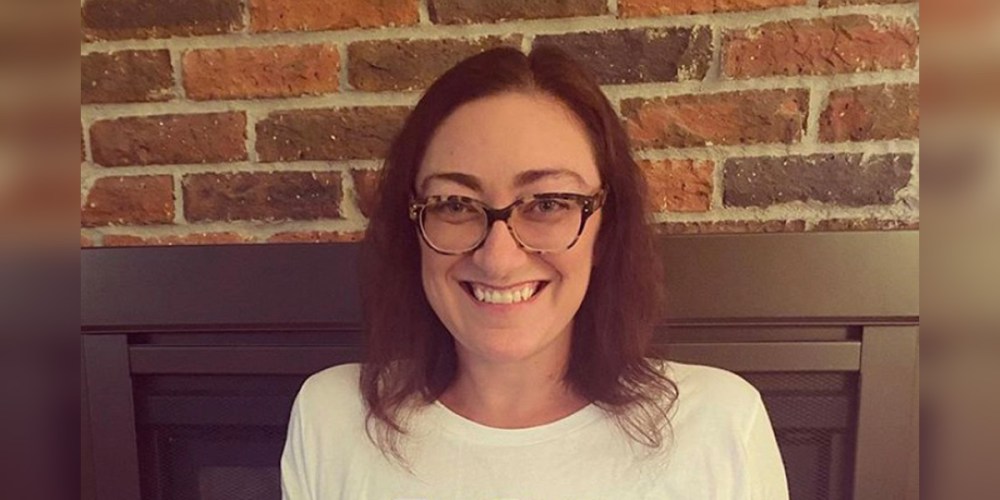
My name is Jenny, and I’m an alcoholic. I have been sober for six months.
Those sentences all by themselves are difficult to type, but my alcoholism would be a problem no matter where or when I typed those words.
Unfortunately, I typed this during a global pandemic, whose hallmark (on top of fever, coughing, breathing problems and death) is loneliness.
I knew that I could not tough out my addiction alone, so I have seen first-hand the difficulty—and joys—of seeking support for addiction in the age of lockdowns, where virtual gatherings are the only option.
In many ways, the current crisis makes it even more important and feasible for people to seek help. For a generation that lives and works online, having the option of Zoom treatment or a virtual Alcoholics Anonymous meeting can encourage more people to seek support in ways that are second nature to them. That includes me.
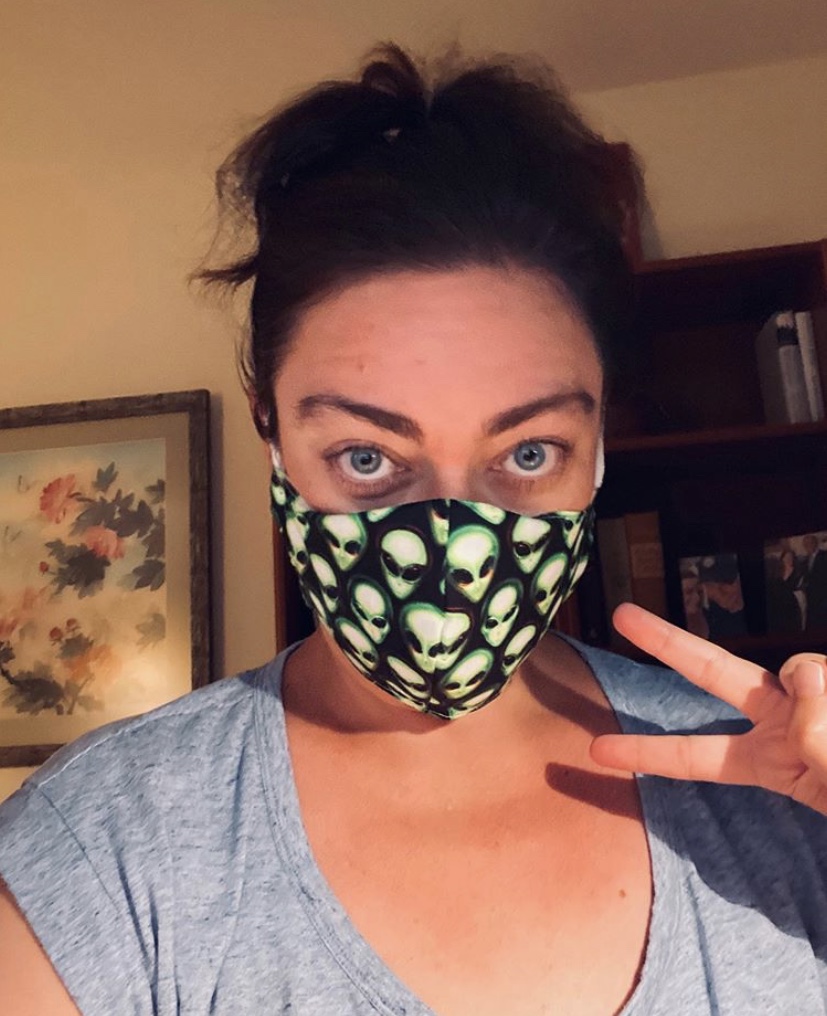
I have been in recovery since March of this year, and these six months have been disorienting, plodding, bizarre and miraculous. In December of 1979, my father walked into a rehab facility in Salina, Kansas to be treated for alcoholism. He got to have his big front door rehab entrance moment – very dramatic and flashy!
Not me. In March, I ended up in a hospital in Washington, D.C., delivered by (I’m told) kind EMTs. This was thanks to the quick thinking and huge hearts of my father and my best friend, who together insisted those first responders kick in my apartment door.
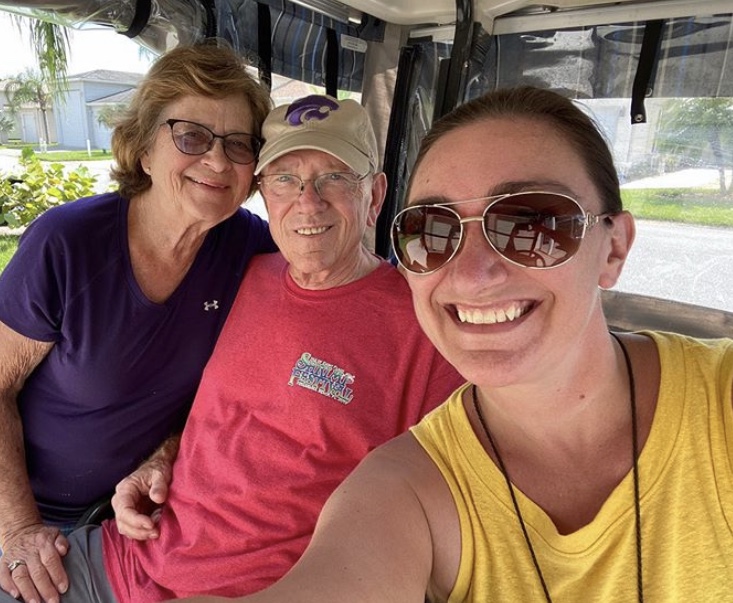
Alcoholic thinking and action feeds the hungry, dangerous cycle that spirals you downward physically and mentally. At the time, I truly believed that I needed to drink in order to survive the pain I was feeling. If I didn’t, I believed the pain could kill me. I drank my medicine to stay alive. In my case, glass after glass after glass of wine. Over the 10 to 15 years before this, my drinking steadily increased to a point where a glass or a bottle was never enough. I was drinking boxes of cheap wine, endless amounts of poison wrapped in cardboard. I thought of it as the only medicine that could shut the door on the bright, threatening, encroaching pain that was lurking outside.
The EMTs found me on the floor, semiconscious, unable to stand, and very close to death. I had pneumonia, which was bad. I also had a severe case of hepatitis, which was worse.
In recovery, you grapple with how alcohol has affected your life. This includes lost loves, forgotten aspirations, unmet goals, career missteps, the inevitable stare at your bank account and the accompanying realization that next to what you pay for rent, booze and booze-related activity is a very close second.
That’s such a horrifying revelation, and it stings so much that you contemplate taking the edge off immediately with that box of wine.
I got out just in time. My hospital stay and brush with death was a critical turning point in my life and I’m so lucky to have had it. And I know now that there is something more. I’m not just lucky to be alive. I’m lucky to be alive right now.
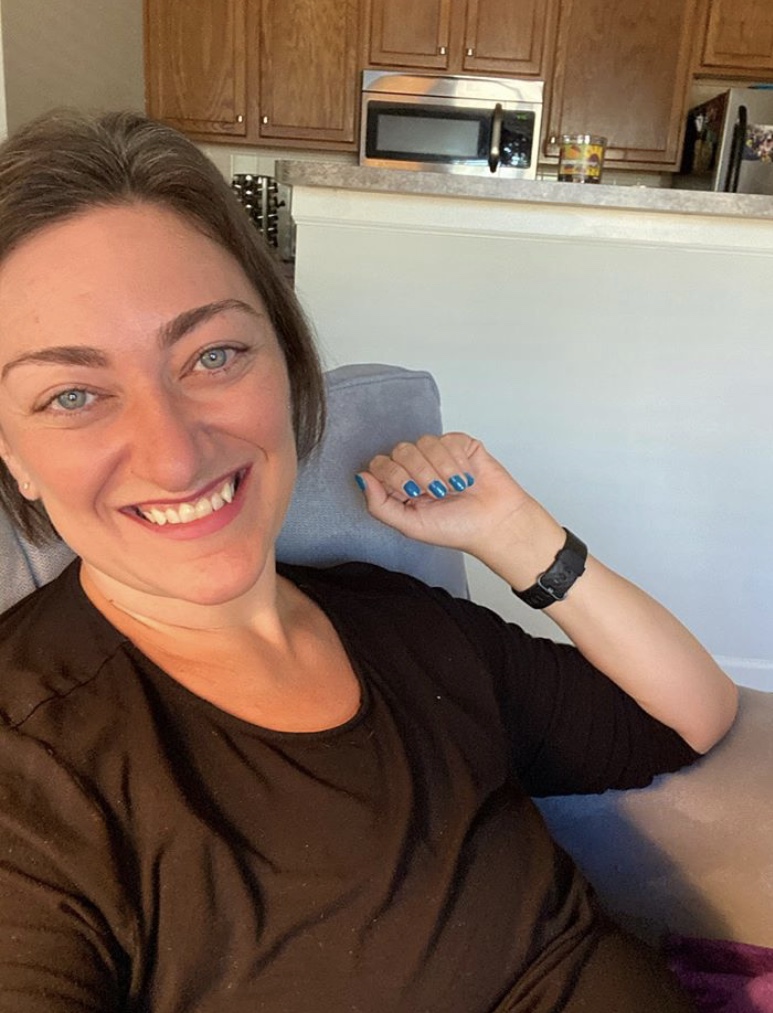
The most important revelation for me is about the right now. The time we’re in. I sometimes ask myself, “How is anyone expected ‘to be alive right now’ without drowning their experience with booze, drugs, cheese fries, unhealthy sex, sleeping, hiding or running away?”
If you traveled back in time and described any single one of our future Dystopian Greatest Hits of 2020 to me – this pandemic, tens of millions of Americans out of jobs and the pain so many of us are feeling over the many Black lives gone too soon as a result of police brutality – and then told me I would feel lucky to be alive during it? I would’ve wanted to pick up a box of wine, right away. And I would have.
But I don’t get to sit on the sidelines anymore, gripping a wine glass to feel safe from the pain I still know is there, pretending it isn’t. I have to show up. Through the process of recovery, which I will be in for a very long time, I have learned that it isn’t just about what I want. It’s about what I need. And even more importantly, it’s about what the world outside of me needs from me. If there ever were a time when our brains and hearts and bodies were needed to fight for justice, fairness, decency, and frankly our common survival, it is now. The act of grace that saved my life now fills my days with discovery and connection. I have a “home group” (essentially your go-to sober squad). I meet with them twice a week. I have even met new groups of addicts in other towns and states who love and survive together on Zoom, and join meetings with them three or four other times a week. I essentially go to a meeting everyday with a group of other “drunks” (as we affectionately call each other), in my hometown and beyond. I have a sponsor (a sober guide/friend/teacher) who I believe has already changed my life in our short time together, and am giddy with excitement to learn all she has to teach me. I’ve learned we can’t dull the pain that the world is dealing us. We are meant to feel it, with all of its sharp edges, because to feel it is to know it. Only then can we look it in the eye and tell it “no.” Only then can we face it (with a mask on). Every day now, one day at a time, I face a demon. I’ve sent quite a few packing. Some of them are old and lingering and hanging on by a thread, but I’m wearing them down. For me, finding support in the virtual world was less frightening than walking into a rehab facility or an AA meeting. I have met a hugely diverse mix of people who have helped me to see how the threads of addiction weave through communities and across state lines. Addiction does not respect your family or job or bank account or past history or future aspirations. No two addicts are alike, but so many of our demons are, and burying them with alcohol worked – until it didn’t. Without the alcohol and within a pandemic, I have my edge now. I wield it like a tool. I hold it like a talisman. It’s sharper and more precise by the day. I know that it will prove essential in the marches, struggles and good trouble to come. How lucky I am to be alive right now. Jenny Towns is an artist, educator and communications professional. She holds a B.A. in dramatic literature from The George Washington University, an M.F.A. in theater from Florida Atlantic University and is currently pursuing her M.A. in music education at Kansas State University. She lives in Manhattan, KS.
Jenny Towns
Jenny Towns is an artist, educator and communications professional who is currently pursuing her M.A. in music education at Kansas State University. She holds a B.A. in dramatic literature from The George Washington University and an M.F.A. in theater from Florida Atlantic University. Recommended


