








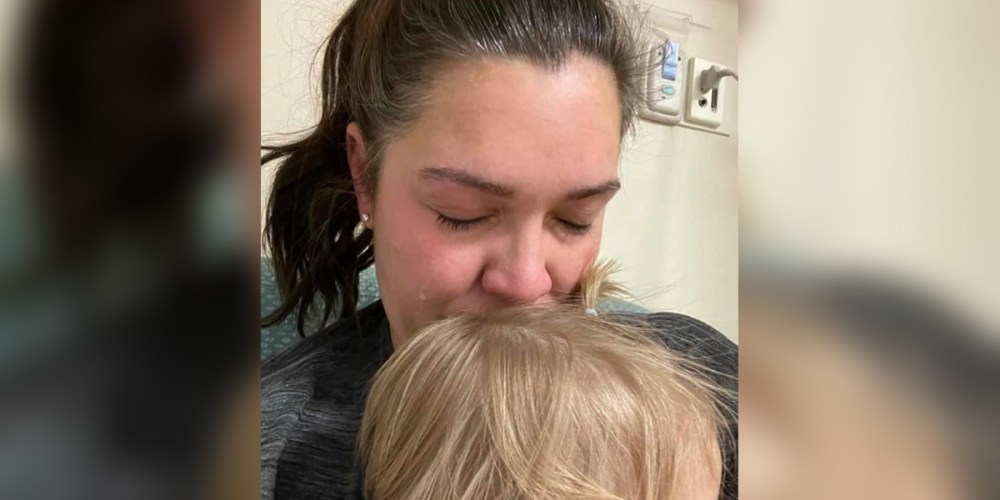
Christmastime will forever be a difficult season for Trista Hamsmith. Last December, one week before Christmas Eve, her 18-month-old daughter Reese died after accidentally swallowing a button battery.
So this Christmas, as toys and lighted decorations fill homes all over the world, Hamsmith has a plea for parents everywhere.
“The most important thing to me is for no other child to go through what Reese went through, and for no other family to live through what we are living through,” Hamsmith told Know Your Value.
“We parents are the first and only line of defense for our children,” she added. “I want people to be aware of what’s in their homes, to know the signs [of button battery ingestion] — and to realize that if you suspect anything, do not waste a second in getting your child to the ER.”
It was only after Reese’s death that Hamsmith learned that button batteries may be found in several items in the home — Poison Control mentions toys, remotes, flashing jewelry, singing greeting cards and more — and that ingestion is often misdiagnosed.
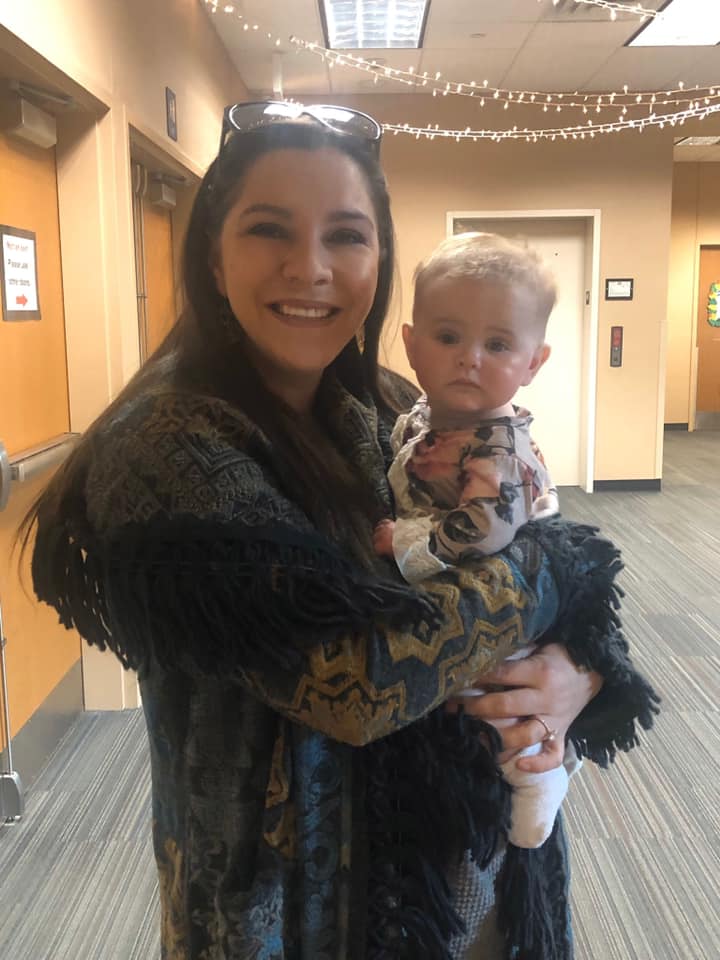
That’s what happened to Reese after she, unbeknownst to her family, swallowed a button battery from a remote last October in their Lubbock, Texas Home. It may surprise many parents that the first signs looked like a bad cold: Reese became congested and wheezy, and Hamsmith brought her to the pediatrician who suspected croup — a common misdiagnosis — and gave Reese a steroid.
But the next day, the family realized one of the flat, round batteries was missing from the remote. They immediately took Reese to the hospital, where an X-ray confirmed the battery was lodged in the top of her esophagus. When a button battery is swallowed, electrical current can form and create a chemical that burns through the body’s tissue — damage that may continue even after the battery is removed.
The initial surgery went well, but doctors later found the battery had created a hole between Reese’s esophagus and trachea. After several brutal weeks of ups and downs, including Reese being placed on a ventilator and receiving a tracheotomy, the 18-month-old died on Dec. 17, 2020.
Hamsmith and her family were shattered. Yet her grief fueled her to take action almost immediately, creating a non-profit called Reese’s Purpose to advocate for legislation mandating secure, tool-required compartments for button batteries and to educate parents and physicians about the signs of ingestion.
“From the get-go, I knew it would give me some peace knowing some good managed to come out of this,” Hamsmith said. “Sadly, nothing done now will save Reese, but my biggest fear is hearing about another tragedy like this 10 years from now. I don’t want this to happen to one other child.”
So Hamsmith has been telling Reese’s story everywhere she can: through the Reese’s Purpose Facebook group, via a petition on Change.org and in testimony before the Consumer Product Safety Commission, in which she noted national records show 3,500 people swallow button batteries annually and that experts suspect the actual number is vastly higher.
She also contacted lawmakers, urging them to introduce legislation that mandates national standards for securing button batteries found in consumer products. Hamsmith’s testimony and trips to Capitol Hill worked: In September, Congresswoman Robin Kelly (D-IL), Congressman Jodey Arrington (R-TX) and Congressman Ted Lieu (D-CA) introduced a bill called “Reese’s Law,” which would mandate button batteries to be tool-secured and require new warning labels on packaging. Senators Richard Blumenthal (D-CT) and Marsha Blackburn (R-TN) followed by introducing a Senate version of the bill at the end of November. “This is a commonsense bill,” said Hamsmith, who urged people to visit PassReesesLaw.org to connect with their lawmakers. “That’s what I hear from everyone, and I spend literally all day every day talking to members of Congress. We have broad support in the House and Senate, so I have confidence. I will push forward leaving no stone unturned.” But change won’t happen overnight, and in the meantime, Hamsmith knows other children are at risk. “Button batteries are a danger in homes every day, but it’s exponentially higher during the holidays,” she said. “This can happen in a second, especially with new presents coming into the house and all of the excitement of the holidays.” Hamsmith implores parents to sweep their homes for button batteries and remove them from the home — or at least from children’s reach. and to know the signs of ingestion: coughing, wheezing, vomiting, abdominal pain, fever and/or blood in stools, according to Poison Control. The group recommends immediately calling the 24-hour National Battery Ingestion Hotline at 800-498-8666 for guidance if battery swallowing is suspected. “Our entire lives changed in an instant. Had we known, had we seen a story like Reese’s, maybe things would have been different for us,” Hamsmith said. “But now, Reese’s purpose is to help stop this from happening to any other family.”
Julianne Pepitone
Julianne is the senior technology writer for NBC News Digital, covering large consumer tech companies' (Apple, Google, Facebook, etc.) news and trends, as well as cybersecurity. She also writes and appears in original videos for NBCNews.com, and speaks as an expert guest on live shows across the NBC and MSNBC networks.
She previously worked at CNNMoney.com where she covered large techs from a business angle, as well as the intersection of the tech and media industries.
In addition to NBC and CNN online properties, Julianne has written for several national magazines and online publications including Esquire, Self, Popular Mechanics and Cosmopolitan. Recommended


