Stretching keeps your muscles strong and healthy, and you need that flexibility to maintain a range of motion. Without it, the muscles shorten and become tight.
The same principle applies to friendship. Stretching is the best metaphor we’ve come up with to describe all the ways our friends expand our world, challenge us, and inspire us to change. This give-and-take is necessary from the very beginning because no two people are exactly alike. Life inevitably brings changes. And those changes often shift the foundation on which the friendship was built. That’s just how it is. You are not the person you were 10 years ago, and you won’t be the exact same person in the next decade. For a Big Friendship to survive, it has to adapt.
There are little stretches that crop up early in a friendship, like getting over the fact that it always takes your friend a full day to text you back or admitting that you don’t like the same music. And there are slightly bigger stretches, which often present themselves later. Maybe you used to live in the same neighborhood, and now that you live farther apart you have to decide whose turf you’re going to meet on. Or bigger stretches, like you used to feel like financial equals, then one of you started making a lot more money, and suddenly things are tense every time the check comes.

Then there are huge stretches, like renegotiating the terms of your friendship when one of you moves away, or becomes a parent, or develops a chronic illness. You could go years with a friendship requiring only a comfortable, familiar set of stretches, and then one of you starts working a night shift, becomes a primary caregiver, or meets their future spouse, and you have to learn a whole new repertoire.
A healthy friendship involves stretches in both directions. When you’re stretching, you’re both making an effort to figure out how to adapt to your differences and to the shifting shape of your bond. Just like exercise, some of this emotional stretching feels good, and some of it will make you feel like you can’t take it anymore. Stretching is being challenged, in a way that is both difficult and rewarding at the same time. The amount of stretching doesn’t have to feel equal in every single moment—sometimes one person will require more from the friendship than the other—but over time, the give has to even out with the take.
Sometimes stretching comes effortlessly. We call it a passive stretch: you just do it, without even thinking about it. You happen to both pick up a hobby at the same time. Or you find yourself with encyclopedic knowledge of Celine Dion, just because your friend is a huge fan, even though you’ve never been one for power ballads. Or you easily adopt a new routine when one of you breaks your foot and can no longer meet up for daily walks.
But most stretches, especially ones related to life changes, are active: You make video-chat dates with your friend after they move 3,000 miles away rather than expecting them to show up on your doorstep with a bottle of cheap wine. You push yourself to talk about a specific way your friend hurt your feelings without realizing it, even though you’re scared to bring it up. After one of you becomes a parent or gets a time-consuming job, you figure out how to maintain the friendship with fewer hours to devote to each other. An active stretch can feel so challenging you’re not sure that you will be able to sustain it.

If the concept of stretching makes you feel queasy or unsure, that’s normal. Most of us don’t like to venture too far out of our comfort zones— especially when it comes to friendship, which we’ve been taught is supposed to always feel easy and harmonious. It can also be difficult to figure out the right amount of growth and sacrifice to devote to a friendship, because we’re not taught that friends are worth stretching for at all.
With other close relationships, there’s an expectation of flexibility and growth over time. Spouses can consult one of the dozens of advice books out there or get a couple’s therapist. There are therapists for families, too. Friends, though? When things get hard, it’s socially acceptable to abandon them with no conversation about it whatsoever, even if you’ve been intimate parts of each other’s lives for years. You’re fully empowered to cut them out of your life.
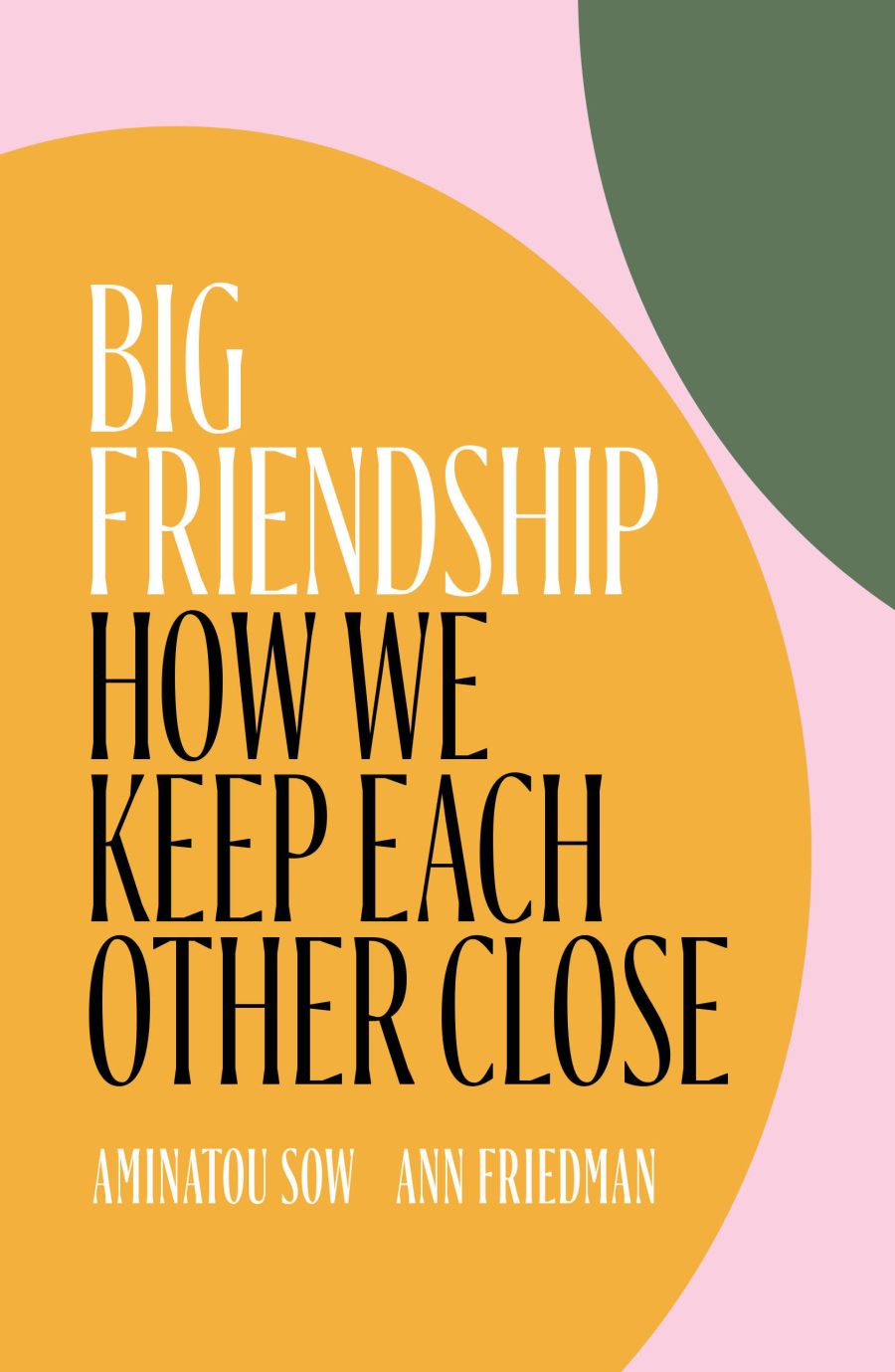
What’s a friendship that’s worth stretching for? How each friend answers that question often determines which friendships fail and which get stronger. For friends, you don’t have to stretch. You can choose to let the friendship break—and people do all the time. If a friendship is still in its earliest days, difficult stretches are more likely to cause it to snap. You haven’t developed the will to make sacrifices for each other yet. You can still picture what your lives would look like without each other. But if you consider each other chosen family and want to be in each other’s lives for the long haul, then your friendship is probably big enough to stretch for. This means that both people in the friendship make the conscious decision, often over and over again, that they’re going to stretch for each other and toward each other. They might feel challenged but decide not to walk away. In fact, they will likely come to see their stretching as a necessary part of being in the friendship, a way of adapting to the inevitable changes that life contains. It’s only through deciding to stretch that we become stronger and grow. There is really no way around that. When we have stretched ourselves, it’s not always fun in real time. But when we look back, we can see that it was our challenges, not our comforts, that have made us stronger, wiser, and more resilient. The above is from “BIG FRIENDSHIP” by Aminatou Sow and Ann Friedman. Copyright © 2020 by Aminatou Sow and Ann Friedman. Reprinted by permission of Simon & Schuster. All rights reserved.
Ann Friedman
Aminatou Sow Recommended