March is Women’s History Month, and the latest statistics show women are continuing to pick up their hammers and shatter the glass ceiling of several male-dominated industries, including in politics, academia and entrepreneurship.
Still, there is a long way to go to achieve parity.
While the majority of Americans would like to see more women in top leadership positions, most adults also believe that men have an easier time climbing the corporate ladder, according to a recent Pew Research Center report on women and leadership.
RELATED: 10 must-read books for Women’s History Month
“The obstacles they see holding women back are very similar across all realms,” Juliana Menasce Horowitz, Pew’s associate director of social trends research and a co-author of the report, told Know Your Value. “They talked about gender discrimination, women having to do more to prove themselves and other structural expectations.”
Here’s a look at where women stand in 2019.
Fortune 500 CEOs:
The number of women at the helm of top companies hasn’t grown all that much over time, and recent trends have made the figure even lower.
The percentage of women Fortune 500 CEOs reached an all-time high in 2017, with 32 women on the list. But as Pew’s “The Data on Women Leaders” report noted, that represented only 6.4 percent of all Fortune 500 CEOs.
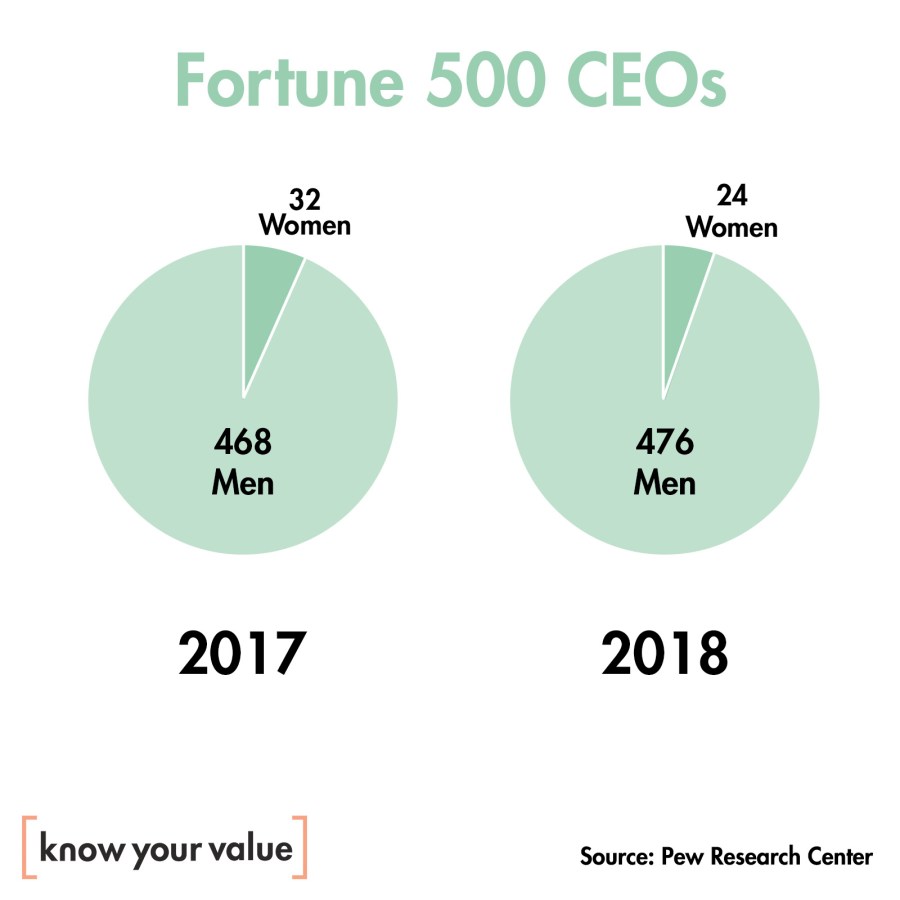
And then, in 2018, the number of women in these roles plummeted by 25 percent, to only 24. The women who left their offices that year included veterans like Hewlett-Packard’s Meg Whitman, as well as those with shorter tenures. Still, as Pew noted in its report, even a small change is notable: “As recently as 1995, there were no female CEOs on the Fortune 500 list.”
Company board members:
Despite the challenges in the CEO sector, the percentage of women who helped shape Fortune 500 companies as board members is growing at a steady clip: It’s more than doubled from 9.6 percent in 1995 to 22.2 percent in 2017, according to Pew’s research.
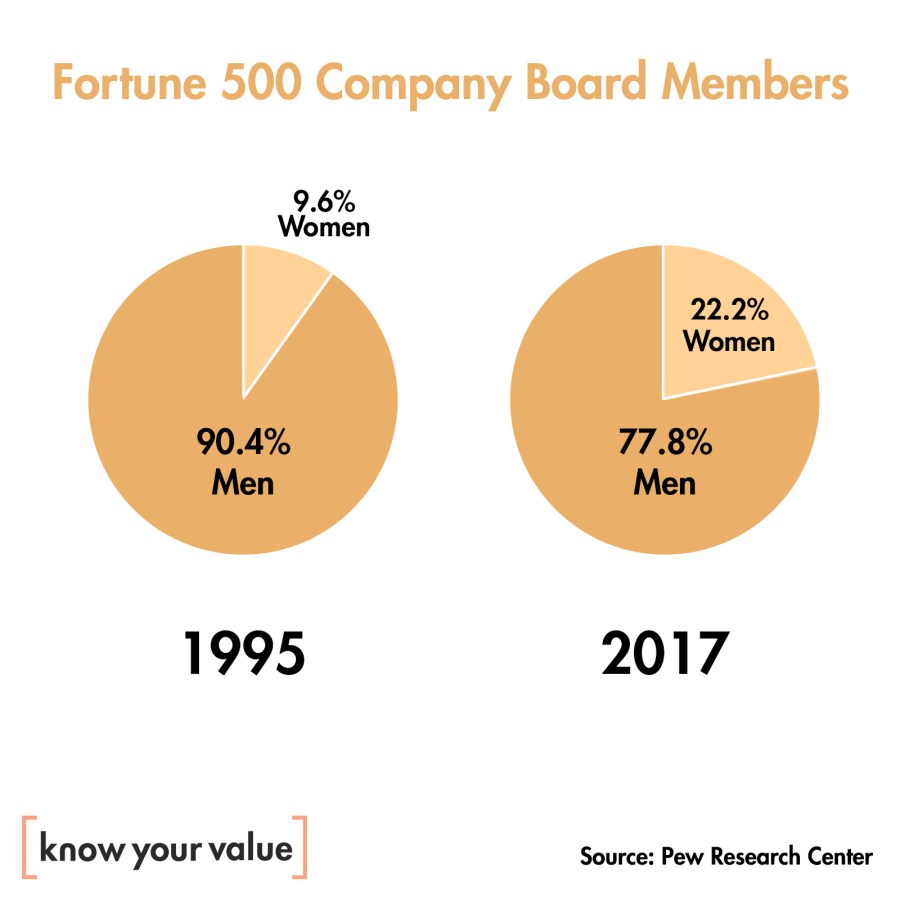
When compared with CEO roles, “there are of course more opportunities with more board seats, and there is more frequent turnover in those positions too,” Menasce Horowitz said.
Business owners:
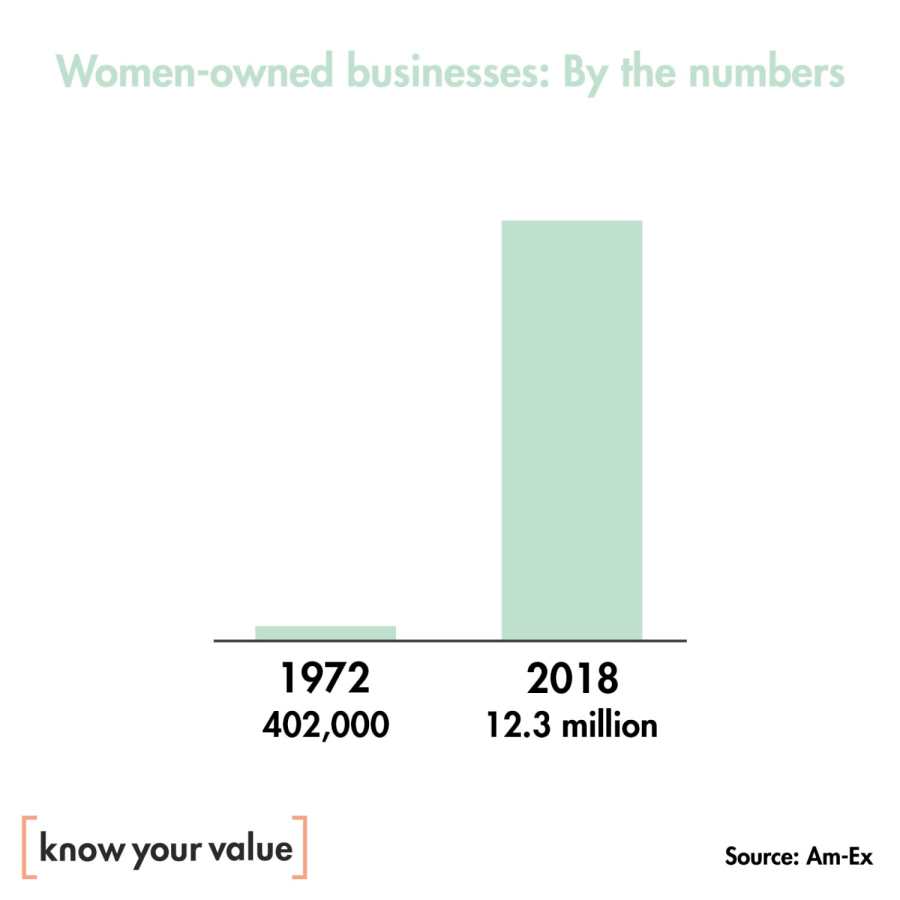
Trends for businesswomen are stronger outside of the Fortune 500. American Express’ “State of Women-Owned Businesses Report” revealed there were 12.3 million women-owned businesses in the U.S. last year, which represents 40 percent of all U.S. businesses. It’s an exponential increase from 1972, when women owned just 4.6 percent of American businesses.
Women of color have been a major driver of this growth: The number of businesses they own soared by 163 percent between 2007 and 2018 — almost three times the rate of growth for women overall during the same period, the AmEx report said.
The Census specifically tracks women-owned “employer firms,” meaning they hire paid workers and aren’t, say, a one-person realtor operation. Census’ statistics lag, but the agency said in an August 2018 report that women owned nearly 1.12 million U.S. employer firms in 2016. That represented 20 percent of all U.S. employer business that year, and it was a 2.8 percent increase from 2015.
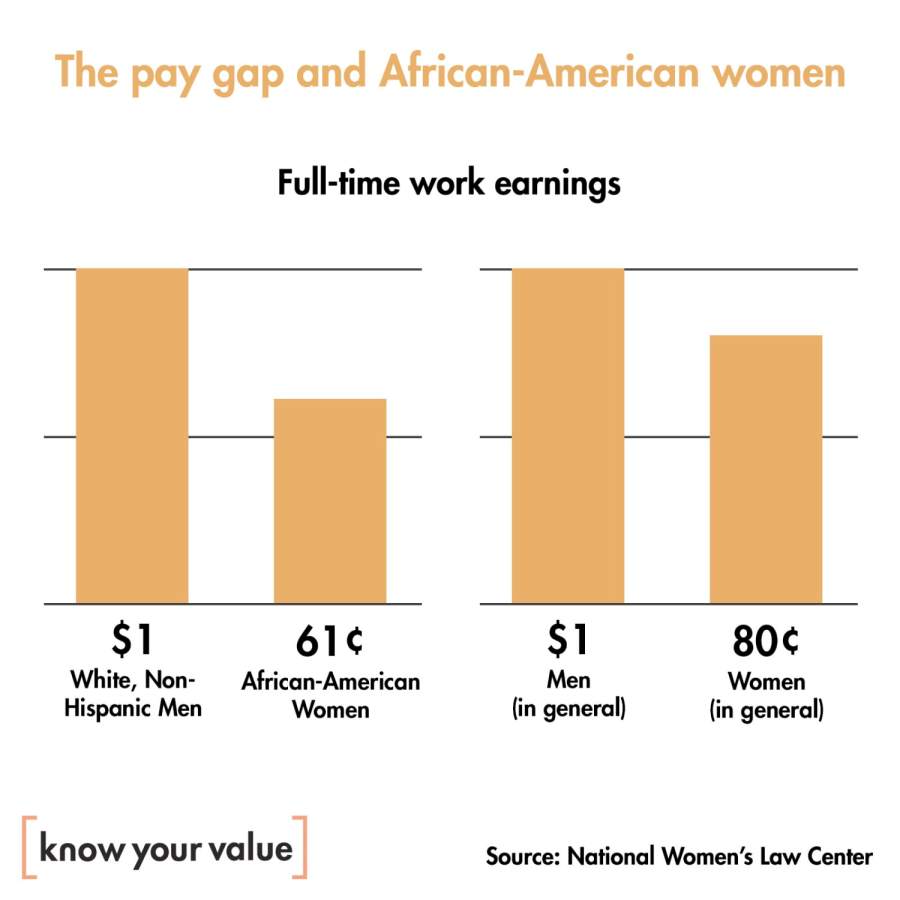
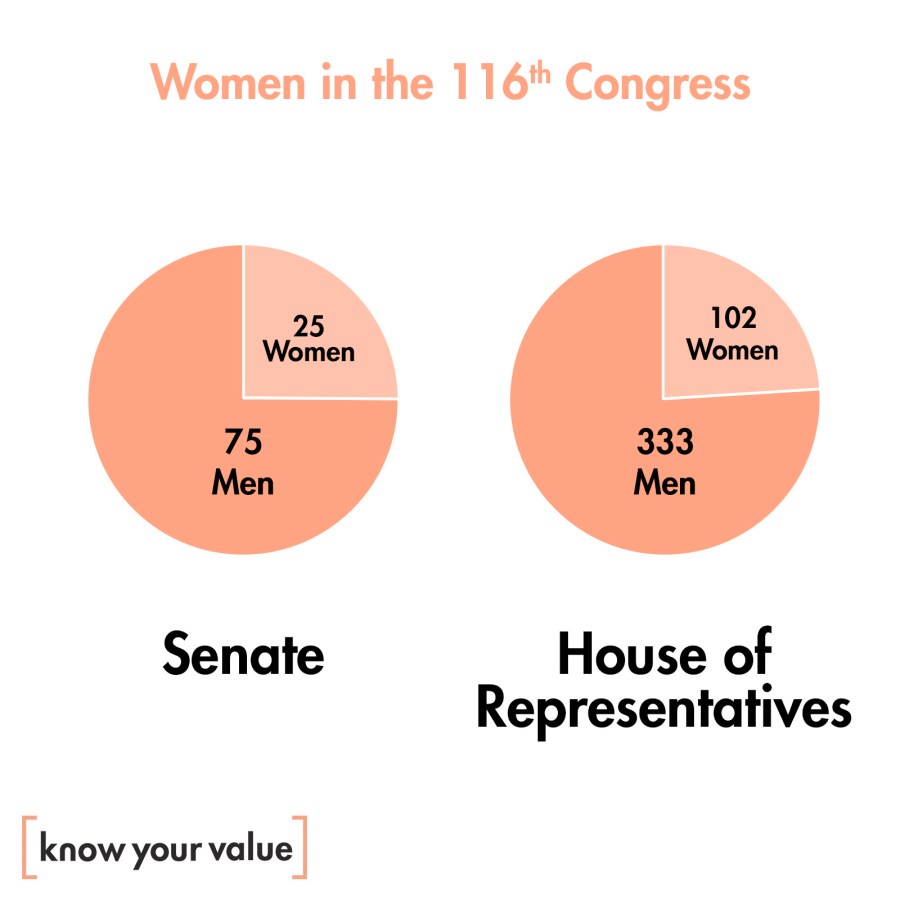
One of the biggest stories over the past year is the rise of women in political office. Currently 25 women serve in the Senate, which represents an all-time high. In total, 56 women have ever held Senate positions. Their counterparts in the House include 102 women currently — 89 of whom are Democrats — who make up just over 23 percent of all Representatives. On the state level, nearly 29 percent of state legislators are women, up significantly from just 4.5 percent in 1971. Meanwhile the share of women governors has grown significantly in the 2000s compared to previous decades, but the figure has fluctuated over the last two decades, Pew data showed. In 2019, six Democrat and three Republican women are serving as governors, which represents 18 percent of the total — an increase of nearly one-third from 2018. A total of 44 women have ever served as governors in 30 states. The as-yet-uncracked political nut for women is, of course, the presidency. And Pew found a notable decline in optimism among women on voters’ willingness to elect a woman to higher office. While Pew didn’t ask all of the same questions in its 2014 and 2018 sentiment reports, they did ask in both surveys about whether America wasn’t ready to elect a woman. For men the figure stayed the same, around 31 percent. But for women it increased significantly: In 2014, about 41 percent said America isn’t ready, and in 2018 that leapt to 57 percent. “Women are becoming more skeptical,” said Pew’s Menasce Horowitz. “One explanation is Hillary Clinton becoming the first major nominee, coming so close and then losing.” Academia represents one of the strongest recent increases for women. In 2016, just over 30 percent of university presidents were women. That’s triple the share from 1986. “Even though women are still underrepresented in this area, [the increased share of women leaders at colleges and universities] has remained a pretty consistent trend over time,” Menasce Horowitz said. An oft-cited stat says women are paid just 80 cents on the dollar compared to men – and other analyses peg it at even less. According to the American Association of University Women (AAUW), women of most minority groups experience an even wider pay gap than their white counterparts. While AAUW data showed “the gender pay gap occurs across almost all occupations and industries,” the divide tends to be greater in male-dominated industries. The top three occupations in which “women collectively lose the most money” are financial managers, physicians and surgeons, and accountants and auditors, the AAUW said.
Julianne Pepitone
Julianne is the senior technology writer for NBC News Digital, covering large consumer tech companies' (Apple, Google, Facebook, etc.) news and trends, as well as cybersecurity. She also writes and appears in original videos for NBCNews.com, and speaks as an expert guest on live shows across the NBC and MSNBC networks.
She previously worked at CNNMoney.com where she covered large techs from a business angle, as well as the intersection of the tech and media industries.
In addition to NBC and CNN online properties, Julianne has written for several national magazines and online publications including Esquire, Self, Popular Mechanics and Cosmopolitan. Recommended


Politicians:
College/university presidents:
Wages: