








New York Senator Kirsten Gillibrand, a Democrat, is expected to unveil a bill this week that would force the Department of Education to automatically refinance federal student loans with high interest rates. Government student loans with rates higher than 4% would be fixed at the 4% rate. The Huffington Post says nine out of 10 government backed loans would be affected.
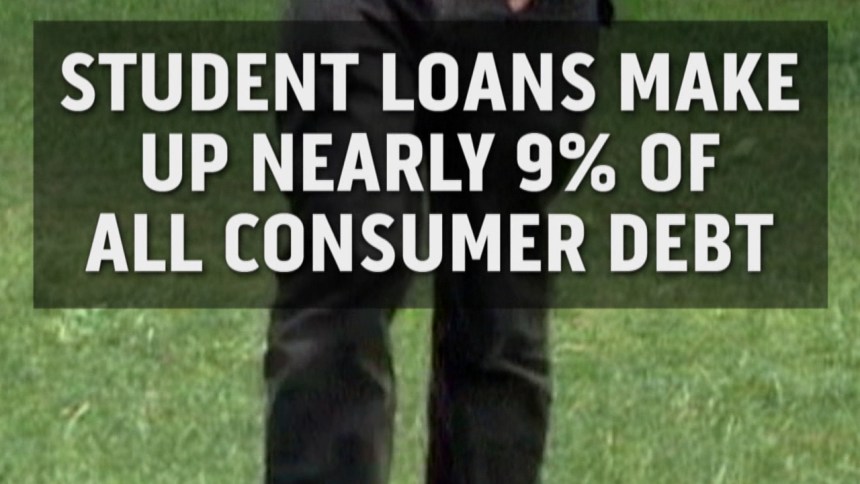
Student debt tripled to $1.1 trillion between 2004 and 2012, according to the Consumer Financial Protection Bureau. It now accounts for 8.8% of all consumer debt—up more than 3% since 2004. That’s second only to what consumers owe on home mortgages.
Student loans really impact those just getting out of college, said Washington Post economics columnist Neil Irwin.
“You’re trying to buy a house, get a car,” said Irwin on Jansing & Co Monday. “If you have that overhang of debt, it’s much harder to do that. The challenge for these graduates coming out with these huge burdens of debt is can they be integrated into the U.S. economy and really become fully fledged members of society when they start out with these tens of thousands of dollars in debt overhang.”
Sixty-five percent of graduates take out loans with the average debt at $26,600. The burden of repaying these loans is causing graduates to delay buying a house or a car or even starting a family. Their decision to put off spending may be putting a damper on profits of local businesses and the larger economy as a whole.
Irwin said he’s not sure the high interest rates on federal student loans is necessarily the problem. He said that even though the federal government has subsidized student loans, that hasn’t stopped college costs from skyrocketing. Even with a lower interest rate, a higher tuition will still yield a large loan debt for students.
“The trick is to find a way to reduce college costs not just in terms of interest rates but also in terms of the actual tuition that students are facing so they don’t end up worse off even as you lower interest rates,” said Irwin. Interest in student loan issues comes as the Department of Education is projected to generate $51 billion in profits this year from student lending. That’s more than the 2012 earnings of the nation’s most profitable company Exxon Mobil. The Department of Education disagreed with the profit comparison, saying annual profit turning by corporations is in no way comparable to projections of student loan collections over a 40-year loan. Irwin suggested some of the DOE’s profits should go towards educating students about how to navigate the financial burdens of higher education. Otherwise, Irwin said the current college loan system “definitely sets up something that almost resembles indentured servitude.”
Essa Yip Recommended


