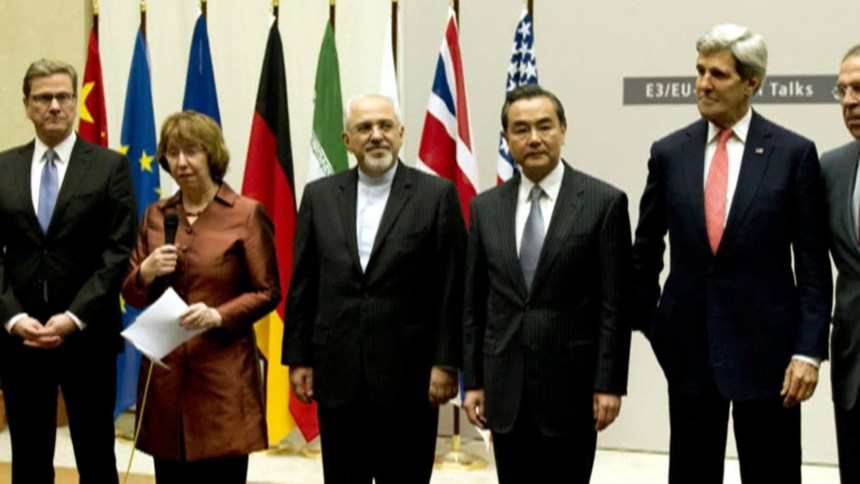
Saturday’s short-term agreement to halt Iran’s nuclear program in exchange for around seven billion dollars’ worth of sanctions relief was heralded by the Obama administration as a major foreign-policy breakthrough. But some hawkish members of Congress are a long way from getting on board.
Some claim Iran just isn’t to be trusted. Others worry the pact could threaten Israel. And at least one Republican—without evidence—is suggesting the landmark agreement is an effort to distract from the failures of the Obamacare rollout.
Congressional approaval isn’t needed for the pact. But lawmakers have nonetheless promised a showdown when they return on Dec. 9.
Under the six-month deal struck this weekend by Iran, the U.S. and five other world powers in Geneva, Iran is required to halt the enrichment of uranium above 5% and neutralize its stockpile of enriched uranium near 20%, as well as halting progress on its enrichment capacity and plutonium reactor. Iran is also required to allow U.N. inspectors access to verify its compliance. In exchange, the west will ease crippling sanctions, including more than $4 billion in previously inaccessible oil revenue.
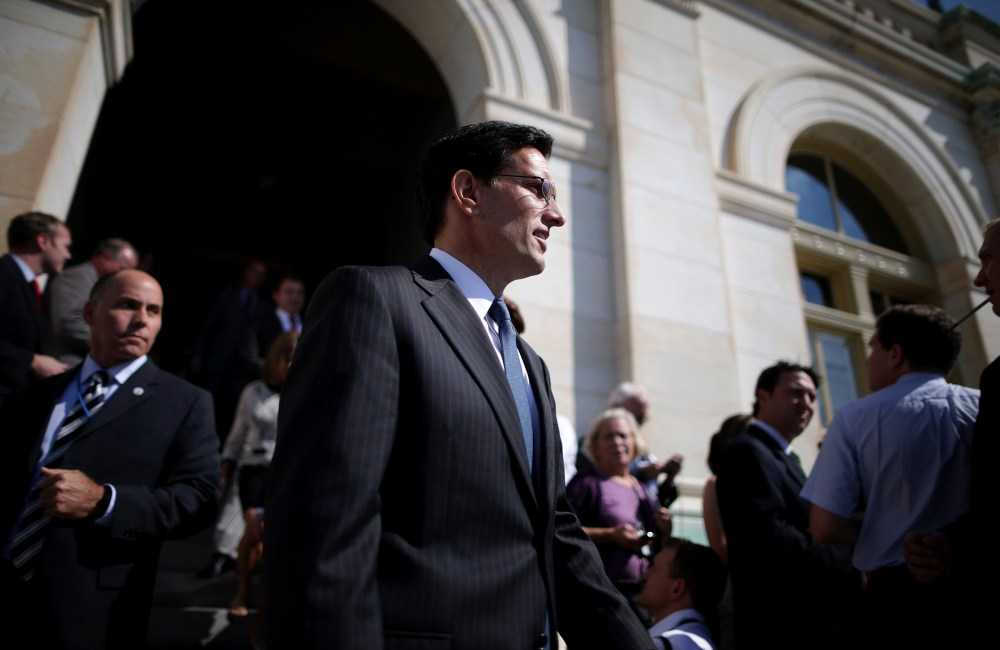
House Majority Leader Eric Cantor charged Monday that “any kind of deal with this regime in Iran is not worth the paper it’s written on,” adding that “Iran has demonstrated again and again [that] it cannot be trusted.”
Cantor called the deal “very, very dangerous” and advocated an attitude of “mistrust and verify.”
Rep. Mike Rogers, a Michigan Republican who chairs the House Intelligence Committee, called the temporary easing of sanctions “a huge lost opportunity” because the Iranian elite “were finally starting to feel this pressure and wanted to do something about it.”
“The notion that it’s this deal or war is absolute nonsense,” Rogers said of the tension surrounding Iran’s enrichment of uranium, which Iran maintains is for peaceful, civilian energy use.
“The Iranians are already saying this means we can continue to enrich uranium,” Rogers said Monday on Morning Joe. “I think it was a deal for the sake of a deal and I think that’s dangerous.”
Sen. Saxby Chambliss, a Georgia Republican, agreed that the easing of sanctions is a mistake. “We’ve got all the leverage in the negotiations, and we’ve let them out of the trap,” he said Sunday on ABC.
“I’m very worried,” Sen. Lindsey Graham, a South Carolina Republican, said Monday. “This deal allows 18,000 centrifuges to stay in place. We’re so far away from what the endgame should look like.”
“You don’t need 20% enriched uranium anymore in Iran to make a weapon; you can do it with 3.5%,” Graham said. “After 30 years of chaos, mayhem and murder by the Iranian regime, should they really be allowed to enrich uranium?”
Graham added that Iran’s ability to create a nuclear weapon “hasn’t been reduced much at all” and promised that a new round of sanctions drafted by Congress “will be focused on an endgame.”
Sen. John McCain vowed in a written statement over the weekend to work with is colleagues in the Senate to “keep the pressure on the Iranian regime,” via additional sanctions.
“I am concerned this agreement could be a dangerous step that degrades our pressure on the Iranian regime without demonstrable actions on Iran’s part to end its pursuit of a nuclear weapons capability,” said McCain, an Arizona Republican and consistent hawk.
Rep. Peter King of New York simply called the deal “a victory for Iran and a defeat for the United States and our allies in the Middle East.” Some GOP criticisms of the agreement sounded more like poltical attacks on Obama. Sen. John Cornyn of Texas charged that the deal was a political ploy by the White House to distract from its botched health care rollout. Sen. Bob Corker of Tennessee said on Fox News Sunday that Iran views “this administration as weak” and that they see the deal as “their window of opportunity to negotiate with an administration that has shown that it really doesn’t have a lot of the intestinal fortitude that other administrations have had.” But it wasn’t only Republicans slamming the agreement. Senators Chuck Schumer of New York and Robert Menendez of New Jersey both warned that the deal could jeopradize the security of Israel, and promised new sanctions by Congress. “It was strong sanctions, not the goodness of the hearts of the Iranian leaders, that brought Iran to the table,” Schumer said in a statement Sunday,” and any reduction relieves the psychological pressure of future sanctions and gives them hope that they will be able to gain nuclear weapon capability while further sanctions are reduced.” Israeli prime minister Benjamin Netanyahu on Sunday called the deal a “historic mistake” that will make the world more dangerous. Obama called Netanyahu Sunday, reminding the prime minister of his promise not to allow Iran to develop a nuclear weapon. Israel sees Iran as the primary threat to its security. Netanyahu has appeared wary of any thaw in U.S.-Iranian relations, especially as newly-elected Iranian president Hassan Rouhani forged ties with President Obama during recent months of rapid diplomacy. Rouhani, a former nuclear negotiator who ran for president and won on a platform of opening Iran to the West after decades of isolation, denounced nuclear weapons worldwide on the U.N. stage this fall, then spoke on the phone with President Obama. The call marked the highest-level direct talks between the two nations since the 1979 revolution. Senate Majority Leader Harry Reid said Monday that he spoke with Netanyahu and promised that Congress would address the need for additional sanctions when lawmakers return in December. While the framework of the deal is seen as high-risk, high-reward –a hallmark of Secretary John Kerry’s tenure as head of the State Department so far – success could become a lasting piece of President Obama’s foreign-policy legacy.
Erin Delmore Recommended