









“This wouldn’t be an issue if you breastfed!”
“I am so glad my wife breastfed our babies, so this is not a problem for us.”
I have been seeing comments like this after every article or social media post about the baby formula shortage, which has been worsening since the beginning of 2020 because of labor shortages and product recalls.

Actress Bette Midler recently took heat for responding to a tweet about the shortage with, “TRY BREASTFEEDING! It is free and available on demand.”
If you have ever said or typed anything like this, I am here to tell you that it is certainly not free and definitely not always available.
When I had my son, Teddy, in August of last year, the plan was always to breastfeed. Even before he was born, I was frequently reminded of the benefits of breastfeeding (and there are many!).
Plus, I gave birth in the middle of a pandemic, and I felt enormous pressure to pass on whatever antibodies I could from my vaccination.
It only took us a few weeks to realize that despite following every 40-minute feeding session with 20 minutes of pumping, eating all the specialty foods and drinking gallons of water, my supply never matched our baby’s demand.
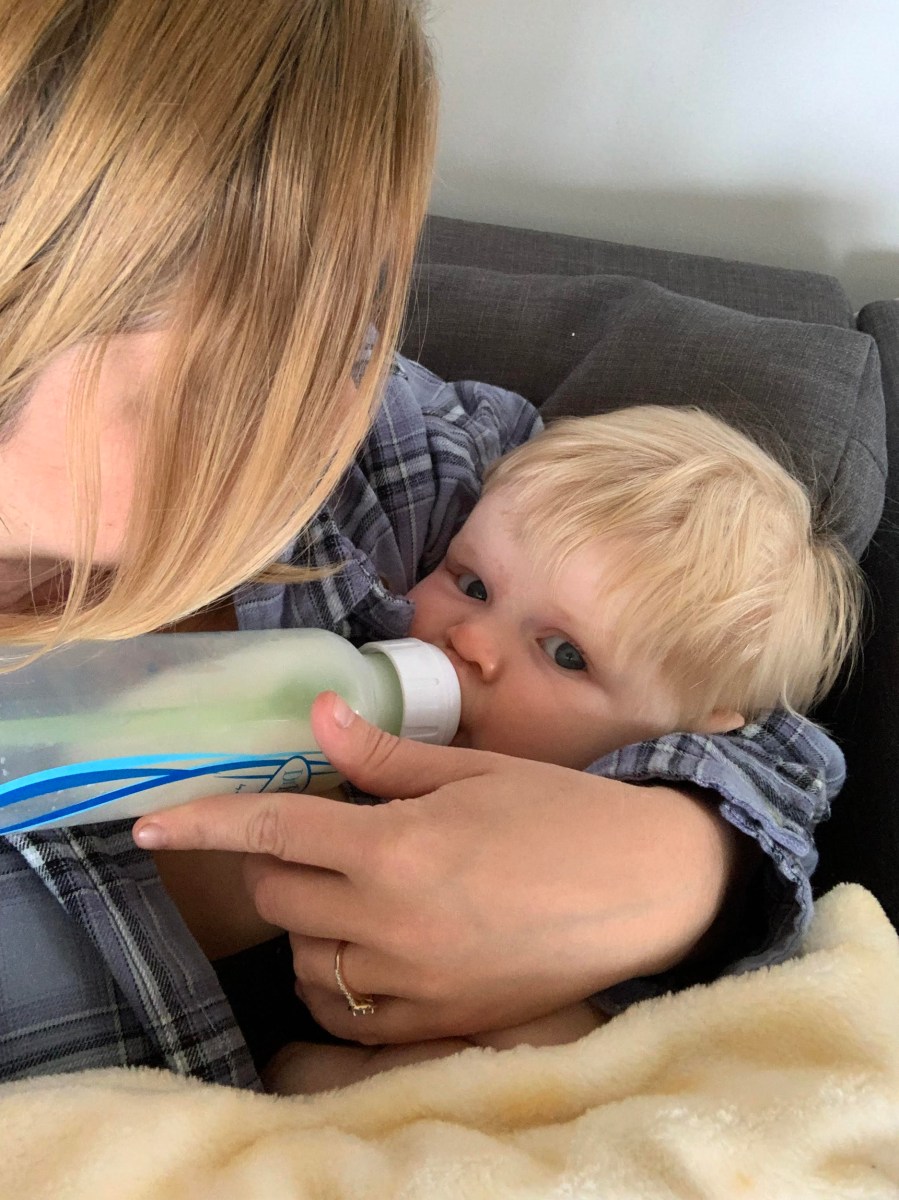
During the first few months of Teddy’s life, my husband would often find me crying while feeding our son because he was still hungry, and I was tapped out. Our baby has always been, and continues to be, someone who loves to eat.
Wasn’t this supposed to be a magic, beautiful experience with my child?
Why was I watching the clock, dreading that I was only ever 20 minutes away from breastfeeding or pumping? Why couldn’t I produce enough milk to feed him? I know many women who had much easier breastfeeding experiences, but for me it was a struggle. It made me feel incredibly guilty.
Breastfeeding is not free
Dr. Alexandra Solosko, a pediatric hospitalist with Children’s Hospital of Philadelphia, shared that new moms often don’t have a solid foundation to navigate breastfeeding challenges. “We as a society just don’t do a great job of supporting moms who want to breastfeed, so they may not feel comfortable bringing up problems that they are having,” she said. “They might not know how or be able to access support.”
Breastfeeding has many proven benefits for moms and babies. But so often, we are fed the myth that breastfeeding is free. This is simply not true and comes at the expense of a mother’s valuable time and mental health.
As Allison, a mother of a 2-year-old boy in Montclair, N.J., described, “For me it was isolating, and I felt like my body was still not mine. When I returned to work, I had to begin pumping and that was when my mental health really began to plummet. I spent hours tied to the pump machine and washing pump parts. I felt less and less like myself and more and more like just a lactation vehicle.”

For many, the choice to breastfeed is not a choice at all. There are a number of reasons why it might not be possible, or best for the child to exclusively breastfeed. According to the Centers for Disease Control and Prevention, the reasons include low supply, difficulty latching, infant nutrition and weight concerns, medications taken by the mother, unsupportive workplace environments, cultural norms, lack of family support, and lack of support at the hospital.
Dr. Solosko described some of the specific issues that might lead to a woman having low or no milk supply.
“One very obvious instance would be a woman who has had breast surgery – either a mastectomy or some other type of reconstructive surgery where they would not have the glandular tissue needed to produce milk,” she said. “Another condition is called IGT or insufficient glandular tissue, where a woman does have some milk producing tissue, but never really developed enough tissue to make a significant amount of milk.”
Sarah, a Philadelphia mother with a 7-month-old girl, explained that her milk simply never came in.
“The day I went to the lactation consultant for the second time (after my daughter was two weeks old) and told them that I had decided NOT to continue to try to breastfeed – my milk wasn’t coming in despite pumping, trying to breastfeed my daughter, eating oats and drinking the teas – I experienced the most enormous sense of relief.” And for those who suggest women try breastfeeding after several months postpartum, Dr. Solosko explains why that’s not realistic. “The process called lactogenesis by which the body produces milk after a baby is born is triggered by the birth of that baby, so there are some very specific hormonal and physiological changes that take place,” she said. “If your baby is four months old, and you didn’t just give birth to him or her, those changes are not going to be taking place in your body – you can’t just instantly start to produce milk.” Before I had my baby, I anticipated the transition to motherhood would be challenging: the sleepless nights, the frustration, the love that would overwhelm me. What I did not anticipate was the constant sense of fear and anxiety: Is he breathing? Did he eat enough? Is he hitting all of his milestones? How do I keep him safe? The formula shortage only magnified that fear. Right now, our son takes expressed breastmilk supplemented with formula and some solids. While we are not among the most severely impacted families, it is an absolutely terrifying time to be a mother whose infant is dependent on formula. I can only imagine what it is like for parents with babies who are exclusively formula fed, especially for those who require a specific type due to allergies or gastroesophageal reflux disease (GERD). No matter where you fall on the spectrum, the fear is palpable at grocery stores and on the local parenting Facebook groups. I can try to tell you what it feels like to drive around to 10 different stores, only to return empty-handed. I can tell you what it is like to see nearly bare shelves of formula locked up in a case. I can describe hours spent scouring different online retailers and manufacturer websites. But unless you’ve lived it, you can’t understand what it feels like to have little confidence that you can feed your baby. What you can do is have compassion. Curb any instinct to remind women that this isn’t an issue if they just breastfeed. Mothers need support (and in my case, a hug) now more than ever. Ask a new mom what formula she uses and look for it at the grocery store. Stop telling women what you think is best, instead ask how to support them during this crisis. Mothers do not need to be made to feel like this is their fault. “None of us know each other’s story or histories,” said Dr. Solosko. “We should not be judging other women for how they choose to feed their babies.” Emily Cassidy is a former Know Your Value team event producer and the current Conference Director at Rock Lititz in Lititz, PA.
Emily Cassidy Recommended


Curb the fear, cultivate compassion

