








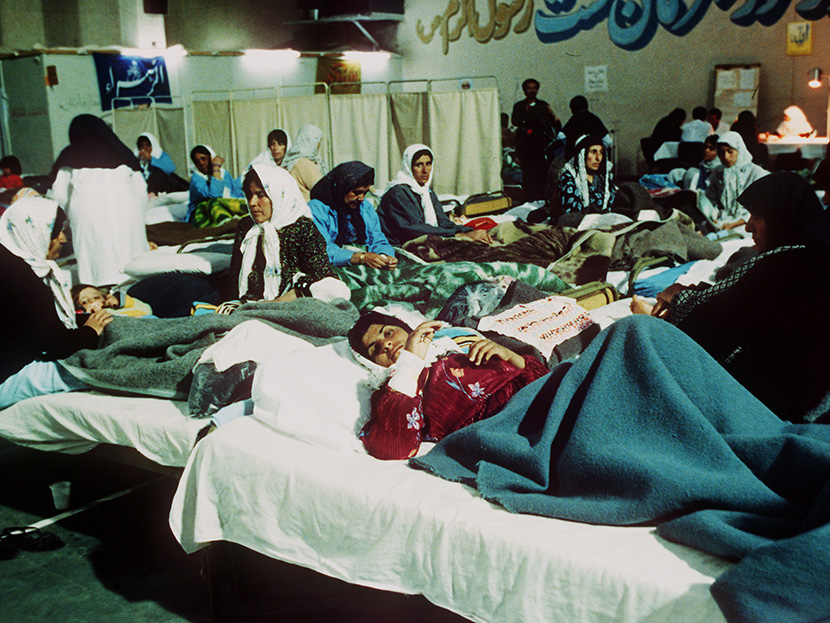
Although the Syrian civil war has dragged on for more than two years, resulting in more than 100,000 deaths, it was the suspected use of chemical weapons by the regime of Syrian President Bashir al-Assad that set off a United Nations investigation and has the U.S. considering a military strike.
As the U.S. and its allies weigh the options, United Nations Secretary General Ban Ki Moon has said “any use of chemical weapons anywhere by anybody under any circumstances would violate international law,” adding “such a crime against humanity should result in serious consequences.”
The use of chemical weapons in modern history has been rare, but deadly and generally condemned by the international community that has made an effort to forgo such tactics.
Chemical weapons are actually thousands of years old, including poisoned arrows and arsenic smoke. Throughout World War I, chlorine and phosgene gases were released from canisters by soldiers and in World War II phosphorous grenades and bombs were used.
The United States and the Soviet Union stockpiled a large amount of chemical weapons throughout the Cold War. And according to the Organization for the Prohibition of Chemical Weapons, had enough destroy most of the humans on Earth.
Both countries eventually agreed to engage in an effort to destroy them. At the time, an already existing 1925 Geneva Protocol prohibited the use of chemical weapons. A 1997 international treaty, which the U.S. ratified, went further, banning the production, stockpiling, and use of the weapons. The only countries not to sign on were Angola, North Korea, Egypt, South Sudan and, yes, Syria.
A brief timeline of chemical weapons use around the world: Iran-Iraq War, 1980s: Iraq, under Saddam Hussein used sarin and mustard gas against Iran. Foreign Policy magazine released documents this week showing the U.S. knew about Iraq’s use of chemical weapons, and was complicit as it feared an Iranian victory. Up to 20,000 Iranian troops were estimated to be killed by mustard gas and nerve agents and played a major factor in ending the eight-year conflict. Iraq against the Kurds, 1988: The Hussein regime used chemical weapons to remove Kurds from their villages in northern Iraq. It’s estimated that the weapons were used on approximately 40 villages, including the most deadly in 1988 in the village of Halabja. Approximately 5,000 men, women and children died within days of the attacks. Tokyo, 1995: In five coordinated attacks, members of the Aum Shinrikyo cult released sarin on several Tokyo subway lines. Thirteen people were killed and thousands were injured. Nearly 200 members of the cult were convicted in the gas attack. The cult is also credited with a 1994 sarin attack in Matsumoto in a residential community, which resulted in the death of eight people.Recommended


