








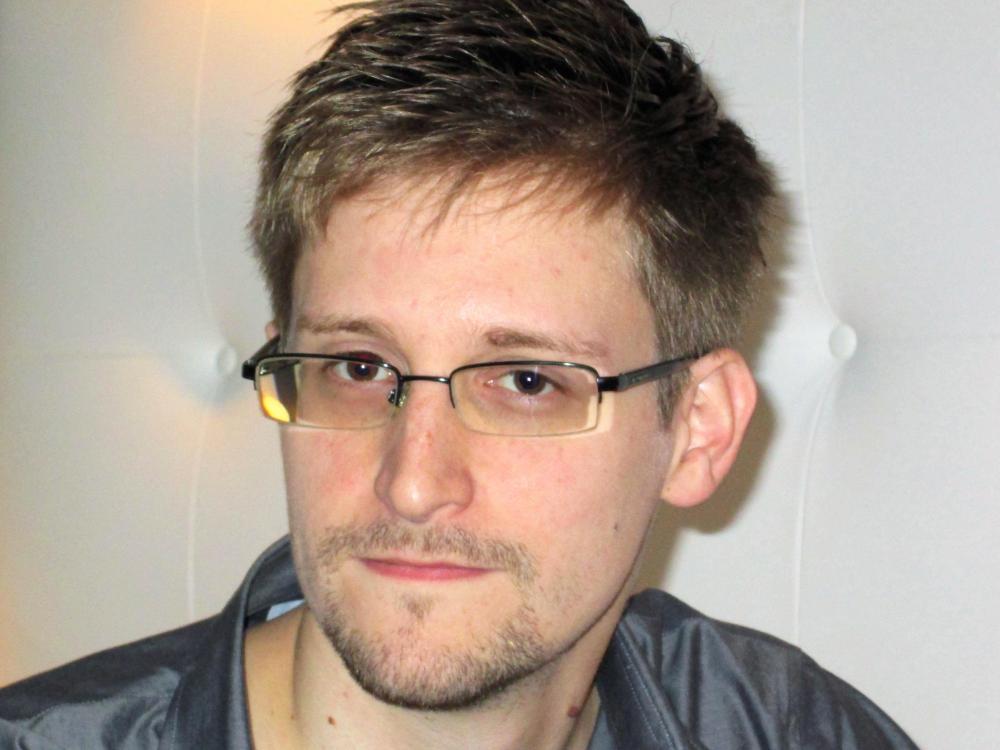
When it comes to Edward Snowden—the former National Security Agency contractor who blew the lid off the country’s secret surveillance efforts—the question may not be where he’s headed, but why.
Ecuador’s foreign minister on Monday said his country would consider an asylum request by the 30-year-old American. Snowden, who had been holed up in Hong Kong after revealing the government snooping programs, flew to Moscow on Sunday, and was supposed to go to Cuba on Monday (there are no direct flights from Moscow to Ecuador). However, journalists on board the Aeroflot flight to Cuba said Snowden wasn’t on board.
Snowden has been in close contact with WikiLeaks’ Julian Assange, who himself was granted asylum by Ecuador last year. Assange has been staying at the country’s embassy in the U.K. to avoid extradition to Sweden, where he faces interrogations about alleged sex crimes.
Assange said at a news conference on Monday that Snowden was in a safe place but would not reveal his location.
Snowden’s consideration of Ecuador, which doesn’t exactly have a clean record on human rights and freedom of speech, may be situational. After all, beggars can’t be choosers. Initially Snowden said he wanted asylum in Hong Kong, and chose the city because of its “spirited commitment to free speech and the right to political dissent.” Then he was reportedly mulling over seeking asylum in Russia, where Dmitry Peskov, a government spokesman, told local media that authorities would consider Snowden’s request.
“The Hong Kong government likely said they don’t have the patience to deal with this and get themselves in a diplomatic mess,” said Robert Anello, a New York lawyer who deals with extradition cases. “They made that clear to him, put him on a plane and [Snowden] found his way to Russia. They too don’t want to put their neck out for Mr. Snowden. It’s Ecuador by default.”
Douglas McNabb, an international criminal defense lawyer who specializes in extradition cases, said choosing Ecuador was probably a result of Snowden’s contact with Assange, who already has contacts with the government there.
The United States government charged Snowden with espionage on Friday. While Ecuador and the United States have an extradition treaty, it’s very old—dating to 1872 —and espionage isn’t on the list of offenses. McNabb said, however, that Ecuador considering the asylum request is “10% legal and 90% political.”
For one, the country’s leader President Rafael Correa, like several of his Latin American counterparts, has a history of criticizing the U.S. for a supposedly imperial attitude. And Ecuador has proven to be asylum-friendly in terms of Assange. Transnational relations between the U.S. and Ecuador have been rocky, with the State Department recently criticizing the country for a slew of issues including narcotics trafficking.
Snowden’s passport was revoked on Saturday, but individual countries can still choose to allow him entry. When the U.S. initially charged Snowden, authorities asked Hong Kong to issue a provisional arrest warrant. Officials there refused, arguing that the paperwork the U.S. submitted did not “fully comply with the legal requirements” needed to keep the North Carolina native from leaving the country.
White House spokesman Jay Carney said at a news conference Monday that Hong Kong’s release of Snowden hurts China-U.S. relations and that American officials are assuming Snowden is still in Russia and are in close cooperation with officials there.
In terms of Ecuador, however, Snowden should be careful for what he wishes for.
“Snowden should understand that while he may have a political ally sympathetic today, Ecuador may not stay that way. This is not necessarily a long-term solution,” said Anello, pointing to Robert Lee Vesco, the fugitive United States financier who was charged with securities fraud in the 1970s. He eventually flew to Costa Rica with the help of President Jose Figueres, who passed a law so Vesco couldn’t be extradited. However, Figueres’ term came to an end in 1974, and Vesco found himself on the run again. He eventually landed in a Cuban jail. Anello also noted that Ecuador isn’t exactly a bastion of freedom, something Snowden said was critical when he first leaked the NSA information in the first place. “The country isn’t known for freedom. I’m not sure what kind of asylum life he thinks he’ll have,” said Anello. Secretary of State John Kerry, traveling in India on Monday, commented on the irony of the countries Snowden is relying on in his quest to evade justice. “I wonder if Mr. Snowden chose China and Russia assistance in his flight from justice because they’re such powerful bastions of internet freedoms,” Kerry said sarcastically. “And I wonder while he was in either of those countries did he raise the questions of internet freedom since that seems to be what he champions.” If Ecuador chooses to grant Snowden asylum, it’s likely relations between the U.S. and the country could become even more heated. “I wouldn’t be very surprised if we don’t see senators and lawmakers on air saying ‘we give Ecuador x numbers of dollars in aid…we either need to freeze or withdraw any promises to this country until they return Snowden. This is political,” said McNabb.Recommended


