








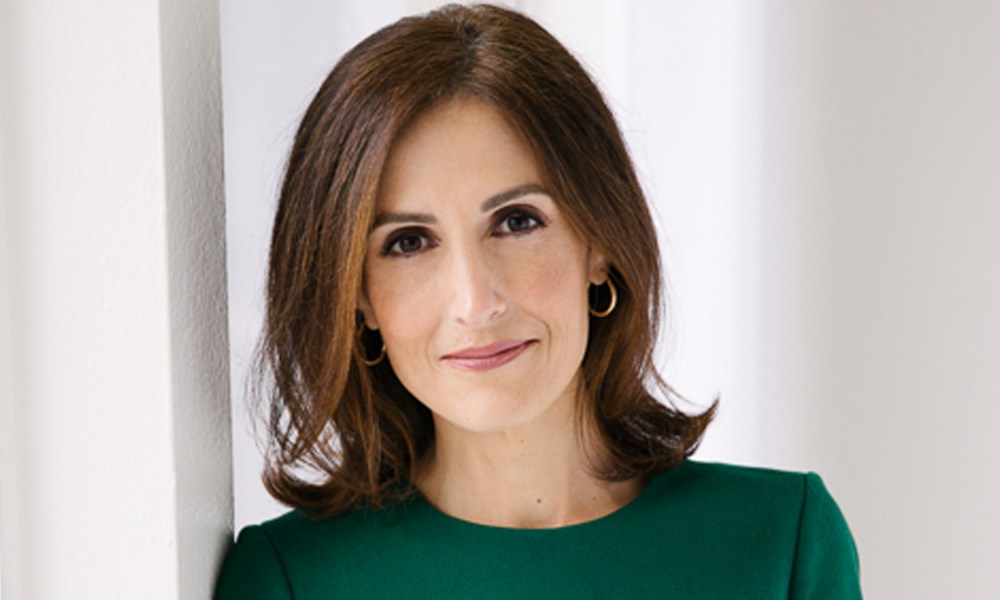
Before the pandemic, political scientist and commentator Dr. Victoria DeFrancesco Soto, 44, never imagined she would take the helm of a major academic institution like the Clinton School of Public Service at the University of Arkansas.

“I was an outsider to the world of higher ed,” the MSNBC and Telemundo contributor recently told Know Your Value. “The [academic] leadership pipeline for women is leaky and especially so for women of color.”
Indeed, the gender gap in academia remains wide. A recent investigation by the Eos Foundation and the American Association of University Women revealed that only 22 percent of higher education institutions had a woman at the top (president, chancellor, system head), despite the fact that there are more women earning PhDs today than men. In fact, one in five PhD earners is a woman color.
Nevertheless, by the start of 2020, Dr. DeFrancesco Soto strategized a way to the position, where she could have “maximum impact” as the first Latina dean of the esteemed presidential institution. Last month marked her first 100 days in the new role.
She details her nonlinear path into academic leadership and what she wants other women of color to know about ascertaining and thriving in these top jobs.
Know Your Value: In January, you became the first Latina to serve as dean of a presidential school and one of the only women of color in this space. Tell us about your career journey.
DeFrancesco Soto: It was not the traditional one, that’s for sure! My path wasn’t one where I rose through the ranks of academic leadership, going from graduate studies chair to department chair, to lots of other positions in between.
For a couple of years, I left the academic world and focused on political analysis consulting. I focused on translating research into user-friendly information through various media outlets.
However, the draw of the classroom and the dynamism of college campuses drew me back in. I started teaching part-time and building programming [at the LBJ School of Public Affairs at The University of Texas] that bridged the classroom with the private and public sector.
I was fortunate enough to have a strong female dean who saw the power of this programming and created an office of Civic Engagement there that formalized the space where the classroom meets on-the-ground practitioners. In this role I gained academic leadership skills as an assistant dean.
Know Your Value: What role did mentorship play in your career mobility?
DeFrancesco Soto: I am where I am today because of mentorship. I have an amazing set of parents and have always had a whole lot of ganas (translates into drive), but I was an outsider to the world of higher ed.
My dean and leadership team at my previous institution were key in my development of the hard and soft skills to move forward. Given the small number of fellow women of color in higher education, I cultivated close relationships with those who had served in high-impact leadership roles (e.g. presidential administrations, business, philanthropy). Those trailblazers helped me navigate my big picture career goals and risk-taking.

Know Your Value: Beyond representation, why is it so important to provide a pipeline for more women to move into academic leadership?
DeFrancesco Soto: While women are killing it when it comes to educational attainment, their numbers are far from reflective of the higher ed leadership ecosystem. If women and women of color don’t see people who look like them in leadership roles then the envisioning of these positions is just that much harder.
Beyond the descriptive representation of having them in these traditionally white male positions, it is the lived experience they bring to these majority institutions that can mobilize tangible steps to uplifting under-served students.
For me, it starts with first-hand experiences building an inclusive approach through what I call the three “C’s”: Composition, Culture and Curriculum.
For example, student retention is a major issue! Traditional 4-year colleges are frequently not intentionally supportive of first-generation and under-served students, both in terms of academic and socio-cultural support.
And when it comes to curriculum, often times the same material has been taught the same way for decades and does not include more recent work from a diversity of scholars.
Small changes in these areas lead the way toward greater success among first-generation and minority students.
Know Your Value: How can higher ed administrations better support and retain women in these top spots?
DeFrancesco Soto: Let me start with the numbers. Less than half of tenure-track professors are women. In terms of full professors – the traditional stepping stone for advancement within higher ed leadership – only about a third are women. To further drill down, Black and Latino faculty make up just 4-6 percent of all tenured faculty. We address this very leaky pipeline by supporting women with their care responsibilities. We know they are the overwhelming majority of primary caregivers for young children, aging parents and special needs family members. The lack of robust parental leave policies in much of higher education – together with a tenure clock that is not accommodating to these caregiving realities – keeps women from reaching that next step. Universities must support women structurally through better parental and family leave. On a parallel track, these academic institutions must be intentional in the construction of peer mentorship pipelines. For instance, the Volcker Alliance’s Dean Summit establishes a pipeline organization to actively recruit women and faculty of color to higher ed leadership, and then gives them the mentorship and support to take on these roles. Know Your Value: What is your guidance for women of color who may not realize they can aspire to top university positions? DeFrancesco Soto: Don’t be afraid to ask! Even if you get a “no” at least folks know where you stand and where you want to head. And I’m not just saying this – I’ve done it myself. After a couple of years engaging in higher ed administrative projects, I knew I was ready for a more expansive leadership role. I approached my school’s dean and point blank asked her if we could transition this role that I had greatly expanded into one of an assistant dean. She agreed. This isn’t to say that I wasn’t apprehensive about the ask, but I had a network of mentors and professional support that pushed me forward. I felt empowered to ask that my value be recognized in an appropriate role. Know Your Value: How has the scope of public service changed over the years and what should women consider about their potential impact here? DeFrancesco Soto: The meaning of public service has become much broader and more diverse. Traditionally folks think of local, state or federal government roles. While that’s one component, we’ve also come to see the private sector intentionally grow its public service footprint as part of sustainable business models. For example, one of our graduates from the Clinton School co-founded a community bank that provides targeted development resources for its members. A public service education is one that brings the tools of data, impact analysis and leadership to any and all professions, including medicine, business and philanthropy. Today, public service applies to all sectors. We’ve lived through the Great Resignation and see how younger generations want fulfillment beyond a paycheck. A public service education meets that ambition, enabling individuals to find their impact and improve their communities. Victoria DeFrancesco Soto is the Dean of the Clinton School of Public Service at the University of Arkansas and a political analyst for MSNBC, NBC News and Telemundo. Previously, she was the inaugural Dean of Civic Engagement at the LBJ School of Public Affairs at the University of Texas. Victoria received her Ph.D. from Duke University and was named one of the top 12 scholars in the country by Diverse magazine. She previously served on the faculty of Northwestern University. Her research on political behavior has been widely published in scholarly journals and cited in the New York Times, Los Angeles Times, Chicago Tribune, Time, and POLITICO.
KYV Editorial Staff Recommended


