








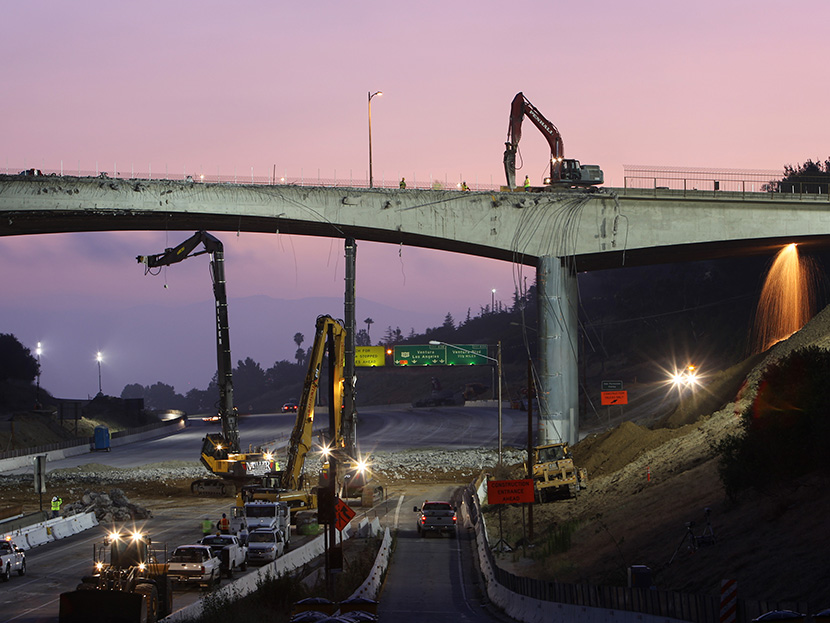
On the surface, it seems like a no-brainer: With interest rates at historic lows, the U.S. government could be borrowing money for next to nothing to rebuild its crumbling roads and bridges, all while creating jobs to combat its stubbornly high unemployment rate.
It’s an opportunity that we aren’t likely to see again in our lifetimes. And already, there are early warning signs that this era of absurdly cheap borrowing will eventually come to an end: The interest rate on 10-year U.S. Treasury notes—the benchmark for long-term borrowing rates—rose to 2.66% on Monday, the highest rate since August 2011. There have been similar spikes in mortgage and corporate bond rates this week, as investors have begun to worry that the Federal Reserve will start rolling back its stimulus program.
But Congress has continued to sit on the sidelines, insisting that austerity prevails over more spending. While President Obama’s budget contained $40 billion in new infrastructure investment, Republicans criticized it as a plan from “Santa Claus” for failing to specify how such borrowing would be paid for. However, policy advocates point out that continuing to defer such investments could also cost the government more money in the long run as interest rates begin to creep upward and the nation’s infrastructure continues to deteriorate.
Aside from a temporary boost from the 2009 stimulus bill, spending on public infrastructure has been in sharp decline despite signs that the country is in need of a long-term upgrade. In 2013, the American Society of Civil Engineers gave the country a “D” grade for the state of its roads, dams, transit, aviation, and school infrastructure, estimating that $3.6 trillion in investment is needed by 2020. Meanwhile, bridge collapses and giant sinkholes have become routine news across the country.
At the same time, interest rates have hit rock bottom as the Federal Reserve has continued its unprecedented Quantitative Easing program, buying up U.S. Treasurys to encourage investment in a still-stagnant economy. The interest rate on 10-year Treasurys hit lowest level on record in the summer of 2012, and they’ve remained extraordinarily low since then. “It would have been a win-win situation,” says Gus Faucher, chief macroeconomist for PNC Bank. “Given the low borrowing costs, the federal government could have undertaken projects with a positive return over time in infrastructure and education.”
In other words, such spending would have put people to work in the short term—particularly in areas like construction where employment has remained low—while investing in things we should be upgrading anyway, all at bargain-basement prices. And it’s become clear that private investors haven’t picked up the slack in the meantime.
New investments, however, are still a non-starter for Congress, which has continued to push through cutbacks in the name of austerity. Sequestration, for instance, has raised interest payments for local governments who used the federal government’s Build America Bonds to construct schools, hospitals, and roads. “Austerity has just shrunk the amount of borrowing,” said Matt Fabian, managing director of Municipal Market Advisors. Legislators still have the chance to change their minds, should the political tides turn. On Thursday, the Fed tried to reassure investors that it wasn’t going to let off the gas just yet, calming the markets and nudging down interest rates. And economists point out that even this week’s surprising 2.66% rate for 10-year Treasurys is still relatively low, given that rates were around 4% during the financial crisis. PNC Bank’s Faucher, for one, estimated that it will be three to four years before interest rates rise to a significant degree. And by then, the Fed will be supporting higher rates because the economy will be revved up enough to need a check on inflation. That said, Congress has already spent more than two years prioritizing budget austerity over spending and investment, and it’s easy to see how legislators will continue to bypass the opportunity to borrow cheaply, absent a political sea change. In the meantime, the costs of borrowing will only become more likely to rise as more time passes. “They have a long way to go, but it’s definitely going to happen,” said Ed Friedman, a director at Moody’s Analytics.
Suzy Khimm Recommended


