










The big news from the Supreme Court this morning was the decision related to Louisiana’s abortion restrictions, but this one deserves some attention, too.
The Supreme Court in a ruling Monday allowed the Consumer Financial Protection Bureau to continue operating, but said that the director of the consumer watchdog could be removed by the president of the United States “at will.” The decision, written by Chief Justice John Roberts, agreed with a California-based law firm’s argument that the CFPB’s leadership by a sole director who was removable “only for cause” violated the separation of powers rule under the U.S. Constitution.
The full, 5-4 ruling in Seila Law vs Consumer Financial Protection Bureau is online here.
For both sides, there’s some good news and some bad news. For the right, which has long opposed the existence of the CFPB, the high court’s majority weakened the agency’s independence — which is clearly a step in Republicans’ preferred direction — but left the bureau otherwise intact.
For the left, obvious, the opposite is true: it’s encouraging that the CFPB will continue to exist, but it’s a problem that its director will serve at the pleasure of the president. The bureau, for all intents and purposes, will be just another executive-branch agency.
As Justice Elena Kagan wrote in a dissent, “Today’s decision wipes out a feature of that agency its creators thought fundamental to its mission — a measure of independence from political pressure.”
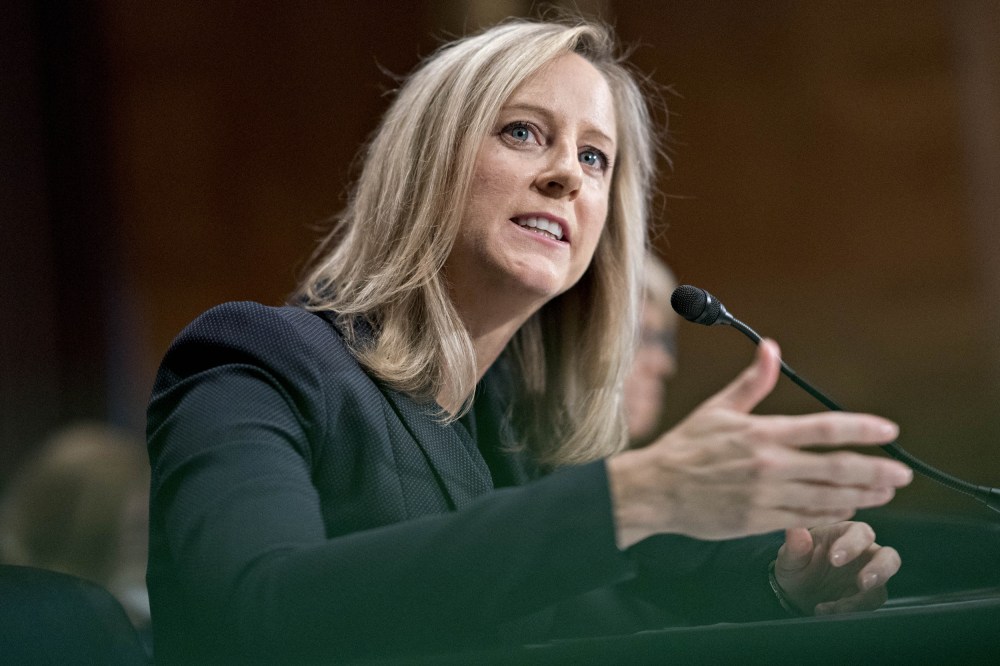
But for the proponents of the Consumer Financial Protection Bureau, there is a possible upside to the ruling: Kathy Kraninger, the Trump-appointed CFPB director, can now be fired if the incumbent president loses. And for many consumer advocates, that would be a positive development, indeed. Politico had this report in May, highlighting Kraninger’s work during the coronavirus crisis: The Consumer Financial Protection Bureau is relaxing rules designed to shield Americans from abuse during the coronavirus crisis, saying the moves are necessary to give businesses flexibility during the pandemic. But with the agency facing an unprecedented wave of consumer complaints as millions of laid-off workers deal with their creditors, lawmakers and consumer advocates charge that the bureau is exploiting the crisis to further a pro-industry agenda. Senate Banking Committee ranking member Sherrod Brown (D-Ohio) said at the time, “The CFPB under President Trump has used this pandemic as an excuse to weaken protections for consumers — enabling predatory lending, watering down credit reporting protections and fair lending laws, and making it easier for credit card and debit card companies to rip off their consumers.” If today’s ruling had gone the other way, Kraninger would maintain her position through December 2023, no matter who won this year’s presidential election. Now, if Joe Biden wins, he can fire her in January 2021 and replace her with an actual consumer advocate.
Steve Benen is a producer for "The Rachel Maddow Show," the editor of MaddowBlog and an MS NOW political contributor. He's also the bestselling author of "Ministry of Truth: Democracy, Reality, and the Republicans' War on the Recent Past."
Latest Post
Recommended


