








No one runs for Congress to serve in the minority, and yet that’s the place that every Democrat on Capitol Hill finds themselves in this week as the new Congress convenes. But for some ambitious politicians, there are ways to make the most of minority status.
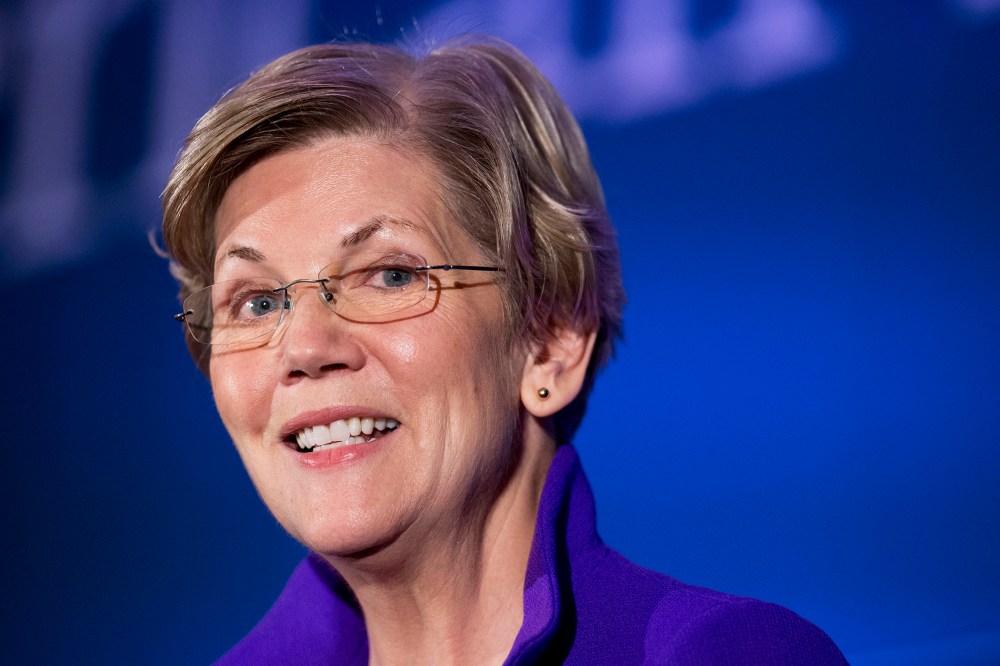
Take two senators in the 2016 presidential mix, who will likely see their profiles rise in the new Republican-controlled Congress: Sens. Elizabeth Warren and Bernie Sanders.
RELATED: Bernie Sanders remakes Budget Committee in his image
Freed from the demands of governing and the compromises that necessarily come with it, ideological members in the minority can afford to be bold and independent, potentially achieving more prominence than if they quietly fell in line with leadership while in the majority.
The Senate is chock full of presidential wannabes, but most are Republicans, who will be forced to take tough votes to keep the government functioning that will inevitably disappoint their base. Not so for Democrats, who can now afford to break with their party’s leaders and the White House to stand up for their principles.
Warren, whom progressives are trying to draft for a presidential run she insists she’s not interested in, was recently made a member of the Senate Democratic leadership, and will now join the Senate Energy Committee. The position could create heated clashes with the committee’s Republican members.
So far in the Senate, the former bankruptcy lawyer has focused almost exclusively on banking and financial reform. Warren’s new position on Energy offers her an opportunity to expand her purview to other issues that progressives care deeply about, like the Keystone XL pipeline and global warming.
“Elizabeth Warren can now play a major role in articulating a new, progressive climate policy,” said Karthik Ganapathy of 350.org, the environmental group that put the Keystone pipeline on the political map. “Heading into 2016, the 400,000 climate voters that showed up in New York for the People’s Climate March [in September] are looking for a leader who will champion this issue.”
RELATED: Elizabeth’s Warren moment
“The balance of power in the Democratic Party is shifting on energy issues — Mary Landrieu is out, and Elizabeth Warren is in,” Ganapathy added, referring to the former Energy Committee chairwoman who pushed a bill to approve the pipeline in a last-ditch bid to save her Senate seat last year.
And Warren already appears more willing to take on the White House. She opposed Obama’s pick for the number-three job at the Treasury Department over his ties to Wall Street late last year, and lobbied colleagues to kill a government funding bill last month.
The fights have been catnip to liberals who are disappointed in Obama.
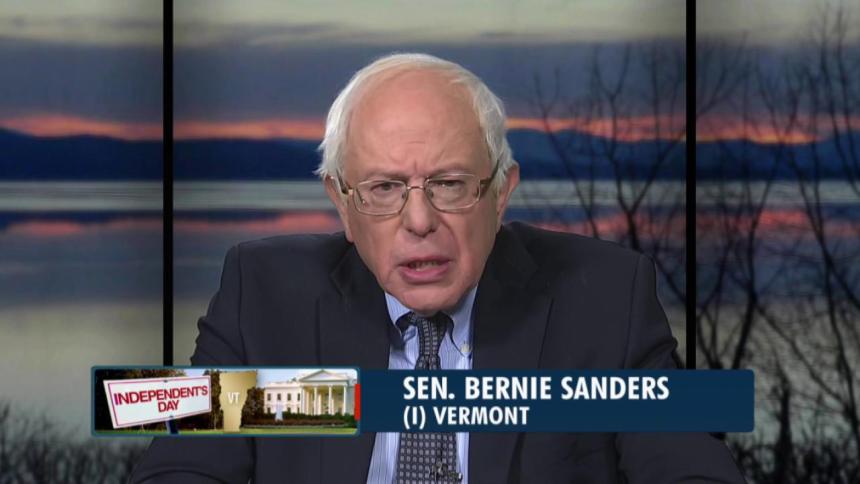
Meanwhile, Sanders, a Vermont Independent who is actively considering a presidential run as a Democrat, will take over as the top Democrat on the Senate Budget Committee — a position he likely would not have been granted if Democrats still ran the upper chamber.
He’s wasted no time remaking his half of the committee in his image, recruiting staffers from a who’s who of lefty Washington policy shops.
Christian Dorsey, the director of external and government affairs for the liberal Economic Policy Institute, told msnbc he expects a “sea change” in what Democratic budget proposals will look going forward now that Sanders is running the show.
While previous Democratic budget writers accepted the need for austerity and worked to preserve progressive priorities as much as possible under reduced funding, Sanders simply does not believe there is a need to cut spending, Dorsey said. The senator has already proposed a massive $1 trillion infrastructure plan, and will likely suggest raising more revenue through tax increases on the wealthy.
And the senator will also serve as conduit to bring liberal activists and experts into Senate discussions that often happen behind closed doors. “He has already reached out to groups like ours,” Dorsey said.
At the same time, Sanders, Warren, and others are gearing up to push the White House on what promises to be one of the fiercest intraparty fights in Democratic politics this year, over massive free trade agreements with countries in Asia in Europe.
Trade hasn’t been at the forefront of the political debate since the Clinton era, but it will come roaring back in the first half of this year when Congress is expected to take up a bill to grant the Obama administration “fast-track” authority to pass trade deals. The left-wing of the Democratic Party, and especially labor unions, still resent President Bill Clinton’s passage of the North American Free Trade Agreement, setting up a scenario in which Obama will likely have to go to battle against members of his own party with Republican congressional leaders as his allies. In December, Warren joined Sens. Tammy Baldwin and Ed Markey in writing a letter to U.S. Trade Representative Michael Froman warning the trade pacts could “undermines the government’s ability to protect the American economy.” Sanders sent his own letter to Froman Monday, calling what he viewed as the administration’s lack of transparency “simply unacceptable.” (A spokesperson for Froman told msnbc that all senators have “full access to the draft TPP negotiating text.”) With Republicans in the drivers seat in 2015, liberal Democrats will almost certainly more often break with the White House, which has vowed to try to work with Republicans. “Make no mistake about it, Sen. Sanders would much prefer to be Chairman Sanders than Ranking Member Sanders,” Warren Gunnels, a longtime Sanders aide who is becoming the minority staff director on the Budget Committee told msnbc. “But be that as it may, it is what it is and we have a major job to educate the American people.” And ambitious Democrats in the wilderness can look to Republicans as models. Sen. Ted Cruz became a movement leader while in the minority in 2013 by trying to thwart then-Senate Majority leader Harry Reid at every turn. Rep. Michele Bachmann became a conservative media star shortly after Barack Obama’s sweeping 2008 election by anointing herself a leader of the tea party opposition. Wisconsin Rep. Paul Ryan rose to prominence in 2008 as the ranking Republican on the House Budget Committee (the House analogue to Sanders’ position) when he first revealed his now infamous budget proposal that incorporated many conservative wish-list items, like radical changes to the social welfare state and sweeping reductions in government spending. It lead to his selection for vice presidential ticket in 2012. But when then-Chairman Ryan had to abandon his pie-in-the-sky dreaming and come down to earth to cut deals with Democrats in 2013, he faced a conservative revolt and accusations of selling out the cause. No one wants to be in the wilderness, but it has its perks. Correction: An earlier version of this article incorrectly stated that Sen. Jim Inhofe will chair the Energy Committee. He will chair the committee on Environment and Public Works.
Alex Seitz-Wald Recommended


