








WASHINGTON — Mitch McConnell has his hands full.
Sure, he’s presiding over a new Republican majority in the Senate. He has an eye toward following in the footsteps of other great lawmakers who’ve gone before.
But starting Tuesday, he’ll be in charge of a body chock full of ambitious senators who may be more focused on winning the White House for themselves in 2016 than they are on legislating over the course of the next two years.
RELATED: Rand Paul tears into ‘isolationist’ Marco Rubio over Cuba
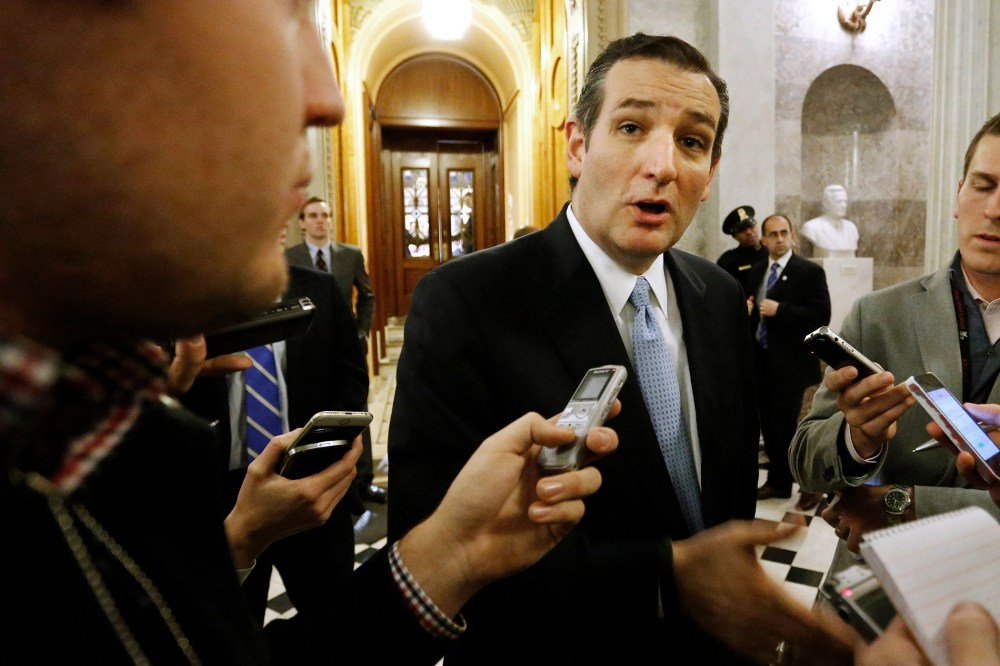
Republicans Sens. Ted Cruz of Texas, Marco Rubio of Florida and Rand Paul of Kentucky all want to move into the Oval Office — and this puts no small amount of pressure on the Senate’s leader. McConnell is powerful, sure, but the chamber rules mean a lone lawmaker can at stop a nomination, block a bill, shut down the government — or, in short, create a fuss.
McConnell isn’t alone, though, as Democrats aren’t short on ambition in their ranks. Massachusetts Sen. Elizabeth Warren insists she’s not running for president, but she led the charge from the Senate against weakening restrictions on big banks that were included in the year-end spending bill that President Obama even supported. Then there’s Sen. Bernie Sanders, I-Vt., who caucuses with Democrats — and who’s already made trips to early presidential states.
Eight years ago, in 2007, the Capitol was also full of would-be presidents: eventual party nominees Obama and John McCain were both senators, as were Hillary Clinton and now-Vice President Joe Biden. There were lesser-known hopefuls, too, including Sens. Chris Dodd and Evan Bayh. On the House side, Reps. Dennis Kucinich, D-Ohio, and Ron Paul, R-Texas, also ran that year.
RELATED: McConnell wants GOP to ‘not look scary’
This time around, the 2016 political context has important implications for Obama’s final two years in office and the next two years of Republican control of Congress. As the 114th convenes, here’s a look at the key Capitol Hill players in the upcoming 2016 presidential race–both potential candidates and those who will matter to them.
Ted Cruz, R-Texas
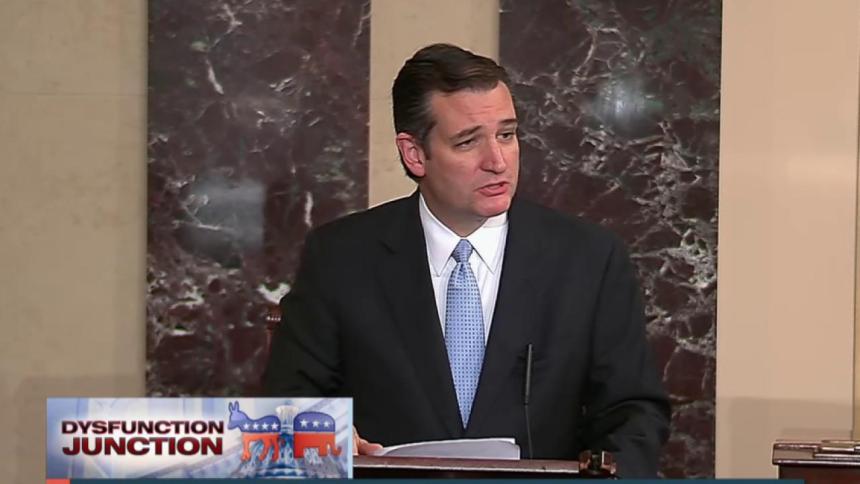
For the past two years, Cruz has made life difficult for his fellow Republicans–and given Democrats plenty to work with. He led the filibuster over health care that included a Senate floor reading of Dr. Seuss’s “Green Eggs and Ham” and ultimately resulted in a government shutdown. Most recently, shortly before Christmas, he held up voting on the so-called “cromnibus” spending package that forced others in the GOP to cancel holiday plans and let Democrats approve more of the president’s nominees than they would have had time for otherwise. Now, Cruz will be in a position to force Republicans (especially those running for president–or facing a Senate primary in 2016) to toe the conservative line on issues ranging from immigration to spending–or risk alienating base voters and handing Cruz an advantage. It’s a potential problem for McConnell’s push to govern. But it could also put pressure on establishment figures like Jeb Bush and Chris Christie who are also eyeing a run, especially if Cruz keeps his rhetoric at fever pitch.
Rand Paul, R-Kentucky
Of all the senators considering a presidential bid, Paul has likely laid the most groundwork. He’s used his perch in the Senate to take stands that have elevated his profile–particularly his filibuster of John Brennan’s nomination as CIA director as a protest against the Obama administration’s use of drone strikes. Cruz and Rubio, two potential competitors, even rushed down to the floor to join in. And Paul has an ally in McConnell, who won reelection in Kentucky after sticking very close to Paul through a tea party primary challenge. The question looming for the next two years: How active will Paul be as the Senate deals with foreign policy issues? They’re set to play a larger-than-usual role on the Hill in the coming months, with possible sanctions against Iran, funding to train Syrian rebels and the ongoing war against ISIS all coming up on the agenda. Broadly, it’s where Paul differs most from the party’s establishment and so could make the loudest noise–but Paul has also been working to close that rift as he prepares a bid.
Marco Rubio, R-Florida
When he arrived in Congress in 2010, Rubio was viewed as the establishment Republicans’ tea party guy. Young, photogenic and Hispanic, Rubio looked like what the party wanted its future to be. Since then, he helped lead the way on a comprehensive immigration reform bill that’s become toxic with the Republican base; and his political mentor, former Florida Gov. Jeb Bush, has announced he’s going to explore a bid. Still, aides privately say Rubio’s seriously considering a run for president regardless of what Bush might do. Rubio’s used his perch in the Senate to start crafting a message focused on the “American Dream” and to bolster his foreign policy bona fides, recently criticizing the Obama administration’s reconciliation with Cuba after five decades.
Mitch McConnell, R-Kentucky
The Senate Majority Leader won’t be on the ballot in 2016. But more than almost any other Republican, he’ll be responsible for making sure his party is in the best possible position to win back the White House–and he knows it. “I don’t want the American people to think that if they add a Republican president to a Republican Congress, that’s going to be a scary outcome,” McConnell told The Washington Post in an interview published on Monday. “I want the American people to be comfortable with the fact that the Republican House and Senate is a responsible, right-of-center, governing majority.” RELATED: McConnell: Obama won’t like GOP agenda McConnell will also have primary responsibility for managing the ambitions of those in his caucus — particularly Cruz, who many blame for the shutdown that soured Americans on the GOP brand. And McConnell has to carefully balance his already-announced support for Paul, his home state colleague. “I’m going to be supporting Rand Paul. But he knows that beyond that, I won’t be involved in presidential politics. I’ve got a big job here,” McConnell told the Post. Joni Ernst, R-Iowa She won’t be on the ballot herself, but as first woman ever elected to federal office from Iowa and the first female veteran to serve in the U.S. Senate, Ernst is already the forefront of GOP presidential primary in 2016. Her own Senate race was a preview, with Republican presidential aspirants flying in from all over the country to help her campaign against Democratic Rep. Bruce Braley. Christie, former Arkansas Gov. Mike Huckabee, Texas Gov. Rick Perry, Sens. Cruz, Rubio and Paul–among others–all paraded through Iowa on her behalf. She hasn’t said if she has an early favorite, though aides privately say that Rubio made a good impression when they met in 2014. Bernie Sanders, I-Vt. A self-declared socialist, Sanders hasn’t drawn intense attention from the grassroots or financial backers he would need to mount a serious presidential bid. But he’s carved out a reputation as an advocate for veterans, and early trips to Iowa have made him popular with many of the liberal state activists who show up at the caucuses. It’s not clear how aggressive he’ll be in using his position to further his presidential ambitions, but aides privately say he’s not finished exploring the possibility of a bid. Elizabeth Warren, D-Mass. She says she’s not running for president. But Elizabeth Warren has already proved she can use her position in the Senate to force populist economic ideas into the national debate. When Senate Democrats picked their leaders, they elevated her into a specially created messaging role to work with liberal interest groups. When Republicans put a provision into last year’s spending bill to strip away regulations from big banks, Warren led the charge against it–and almost stalled the bill as a result. As Democratic discontent with Hillary Clinton festers on the left, Warren almost has carte blanche to force her party — and Clinton — to pay closer attention to what liberal base voters want.
Kasie Hunt Recommended


