








In 1999, then-Louisiana state Rep. Steve Scalise voted against implementing and later mandating the federal Martin Luther King holiday in his state. In 2004, he did it again — this time one of just six in the state to vote against the holiday the federal government had been celebrating for two decades.
Smack in between those two votes, the lawmaker addressed a group of white supremacists in 2002. The Republican—now the Majority Whip in the House of Representatives—has since apologized for the speech, but the scandal has highlighted how race remains a problematic issue for many conservatives.
Eight other Republicans who voted against the holiday are currently serving in Congress as of Monday, the 31st Martin Luther King, Jr. Day the federal government has observed in honor of the slain African-American icon, arguably the country’s most influential civil rights leader. Amid highly publicized racial tension in areas like Ferguson, Missouri and New York City, these nay votes have received renewed scrutiny and attention.
RELATED: Scalise’s vote against MLK Day gains new relevance
Scalise released a statement Monday recognizing MLK Day, saying the U.S. “has been strengthened” by King’s legacy.
“Dr. King challenged our country to fulfill the promises of liberty, equality and justice prescribed in the founding of our great nation,” Scalise added. “Leading by example, he stressed the teachings of tolerance, service, and love, regardless of race, color, or creed. Today, his writings and speeches continue to empower and inspire those who seek liberty, equality and justice.”
In 1983, 112 federal lawmakers—90 representatives (77 Republicans, 13 Democrats) and 22 senators (18 Republicans, 4 Democrats) voted against commemorating Martin Luther King Jr.’s legacy with a federal holiday on the third Monday in January. Six of them are still in office, joining three others, including Scalise, who voted against the holiday while in office. Twenty current Congressmen who supported the measure are also still in office, including Republicans Sen. Thad Cochran and Sen. Pat Roberts.
Many conservatives who have been approached about their nay votes in recent years have cited their opposition to the added cost of closing the federal government for a holiday; others have recanted their rejection of the holiday, but still others have declined to speak with reporters on the issue over the years, leaving it ambiguous as to whether they still oppose the holiday.
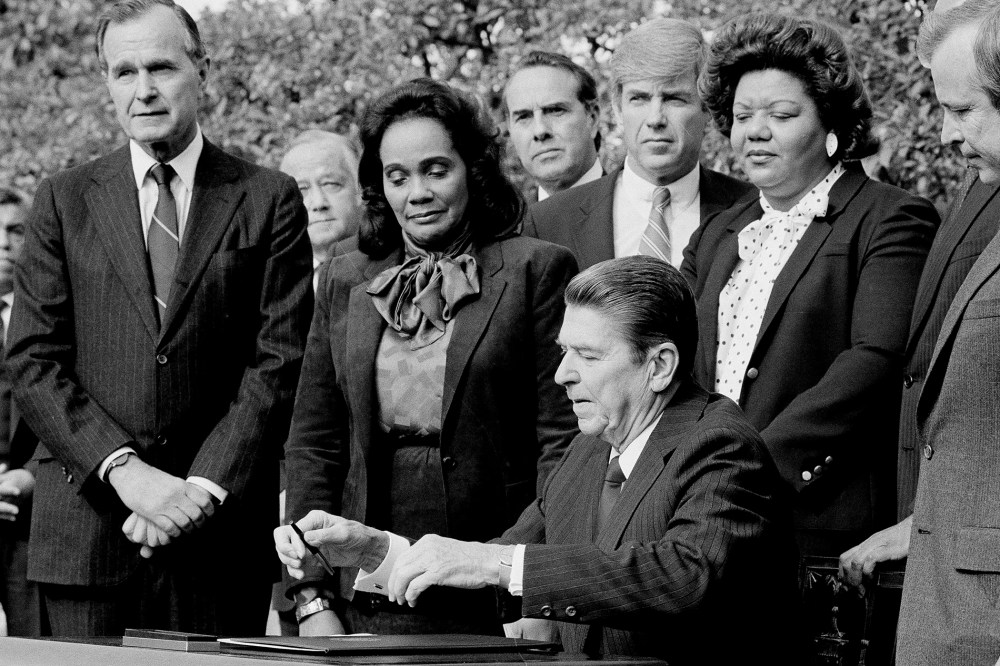
Sens. Richard Shelby of Alabama, Chuck Grassley of Iowa, John McCain of Arizona, Orrin Hatch of Utah, as well as Reps. Jim Sensenbrenner of Wisconsin and Kentucky’s Hal Rogers all opposed the measure. Texas’ Rep. John Culberson and Georgia’s Sen. Johnny Isakson also voted against the holiday on a state level, The Hill reports. A handful of other notable Republican opponents of the holiday during its multiple-year evolution from concept to reality include: President Ronald Reagan, although he did sign it when it arrived on his desk with a veto-proof majority; former Vice President Dick Cheney, who voted against the bill in 1978, but voted for it in 1983; and former Texas Congressman Ron Paul, who was another nay vote in 1983. McCain, while running for president in 2008, told NBC News he regretted that vote. He was notably a prisoner of war in Vietnam when King was assassinated. Hatch called the vote “one of the worst decisions I have made as senator” in a 2007 book. And Isakson recently told The Hill he’d reverse his nay vote if he could. Meanwhile, Scalise has seen his voting record on race examined more closely. For instance, earlier this month New Orleans’ Times-Picayune reported that Scalise had voted against a Louisiana state resolution apologizing for slavery. “Why are you asking me to apologize for something I didn’t do and had no part of?” Scalise said at the time, according to the paper. “I am not going to apologize for what somebody else did.”
Jane Timm Recommended


