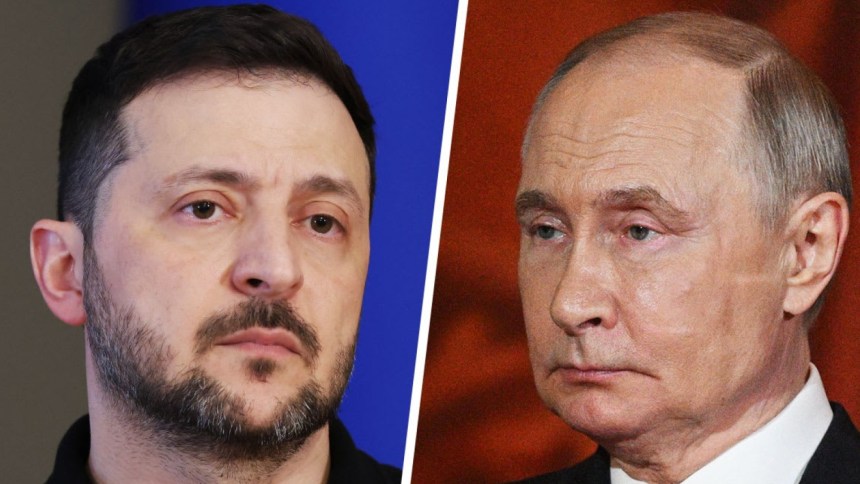
Ukraine’s astonishing surprise drone attack on Russia’s nuclear-capable strategic bombers on Sunday highlighted Ukraine’s strategic savvy against its much larger invader. It could also slow the already beleaguered diplomatic talks between the two countries to end the war, given how humiliating it was for Moscow.
The remarkable operation, known as Operation Spider’s Web, involved trucks smuggling 117 aerial drones into Russia and depositing them at the perimeter of four Russian air bases, NBC News reports, citing Ukrainian officials. One of those air bases was 2,500 miles behind Russian borders, deep in Siberia. The drones were then activated and did extraordinary damage to Russian air fleets, as NBC News reports:
While there are differing accounts on the extent of the ensuing damage of Sunday’s “Spiderweb” operation, Ukrainian President Volodymyr Zelenskyy said 40 Russian aircraft — 34% of Russia’s strategic cruise missile carriers — were hit. Ukraine’s security service, the SBU, put the estimated cost to the Kremlin at $7 billion. Some military commentators and pro-Russian bloggers have called it the country’s “Pearl Harbor” — a reference to Japanese attack in 1941 that saw the United States enter World War II.
Of course the attack was not like Pearl Harbor in one crucial respect: that Ukraine is retaliating against a belligerent invading its borders, whereas Japan’s attack on the U.S. was an unprovoked strike that spurred the U.S. to enter World War II. But the level of coordination, the element of surprise and the scale of the damage done to valuable aircraft made it a spectacular maneuver. Zelenskyy said the strike took a year and a half to plan, and praised its execution as “absolutely brilliant.”
Rob Lee, a senior fellow at the Foreign Policy Research Institute, wrote on X that the strike “will degrade Russia’s ability to launch cruise missiles at Ukraine, and will force Russia to shift resources to protect facilities far from Ukraine.”
Ukraine’s operation came just before a new round of peace negotiations between the two countries kicked off in Istanbul on Monday, and the attacks may have made Moscow even more aggressive toward Ukraine and resistant to compromise than it might have been otherwise. Reuters reports that “the mood in Russia was angry as the talks kicked off, with influential war bloggers calling on Moscow to deliver a fearsome retaliatory blow against Kyiv.” Russia already sent nearly 500 drones into Ukraine over the weekend. “We can expect a great deal of sound and fury from Moscow,” Keir Giles, a senior consulting fellow with the London-based think-tank Chatham House’s Russia and Eurasia program, told NBC News. Russia “will be working hard on convincing the United States to attempt to rein Ukraine in, in order to prevent any further damage to Russia’s means of bombarding Ukrainian cities with long range missiles.” At the same time, Russia has already shown few signs of a willingness to compromise in negotiations with Ukraine. Russian President Vladimir Putin knows he has something of an ally in President Donald Trump, who has butted heads with Zelenskyy in front of the press. One sign that Russia is already not committing to the talks seriously: It sent a far more junior official than Ukraine did to the talks in Istanbul. At the negotiations Monday, Moscow rejected Kyiv’s demand for an unconditional ceasefire before settling on the terms of a long-term deal. Ultimately the longer Trump declines to apply real pressure to Russia, the longer the war likely drags on.
Zeeshan Aleem is a writer for MS NOW. Sign up for his newsletter.
Latest Post
Recommended