








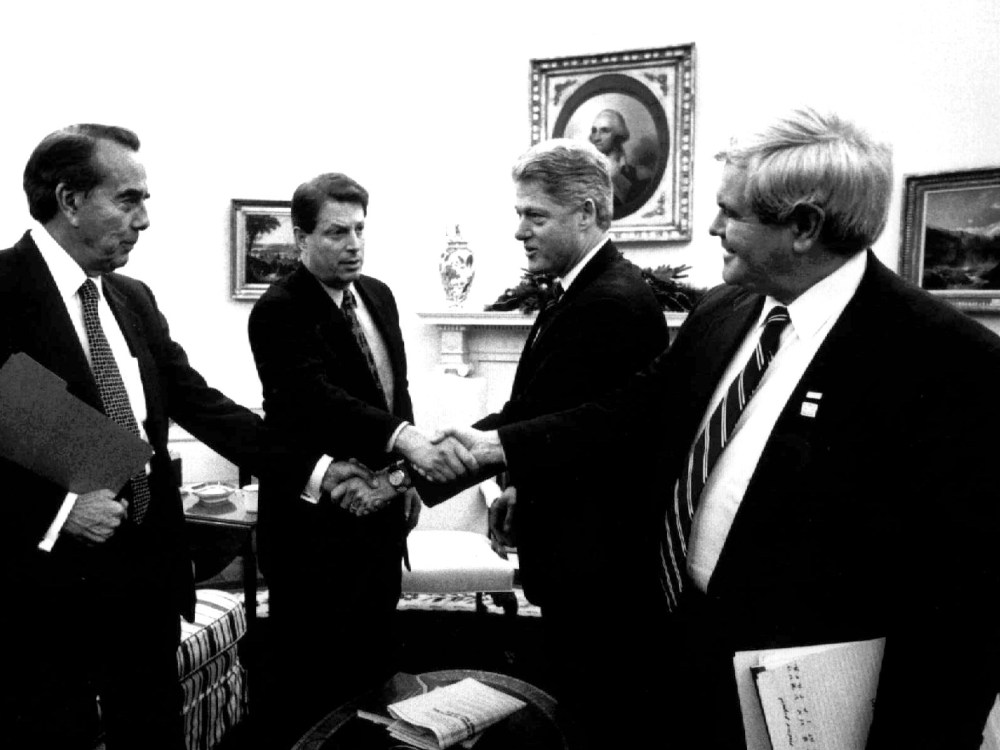
It’s been nearly two decades since the White House and Republican leaders in Congress failed to come to an agreement on the budget, sending the government careening into a partial shutdown. And if past is prologue, what’s to come is looking grim.
In mid-November, 1995, President Clinton announced that nearly half of the federal government had gone “idle.” Facing pressure from a vocal freshmen class, Republican Speaker Newt Gingrich refused to buckle on spending cuts to entitlement programs, education, the environment, and public health–all initiatives central to Clinton’s agenda. The president vetoed a series of spending bills laced with GOP amendments that would have cut funding to a number of programs.
Non-essential White House employees were sent home, as were 800,000 federal employees across the country. Skeleton staffs manned Social Security offices, leaving thousands hoping to apply for benefits in the lurch.
While this year’s imminent shutdown isn’t colored by an upcoming presidential election, it does involve the same warring ideologies that pit Republican promises to rein in spending against a Democratic president’s chief legacy–Obamacare. In a matter of hours, certain government entities could begin halting operations, creating a variety of consequences for federal employees and those who rely on them.
Nevertheless, Clinton said over the weekend that if he were still president, he would not negotiate with Republicans to avert a government shutdown. “The current price of stopping it is higher than the price of letting the Republicans do it and taking their medicine,” he said Sunday to ABC’s George Stephanopoulos. “If they’re going to change the way the Constitution works and fundamentally alter the character of our country and damage the future of a lot of kids, you just have to say no.” (Watch the NBC News archive footage from Nov. 15, 1995, as Tom Brokaw, Brian Williams and Robert Hager report on the Clinton-era government shutdown.)
MS NOW staff Recommended


