








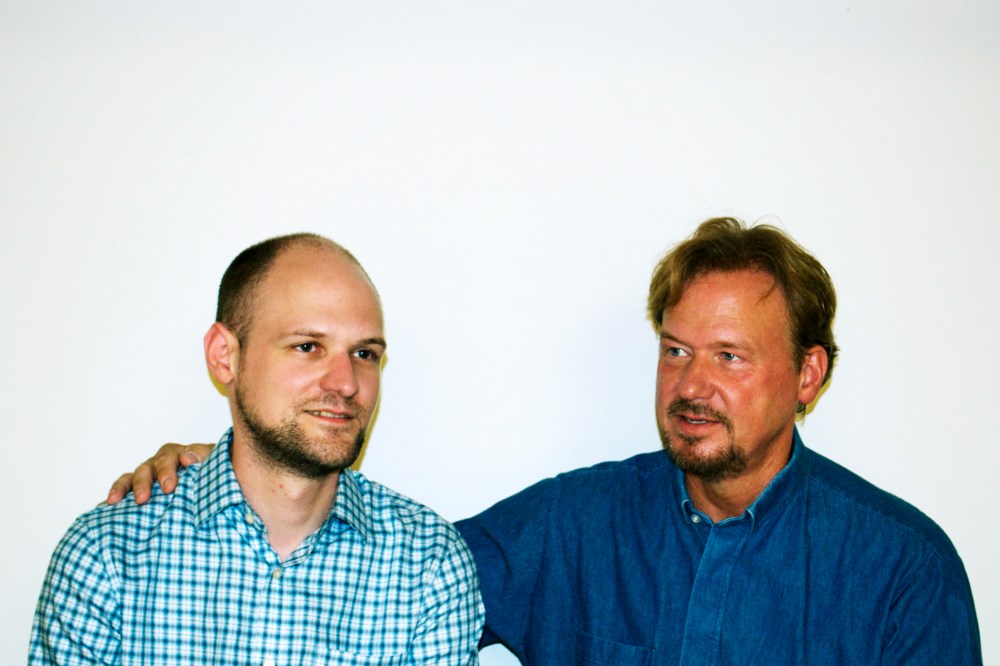
It’s been six years since the Rev. Frank Schaefer presided over the wedding of his gay son, Tim, to another man. But though that time period has seen tremendous gains for LGBT equality in the U.S., the United Methodist pastor still stands to be defrocked in an unusually publicized church trial that began on Monday.
Dozens of supporters turned out with signs and rainbow stoles at a Methodist retreat in Spring City, Pa., about 60 miles east of Schaefer’s church in South Lebanon Township. The 51-year-old pastor will be tried there before a 13-member jury of his fellow clergy members.
Though the 2007 ceremony was legal in Massachusetts, where his son still lives, Schaefer now faces a wide range of penalties for breaking his pastoral vows, which resist national strides toward marriage equality. The United Methodist Church maintains a 40-year-old policy that simultaneously accepts gay and lesbian members, but considers the practice of homosexuality “incompatible with Christian teaching.” Soon after states began legalizing same-sex marriage, the church implemented a rule that barred Methodist pastors from officiating gay unions.
Schaefer says he knew he was putting his career in jeopardy when he was upfront with telling his superiors in the Eastern Pennsylvania Conference why he was marrying his son to another man. It wasn’t until April that a member of Schaefer’s congregation filed a complaint just shy of when the statute of limitations was due to expire.
“In one sense, it was an easy decision, because first of all, I love him so much,” said Schaefer last week to NBC affiliate, WGAL. “Imagine if I had told him no. It would have just negated all those affirmations.”
Tim Schaefer came out to his parents when he was 17 years old, after battling depression and suicidal thoughts because of his sexuality.
“Every night I prayed, begging God to make me normal. I pleaded with God to fix me,” wrote Schaefer, now 29, in a Huffington Post column. “While the United Methodist Church was preaching hateful messages that were harming me, it was my family and their deep love for me that kept me from suicide. Their love and affirmation gave me the reason to live.”
Neither Schaefer could be reached for an interview because their lawyers instructed them to stay silent until the jury handed down a verdict–a practice in line with United Methodist Church trials, which have existed largely in the shadows. Only four secular journalists, and four other members of the United Methodist-related media were allowed to attend Monday’s trial. Filming or sound recording was prohibited, as was posting to social media accounts.
Professor Thomas Frank at Wake Forest University believes there are as many as five other clergy trials scheduled for pastors who’ve performed same-sex weddings, but acknowledged that the insulated process makes it very difficult to get accurate information. He has criticized the church for abusing its judiciary powers and called on the Council of Bishops to put a moratorium on the trials. “We hardly had any trials at all until human sexuality surfaced,” said Frank to msnbc. “It would have been a challenge for anybody to come up with more than a handful of trials in a 100-year period.” Now, he said, “church trials have gotten completely out of hand,” costing a fortune in terms of time and personnel, and stifling dialogue on a critically important civil rights issue. The Council of Bishops cannot change church law–that power is reserved to the 1,000-member General Conference, which meets once every four years. But it can create a forum where members of the nation’s largest mainline Protestant denomination can speak their views, which are developing at a rapid rate across the country. According to a poll released last June by the Pew Research Religion & Public Life Project, a solid majority of White mainline Protestants said they supported marriage equality, with the trend ticking upward. But that’s not the real issue, said Frank, who may be asked to testify on the second day of Schaefer’s trial. “The issue to me is why can’t we make our own pastoral judgement about this, and agree that we may diverge at points, but that doesn’t mean we can’t be one church?” he said. “I certainly hope we’re heading in that direction.”
Emma Margolin
Emma Margolin is a reporter at MSNBC.com. Recommended


