








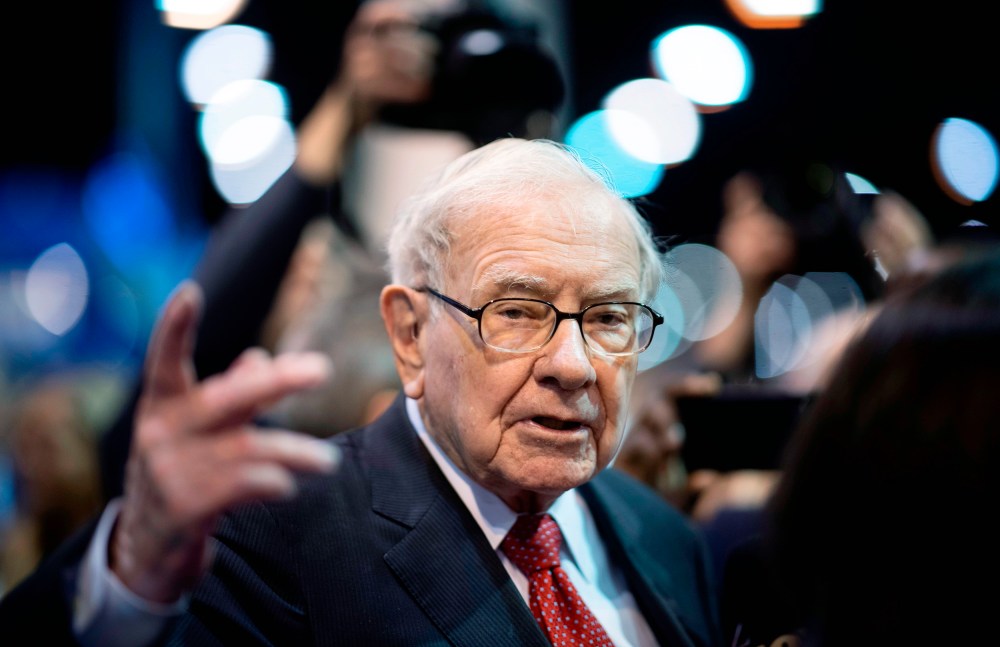
More than a decade ago, billionaire Warren Buffett enjoyed a cycle of positive press for coming out in favor of tax increases for the wealthy.
The so-called Buffett Rule — a belief that millionaires and billionaires shouldn’t pay a smaller percentage in taxes compared to working- and middle-class people — emerged from that declaration. And its name was a kind of homage to someone many thought of as a compassionate billionaire. (He even received a Presidential Medal of Freedom from President Barack Obama in 2011 for his business success and philanthropy.)
But we should know by now not to put faith in the “rich guy with a heart of gold” trope. And Buffett is an example why.
The Justice Department announced a discrimination settlement Wednesday involving Trident Mortgage Co., a lender and subsidiary of Buffett’s firm Berkshire Hathaway. In a news release, the Justice Department alleged that Trident engaged in “redlining,” another word for racist and illegal home loan policies, in largely nonwhite communities across Pennsylvania, New Jersey and Delaware from at least 2015 to 2019. Racist lenders historically engage in redlining to prevent nonwhite people from moving into neighborhoods where white people live and to make homeownership difficult for nonwhites in general.
“Trident’s unlawful redlining activity denied communities of color equal access to residential mortgages, stripped them of the opportunity to build wealth, and devalued properties in their neighborhoods,” Assistant Attorney General Kristen Clarke of the Justice Department’s Civil Rights Division said. “This settlement ensures that significant lending resources will be infused into neighborhoods of color in and around Philadelphia that have historically experienced racial discrimination.”
The Associated Press noted that, as is the case in most settlements, Trident wasn’t forced to admit guilt. In a statement, HomeServices of America, the division of Berkshire Hathaway that owns Trident, said it “strongly” disagrees with the Justice Department’s findings.
But the settlement conditions — which the Justice Department say amount to its second-largest redlining settlement ever — speak for themselves.
The Buffett-owned company has agreed to invest $20 million to increase credit opportunities in predominantly nonwhite communities cited in the release, to employ at least four loan officers to serve those communities and to pay a $4 million fine. Yikes. It seems to me the most favorable reading possible here is that Buffett’s hunger for money led him to create a portfolio so unwieldy he simply couldn’t keep track of all the racism happening within it. In that scenario, Buffett’s compassion ran up against his capitalistic impulses — and lost. On the other hand, there’s always the possibility he knew about these allegations for years and did nothing about them. Either way, the settlement is an awful look for Buffett and company. And, I hope, a blow to the compassionate billionaire brand.
Ja’han Jones is an MS NOW opinion blogger. He previously wrote The ReidOut Blog. Recommended


