The Senate on Monday passed the Emmett Till Anti-Lynching Act, ending more than a century of racist obstructionism that blocked federal proposals to acknowledge and outlaw the brutal executions.
In the time since George Henry White, a Black U.S. congressman, first introduced anti-lynching legislation in 1900, thousands of Black people have been tortured and killed in a nation that has refused to acknowledge the slayings for what they were: a reign of anti-Black terror.
What are we to make of a Congress that is more willing to legislate the conditions of Black death than improve the conditions of Black life?
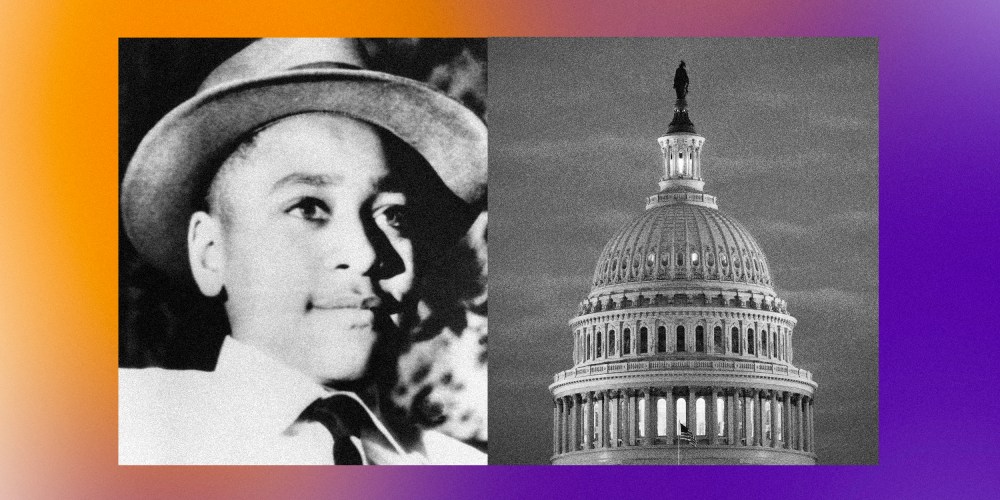
The Emmett Till Anti-Lynching Act, named after the 14-year old boy whose brutal murder galvanized the civil rights movement, makes it possible to prosecute a crime as a lynching when a conspiracy to commit a hate crime results in death or serious bodily injury. The maximum sentence under the law would be 30 years.
Its passage wasn’t guaranteed. Sen. Rand Paul, R-Ky., single-handedly blocked similar legislation from advancing in 2020 and repeatedly sought to weaken its language. Specifically, he claimed the original bill’s definition of lynching was written “so broadly as to include a minor bruise or abrasion.” He said he’d vote for the bill only if lynching were narrowly defined using the “death or serious bodily injury” qualification. He ultimately got what he wanted.
I’ve written for The ReidOut Blog that the symbolism in the passing of a federal anti-lynching law is important. It necessarily condemns the tradition of routine, white racist torture that was used to restrict Black life. But passing the bill only represents momentary progress for white people — a brief acknowledgment of a specific and uniquely brutal sin committed in the name of white power. And while punishing lynchings is an objectively good thing, what are we to make of a Congress that is more willing to legislate the conditions of Black death than improve the conditions of Black life? How can we countenance this symbolic rejection of white power at the same time other forms of white supremacy are proliferating across the country — and with the blessings of many lawmakers? In several states, Republican-backed legislation is banning the teaching of Black history. In some states, white Republicans are leading a voter suppression push with bills that will disenfranchise thousands — if not millions — of Black people. And the threat of racist policing looms still despite the massive racial justice demonstrations of 2020. Congress is yet to enact a law protecting educators and students from whitewashed history, or protecting Black voters from suppression, or protecting Black people from unjust interactions with law enforcement. These are the steps that would make a substantive impact on Black life.
Ja’han Jones is an MS NOW opinion blogger. He previously wrote The ReidOut Blog. Recommended