









It’s official: Ron DeSantis has literally turned Florida into an international embarrassment.
The United Nations Committee on the Elimination of Racial Discrimination on Tuesday issued a report examining discrimination across the globe that name-checked Florida House Bill 1, an oppressive anti-protest law pushed by DeSantis, the state’s Republican governor.
In its report, the committee — made up of 18 members, including a representative from the United States — said it’s “concerned about reports of increasing legislative measures and initiatives at the state level that unduly restrict the right to peaceful assembly following antiracism protests in recent years, such as the HB1 Combating Public Disorder law in Florida.”
DeSantis signed HB1 into law last year in response to protests against police brutality that ignited in the summer of 2020. Republicans, seeking to redirect the national discourse away from racism, cherry-picked isolated incidents of violence in an effort to portray all antiracist protesters as dangerous and to delegitimize their cause.
The Florida law, referred to as “anti-riot” legislation by its supporters, is a product of right-wing fearmongering.
The law authorizes punitive action against anyone who “willfully participates in a violent public disturbance involving an assembly of three or more people.” It’s a bill that’s dangerously, and deliberately, broad. As written, it means an anarchist or anyone in disguise can show up to an antiracist protest and intentionally cause damage or harm, potentially dragging peaceful protesters into a criminal probe.
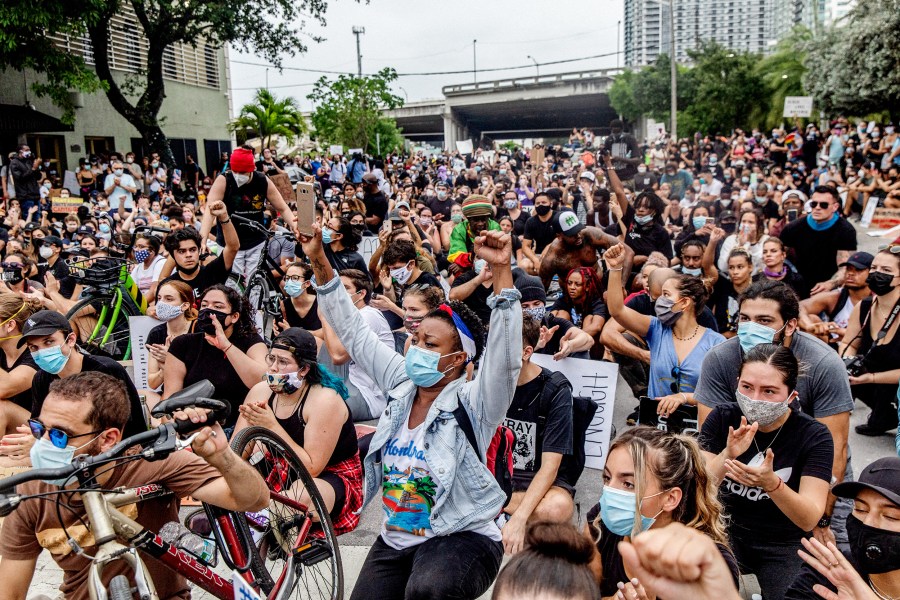
For more than a year now, Florida civil rights activists have sounded the alarm on the potential for the law to be used to silence and harass protesters. Ben Frazier, founder of the civil rights advocacy group Northside Coalition of Jacksonville, was asked to testify before the U.N. committee in Geneva earlier this month, in advance of Tuesday’s report.
Multiple judges have shown support for arguments against the bill, too. Last year, a federal judge blocked major parts of the bill, including its broadened description of what constitutes a “riot,” on grounds they violated the First Amendment.
“If this Court does not enjoin the statute’s enforcement, the lawless actions of a few rogue individuals could effectively criminalize the protected speech of hundreds, if not thousands, of law-abiding Floridians,” U.S. District Judge Mark Walker wrote in his ruling.
DeSantis and his team filed an appeal, but the federal judge presiding over it was so unimpressed with their arguments he questioned whether DeSantis’ team even understood them. “Doesn’t the fact that you’re having a problem telling me what the statute does […] indicate to you that there’s a problem with your theory?” U.S. Circuit Judge Edward Carnes asked Florida’s deputy solicitor general during a court hearing in March. Responding to the U.N. committee’s report, a spokesperson for DeSantis said the people of Florida are the only ones with “any bearing on the governance,” according to the Miami Herald. Of course, it was Floridians who briefed the committee on HB1. And DeSantis is the same guy who fought to overturn an amendment voters passed that would have helped millions of people with felony convictions vote. And he did pressure state lawmakers to accept a racially discriminatory congressional map proposed by his own office that will help him consolidate power in the state and potentially the country. Clearly, he and his team have little interest in answering only to voters. Regardless, the U.N. committee’s report is the latest sign the world is taking notice of DeSantis-run Florida and its oppressive ways. He’s put his state on the global stage … just for all the wrong reasons.
Ja’han Jones is an MS NOW opinion blogger. He previously wrote The ReidOut Blog. Recommended


