HUGO, Okla.— As a low winter sun faded over McCurtain County, Jesse Pacheco rumbled down Highway 70 toward a little rural town where a mother and her boy were waiting.
Pacheco has traveled this forlorn stretch of highway countless times before, into the heart of one of the poorest parts of the Choctaw Nation, a sprawling area in southeastern Oklahoma that includes nearly 11 counties and 11,000 square miles.
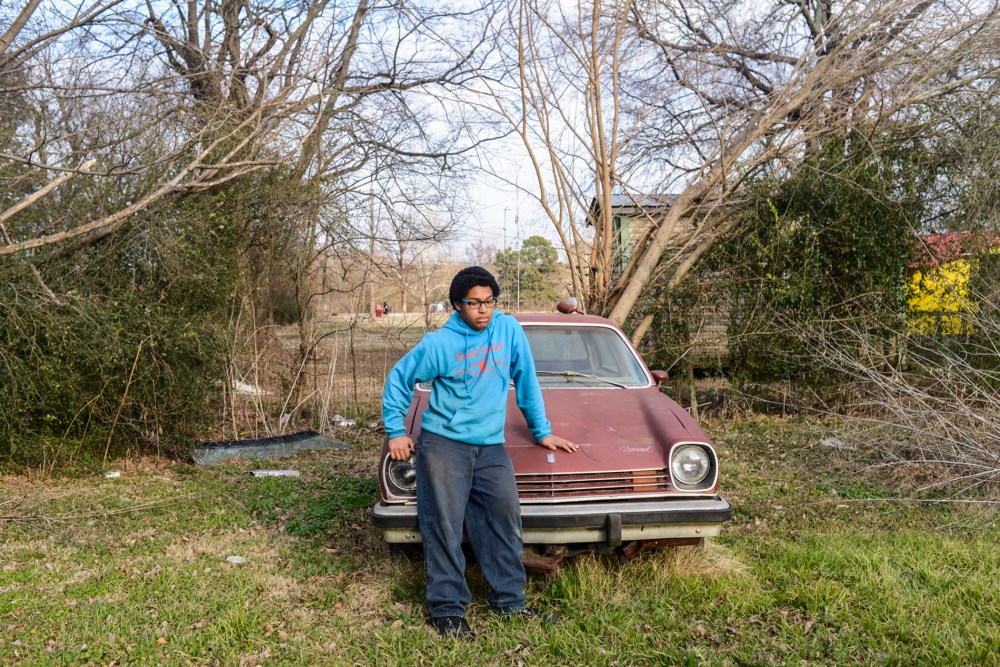
Pacheco, a Choctaw himself and a youth outreach worker, racks up 3,500 miles a month driving to rural communities and one-stoplight towns to deliver tough love to native boys. Some have had run-ins with the law or been pushed out of school.
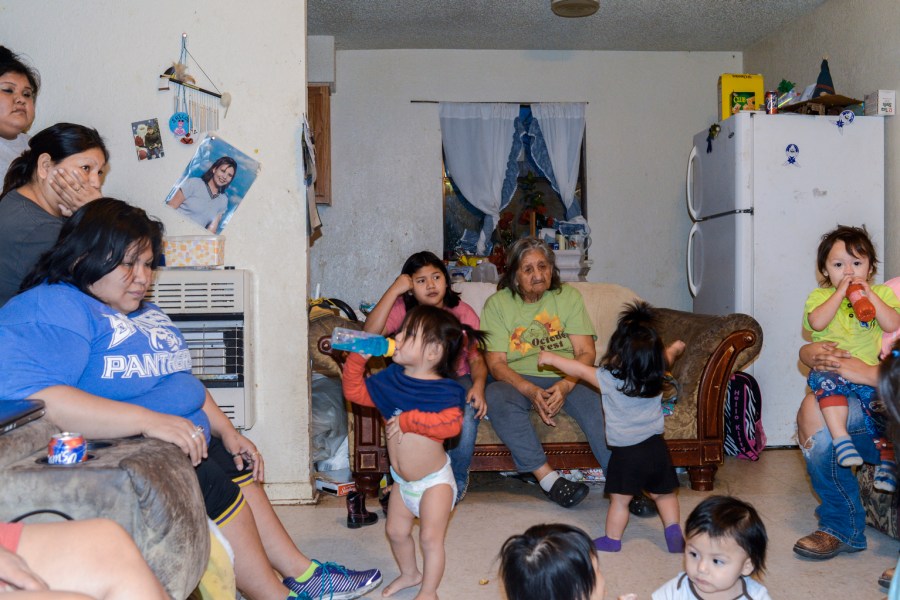
Nearly all the young men he visits are impoverished or have parents who struggle with substance abuse. Many live with aging grandparents who don’t have the financial means or energy to follow after rebellious teens. Most are angry, and nearly all of them live in far flung, relatively isolated communities with few job opportunities and little more than trouble and girls to chase.
Across the country American Indian youth suffer disproportionately high rates of school drop-out, suicide, poverty and teen pregnancy. As other historically oppressed minority groups have seen major academic gains in recent years, the educational performance of Native American youth has slid in the opposite direction.
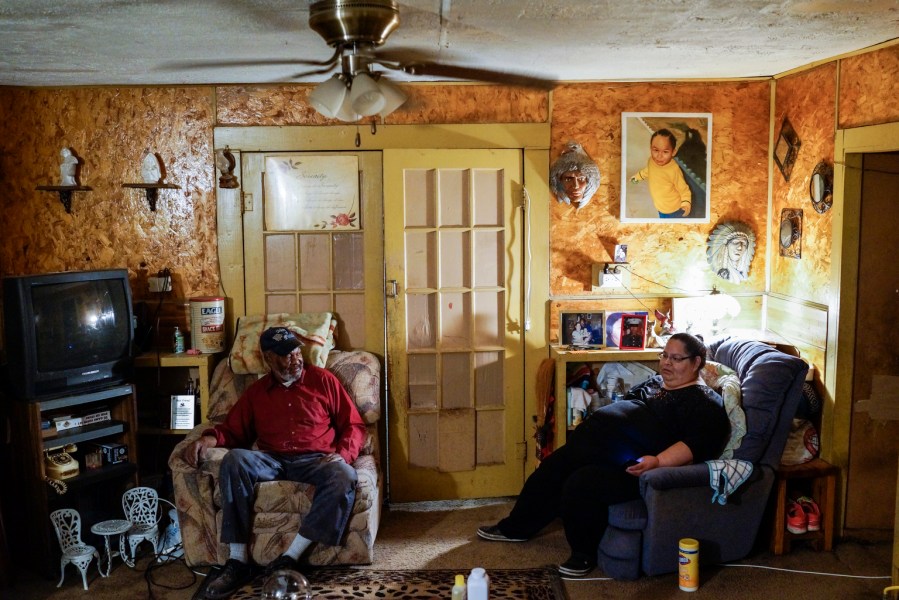
While young Choctaws fare better than many of their counterparts in the more than 560 federally recognized Indian tribes, their suffering is still widespread.
Congress’s sequestration cuts and other austerity measures have put a strain on many of the Choctaw Nation’s programs for students and at-risk youth. Hiring more outreach workers has slowed and wait-lists have swelled.
But January brought new hope for the tribe’s young people, when President Barack Obama announced the formation of five so-called Promise Zones in impoverished areas across the country. The Choctaw Nation made the list, along with communities in San Antonio, Los Angeles, Philadelphia, and southeastern Kentucky.
“Sometimes the only thing you can do is not make it worse,” said Pacheco, an outreach worker with the Choctaw Nation’s Hokli Nittak program. “Sometimes that’s all you can do.”
On either side of the highway a blur of timber and farm land froze in the twilight. Pacheco hunkered down for the long ride deep into Indian country, gesturing to where a chicken plant or saw mill had been.
It had been months since Pacheco had last seen the 13-year-old, Thomas. He was worried.
Money had been extremely tight for the family. Thomas’s estranged father was back in the picture. And the teen’s frequent and increasingly volatile outbursts in school had become yet another issue that needed to be addressed.
Seize the Day
Hokli Nittak means Seize the Day in Choctaw. Several times each week a little corps of outreach workers fan out into the far reaches of the Nation to seize the day and the hearts and minds of as many at-risk Indian youth as they can.
The emotional and financial costs are steep. While the tribal government funds a wide array of programs with the spoils of a lucrative gaming operation, many others have been funded by a number of dwindling grants offered by the federal government.
The five Promise Zones are the first of 20 scheduled to be created over the next three years. Obama announced the initiative during his 2013 State of the Union Address, borrowing from concepts developed by the Harlem Children’s Zone in New York City, which takes a comprehensive approach to addressing the social, economic and educational needs of children within a 24-block radius of the school.
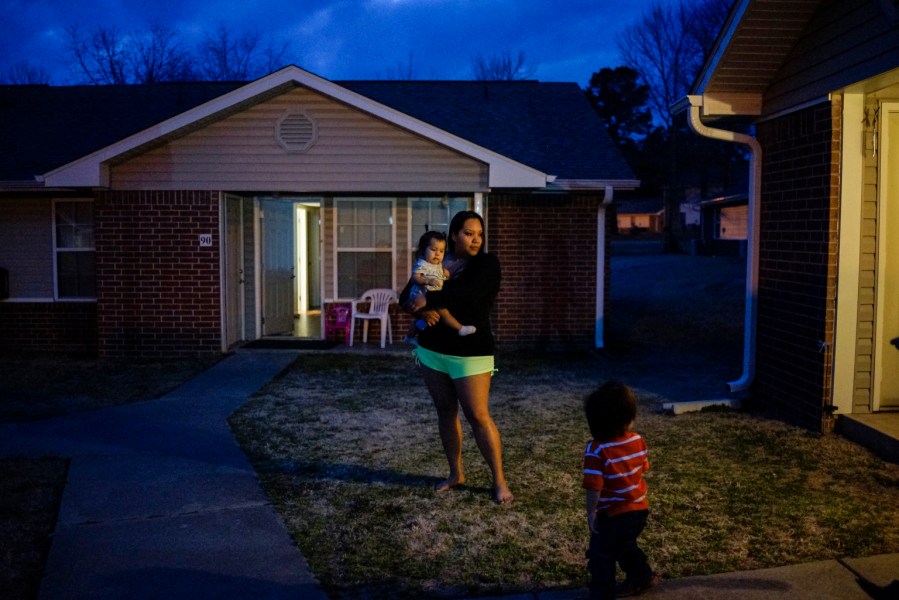
The communities selected as Promise Zones were chosen from hundreds that applied, based on their demonstrated ability to collaborate with private businesses, federal, state, tribal and local officials, as well as parents, faith-based and non-profit organizations.
The initiative doesn’t necessarily offer a lot of new and desperately needed funding. It’s intended instead to enhance the relationship between the communities and federal partners, help with accessing federal resources and grants, and offer tax breaks and tax credits for businesses.
As part of the president’s 2015 budget proposal, Obama asked for $100 million to support the current Promise Zones and $200 million to expand the program to include an additional 40 communities.
Many of the program’s details remain vague. And while the launch of the zones highlight Obama’s efforts to keep a promise to make 2014 a year of robust executive action, the sheer depth of the social and economic problems facing young Choctaws and Native American youth on and off reservations show such efforts to be a pebble in the proverbial pool of despair.
About 23% of those living in the Choctaw Nation live below the poverty line — 7 points higher than the national average. In some communities the poverty rate balloons to around 50%. Many children here are impoverished, living in homes without running water. In McCurtain County alone, which has among the highest population of Choctaw, about 34% of the children live in poverty. The teen pregnancy rate is nearly twice the national average, higher than all other races combined. The STD rate is nearly quadruple the national average, according to youth outreach workers. And almost one-fourth of area students are enrolled in special education programs.
Choctaw officials said they hope the Promise Zone designation will allow the tribe access to additional grants that could bolster funding for programs in the tribe’s service area. (Choctaw Nation is not on a reservation, rather it serves tribal members in a geographic area roughly the size of Vermont.) Such programs would include afterschool and summer school initiatives and partnering with local universities.
The tribe also hopes to target youth and students across 85 school districts with the expansion of Choctaw Language courses, early literacy and parent support programs.
%22You%20wish%20you%20could%20just%20hold%20a%20mirror%20up%20to%20them%20and%20show%20them%20who%20they%20really%20are.%22′
Hokli Nittak and its sister program for pregnant teens and young parents have been central to the Nation’s youth outreach.
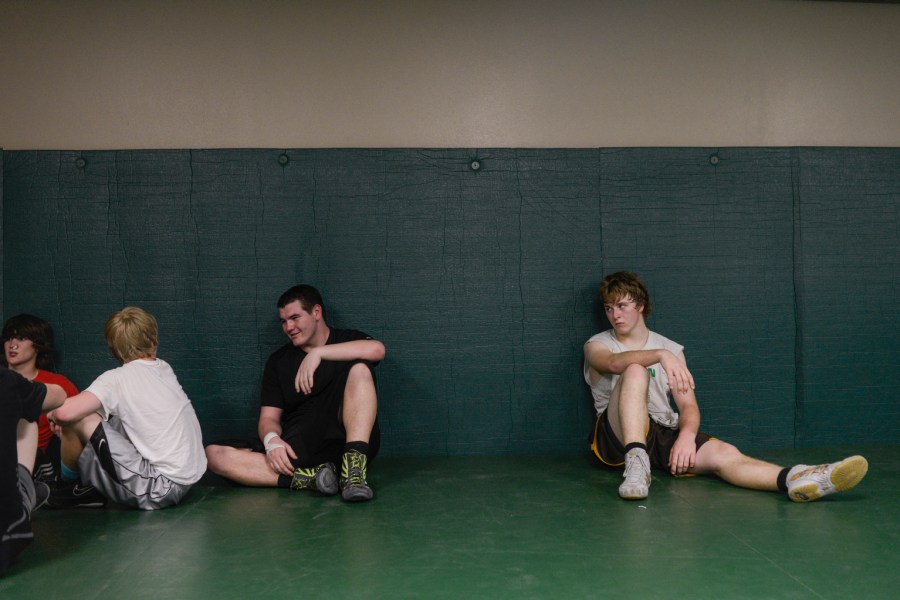
“What we’re trying to do is to get those kids left behind,” said Joey Tom, senior director of the Choctaw Nation’s youth programs. “Those are the kids that don’t play sports, the ones in the corner. We use our language, our culture and history, our traditional sports to reach them.”
As Pacheco cruised down the highway headed toward Idabel, the small town where Thomas and his mother live, he lamented the dire state of far too many rural Native youth. Too many are poor. Too many have low self-esteem. Too many don’t see school as a viable option. Too many can’t imagine life outside of their small worlds or away from their families— not for a job, not for college, not for anything.
“It’s painful,” said Pacheco, drawing his gaze from the highway, which was lightly dusted by a rare Oklahoma snow fall. “You can see that they’re bright but they can’t see it yet. You wish you could just hold a mirror up to them and show them who they really are.”
Pacheco, now 44, sees much of himself in the boys he works with.
He grew up poor in a small town with a single mother who worked hard for meager wages— picking pecans, cleaning houses and working as a home health aide. By the time he was 13 he started drinking and fighting, habits that would haunt him for much of his young adult life, through two marriages and a stint in jail.
Pacheco ranked near the bottom of his high school class. He had little interest in school and his bad attitude preceded him.
“My attitude toward life was, I didn’t think I had as many chances as other people,” Pacheco said.
Partying offered an escape. He dabbled with drugs. “I tried them all,” he said.
But alcohol had the strongest grip on his life.
At 15 he was kicked off of the football team for blowing off a practice to drink. After high school he cycled in and out of college. At 18 he had his first child, a son. He and the boy’s mother were married and divorced within a year. The drinking got worse. He wasn’t involved in the child’s life. From 20 to 27 his life continued to spiral out of control.
By then Pacheco had gotten married again. And on one drunken night an argument got out of hand, turned physical, and Pacheco was arrested and sent to jail for domestic violence. It was a blessing in disguise. After 90 days of jail and rehab, Pacheco said he was able to wean himself from alcohol. He hasn’t had a drink since.
This year marks Pacheco’s 17th year of sobriety.
“I don’t take credit for it,” he said. “I believe that God was by my side.”
As a young man there were so many people— family, neighbors, church folks— who said they saw his potential and tried to steer him away from the self-destructive path he was on.
“I just couldn’t see it for myself,” Pacheco said.
He said he knew he wanted more for himself, but at the time didn’t know how to go after it. He sees the same struggle in the eyes of many Indian teens.
“It’s good when I see young men that are doing something different, pulling out of the mess. But it’s really difficult when I see a young man not able to get it together,” Pacheco said. “I say, I know where this will take you. Not because I’m psychic or a fortune teller, but because I’ve been there.”
After his release from jail Pacheco enrolled in college and earned a bachelor’s degree in psychology. Later he earned his master’s degree in behavioral science.
“I always knew that I wanted to come back and work with my people,” said Pacheco, who is also a minister and certified counselor.
That calling hasn’t always been simple or easy.
One former client murdered someone on his 18th birthday. Others have been unable to shake the pull of crime, depression or addiction.
“I tell them, the most important thing you can do is learn how to keep yourself safe,” Pacheco said. “Choices. It’s all about the choices you make in life.”
A Trail of Hurt
The long and rocky road— both figuratively and literally—Pacheco and his tribe have traveled is a trail of hurt carved more than 180 years ago.
In 1831, the Choctaw were one of the so-called “Five Civilized Tribes” to be removed from their homeland, along with the Cherokee, Chickasaw, Creek and Seminole. The U.S. government forced them to decamp from what is now Alabama, Louisiana and Mississippi to “Indian Territory” in Oklahoma, during what came to be known as the Trail of Tears. Nearly 2,500 Choctaw died along the route.
By then, the Choctaw had largely embraced white culture. Many had intermarried, converted to Christianity and even held slaves. They sided with the Confederacy during the Civil War, and after the war they were forced to free their slaves and give them freedmen rights.
In 1889 the U.S. opened up land to white settlers in the Oklahoma Land Rush. The Choctaw became victims of the expansion, including land thefts and killings. During World War One, Choctaw soldiers served as the much-heralded “Code Talkers” for the U.S. Army, using their native Choctaw language to deliver coded messages undecipherable by the Germans. From the 1940s to the 1960s the U.S. pushed a policy called Indian termination and assimilation. The rights of sovereign Indian Nations were stripped and an attempt was made to assimilate Indians by forcing them to boarding schools where they were often physically abused and barred from speaking their language or practicing their traditions. The darkness of those periods lingers for many older Choctaws, who saw grandparents and parents institutionalized or were even institutionalized themselves. %22For%20generations%20we%20were%20taught%20to%20be%20ashamed%20of%20being%20Choctaw.%22′ “For generations we were taught to be ashamed of being Choctaw,” said Teresa Billy, assistant director of the School of Choctaw Language, which beams Choctaw language courses into dozens of public schools. Much of that history, good and bad, has been lost on younger Choctaw who are more apt to be of mixed-race and identify more with white, rural culture than that of the Choctaw. “We’re trying to go back and reestablish who they are and uninstall who they think they are,” Billy said. “We say, tribally here’s what your people overcame and you have the ability to do the same. But when you can’t get over the poverty mind set, the only thing left is survival mode.” One of the first things the tribe did when it arrived in Oklahoma was set up a school. Today the Choctaw Nation offers college scholarships, summer school and summer employment programs. It also operates three daycare centers, 14 head start programs and a number of adult education and GED programs. A Small Victory Pacheco finally made it to Idabel as darkness fell, pulling up a short dirt driveway to a weather-beaten, white clapboard house. A shadow appeared in the doorway, pushing through a rickety screen door to the front steps. It was Thomas, a brown, bespectacled boy with an Afro. He offered a soft hello. Inside, Thomas’s mother, Wilanda Blakely, waved Pacheco in. She sat in a blue-grey reclining chair tucked in the corner of the small living room, beneath a large painting of Thomas as a toddler and a pair of Indian heads that hung on an exposed chipwood wall. Thomas sat down on a small sofa, his eyes on his shoelaces. Blakely was happy to see Pacheco. Before the family had connected with him and the Hokli Nittak program, they’d had a series of bad experiences with school counselors. “All they ever talked about was medication,” Blakely said. “But I don’t want him on that stuff. I don’t what him to be a zombie. I just don’t want him to be like that.” Thomas is a bright boy, Pacheco and Blakely said. He’s always scored high on standardized tests but around 3rd grade, his school work began to slip and his behavior became erratic. He stopped doing his homework and Blakely began getting calls about Thomas’s emotional outbursts in school. One counselor asked if Thomas heard voices. He told her yes, that sometimes he thinks he hears someone calling him, Blakely recalled. The counselor wrote in her notes something about psychosis or hearing voices, and Blakely demanded the counselor remove it. “If he has psychosis than everybody in this house has it,” Blakely said. “We’re Indian. It’s a cultural thing. We believe in ghosts and that our ancestors visit us. We’ve all seen them.” She explained how their house, which she grew up in, was haunted and she receives occasional visits from loved ones who’ve passed on. That episode with the school counselor, Pacheco said, is consistent with the kind of culture clash many Indians encounter when dealing with non-Indians in so many ways. %22Turn%20my%20anger%20into%20energy%20and%20strength.%22′ Since Pacheco has started visiting with Thomas, Blakely said she’s seen a turnaround in his grades and he’s starting to get a handle on his emotions. “Tell him what happened the other day,” Blakely said to Thomas. “Go on now.” Thomas said he’d gotten into it with another boy in school, Michael, who had tormented him for much of the school year. “Whenever he’d bother me it’d make me upset,” said Thomas, a 7th grader. “I’d burst out in anger or just start crying at what he said.” The other day Thomas said the two of them were horsing around in the hallway when Michael smacked his glasses from his face. Thomas looked over at Pacheco, as if gauging his reaction. “What do we always talk about,” Pacheco asked. “Choices,” Thomas said. “Turn my anger into energy and strength.” After getting his glasses knocked off, Thomas said, “I didn’t show out or anything.” In the end, Thomas said it was Michael who got a paddling from the school principal and not him. It was a small victory for the boy, but a victory nonetheless. “I know my attitude could let me make a different decision,” Thomas said. “That’s what I’ve learned from you.” Blakely leaned back in her chair, smiling. There was hope. Editor’s note: this is the first of two stories on the Choctaw Nation, exploring the tribe’s outreach efforts to young Indians struggling with poverty and teen pregnancy. The Choctaw Nation was recently selected by the Obama administration as one of five Promise Zones, a federal initiative aimed at helping impoverished communities across the country.
Trymaine Lee
Trymaine Lee is an NBC News correspondent. Recommended