








When Vice President Joe Biden and Paul Ryan face off Thursday night, they’ll be the latest to take part in a long line of election debates on the national stage.
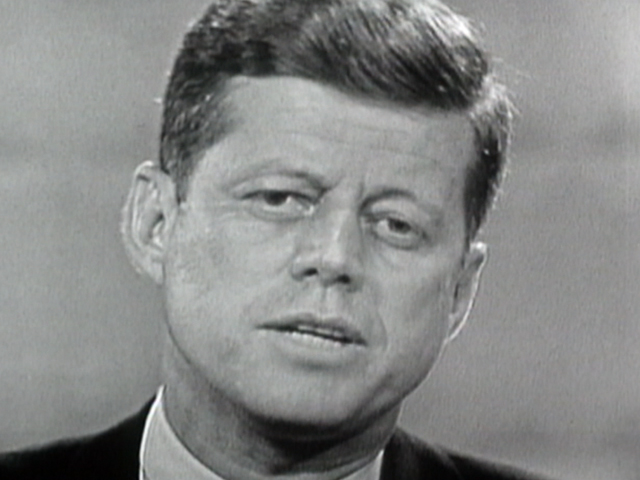
The first televised presidential debate was in 1960, when John F. Kennedy met Vice President Richard Nixon in front of an audience of 70 million viewers. Kennedy was smooth, tanned, and calm as ever. Nixon was sweaty, sick, and refusing makeup. Maybe you can guess who came across more agreeable to viewers at home.
At that early stage, it was perhaps hard to imagine how much of an impact televised debates would have on national elections. Actually seeing the candidates made not only what they said important, but how they looked while saying it. Can you imagine Joe Biden or Paul Ryan refusing makeup before stepping on stage tonight? Though this history of televised debates is a relatively short one, there is no shortage of gaffes, zingers and impressive performances.
Looking back, one of the most common debate criticisms is when a candidate seems unaware or out of touch. In 1976, for example, Gerald Ford claimed, “There is no Soviet domination of Eastern Europe.” It was a declaration so inexplicable that moderator Max Frankel of The New York Times had to interrupt: “Did I understand you to say, sir, that the Russians are not using Eastern Europe as their own sphere of influence?”
This same criticism was leveled at George H.W. Bush in 1992, when he repeatedly checked his watch during a town hall debate with Bill Clinton and Ross Perot. It looked like Bush had other places to be, like the debate didn’t warrant his time.
On the other hand, candidates should be careful of seeming too aggressive. Al Gore sighed several times during his debate with George W. Bush in 2000, and the sound was picked up by his microphone. It came across to some viewers as being arrogant, a feeling that was reinforced when Gore seemed to invade Bush’s personal space in the following debate. In 1980 and ’84, Ronald Reagan landed a few memorable zingers on his opponents Jimmy Carter and Walter Mondale. In response to a question about whether he was too old to perform the duties of president, Reagan said, “I will not make age an issue of this campaign. I am not going to exploit, for political purposes, my opponent’s youth and inexperience.” Such wit and comedic timing Reagan no doubt learned during his years as an actor. A strong performance can warm you to the electorate and a bad performance can do the opposite. Though, debate performances are not always decisive of who will win the election. Take, for example, John Kerry’s strong showing in 2004; he might’ve “won” the debates, but he ultimately lost the election. With an estimated 60 million people tuning in this time around, it’s a unique chance to make an impression.
Evan Puschak Recommended


