








Texas’ strict new voter ID law is being put to its first widespread test. Signs of trouble emerged as early voting for the Nov. 5 elections began Monday.
Under the controversial new legislation, which supporters claim prevents fraud, all voters must supply an approved form of photo identification that exactly matches the name on their voter registration cards.
The U.S. Department of Justice slapped Texas with a lawsuit over this issue in August, arguing the law disenfranchises minority voters. But it could hit women particularly hard, especially those who use their maiden names or hyphenated names.
Sonia Gill, counsel for the Lawyers’ Committee for Civil Rights Under Law, warned many voters might be in for an unpleasant surprise on Election Day. “Women in particular are going to have a difficult time because they are more likely to have changed their names and, as a result, the name on their photo ID may not match up to the name listed on their voter registration.”Approved forms of valid photo IDs include a Texas driver’s license, a Texas personal ID card, a Texas concealed handgun license, a U.S. military ID card, a U.S. citizenship certificate, or a U.S. passport. The state also started issuing new “Texas Election Identification Certificates” geared toward the estimated 1.4 million eligible voters who are currently missing photo IDs.
But according to the Dallas Morning News, as of last week, only 41 residents received one of these new certificates. Statewide. Adding to the list of hurdles, if variations in names exist, Texans need to show original documents or certified copies of their name change, via a marriage license, divorce decree or court ordered change. No photocopies are allowed. The state had been charging at least $20 to get a new version of these documents. But Texas Secretary of State John Steen’s office announced these “Election Identification Certificates are available free of charge to qualified voters who do not already have an approved form of photo ID.” A 2006 survey by the Brennan Center for Justice at NYU School of Law disclosed that 34% of women voters do not have an acceptable ID that reflects their current legal name.
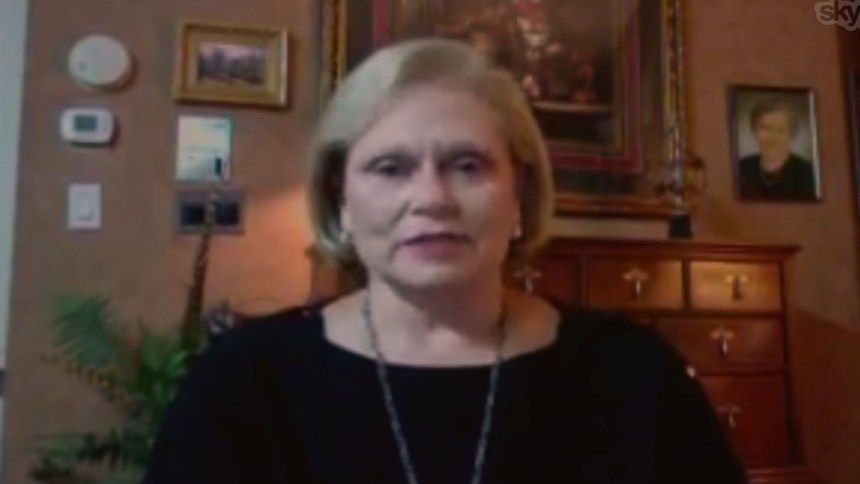
“I couldn’t tell you where my original marriage license was if my right to a representative democracy depended on it,” said Jessica McIntosh, communications director for Emily’s List, a group that helps elect pro-choice Democratic women.There have already been reports of women encountering voting problems–including difficulties suffered by a local judge well-versed in law who tried to vote at her own courthouse. “I presented myself and with my voter registration and I was aware of the new voter law and so I also presented my Texas driver’s license which is valid and unsuspended,” 117th District Court Judge Sandra Watts told MSNBC’s Lawrence O’Donnell. “I was then advised that the names had to be identical. And I said that was ridiculous, that I had been voting for 49 years and that the law required me to present a voter I.D.” She ran into issues because her maiden name is printed as her middle name on her driver’s license. But her voter registration card lists the middle name given to her at birth. Watts was able to vote after signing an affidavit attesting that she is who she says she is. After the incident, she also took a closer look at the fine print.
“There’s some interesting language in the law. I’ve never seen it before,” said Watts. “I have a constitutional right to vote. And that constitutional right now says I offer myself to vote and an election official is going to determine whether I am accepted to vote.”
Gill agreed. “Election judges are given a significant degree of subjective interpretation in determining whether or not the name on a voter’s photo ID matches the name on the voter registration list,” Gill explained. “Without concrete guidance and specialized election judge training on the new photo ID law, it creates the potential for the photo ID law to be applied differently across the state.”
If a voter lacks the proper ID, the voter can still cast a ballot provisionally; they’ll have six days to present the proper identification or their ballot will be tossed out.
Watts suggested women should be prepared for the potential paperwork nightmare and expect major delays.
“Texas has not done an adequate job of informing voters throughout the state about the new photo ID requirement. I anticipate many voters will show up to vote with their voter registration card, as they have done in the past, and expect to vote a regular ballot, only to be denied,” Gill said. “This has already been reported from local elections that have taken place in Galveston and Eagle Pass.” Linda Krefting, president of League of Women Voters of Texas, told msnbc that the organization is focusing on “creating clarity” by trying to get the message out about the new rules, including which IDs are acceptable and the requirements if they don’t have an ID. The League of Women Voters opposes the law. But now that it’s here–for the time being, at least–the group wants to downplay questions about the law as an issue, and just get out the vote. “We’re afraid of scaring people away from the polls,” said Krefting. “We need more people voting, not less. We’re worried if people make a big to-do about how problematic this law is it’s going to encourage people to stay home.” Texas is notorious for low voter turnout, and in 2012 women made up more than 55% of the those who turned out. Cecile Richards, Planned Parenthood president and daughter of a former Texas governor, said this the latest attack on women’s rights will only create backlash. “All the other abuses against women in Texas for the last couple of years–taking away women’s health care, shutting down women’s health clinics,” she told MSNBC’s Lawrence O’Donnell. “What you are going to see, and what we’re already seeing, in Texas is an enormous backlash that women are not going to be denied the right to vote and they are going to be energized.” McIntosh told MSNBC that “women are watching” these efforts championed by Republicans. “This is really insidious strategy to disenfranchise exactly the voters they know that they have turned off with their extremist right-wing agenda,” McIntosh said. “All you have got to do is see all the enthusiasm for Wendy Davis… and I don’t think it is going to work.”
Sarah Muller Recommended


